
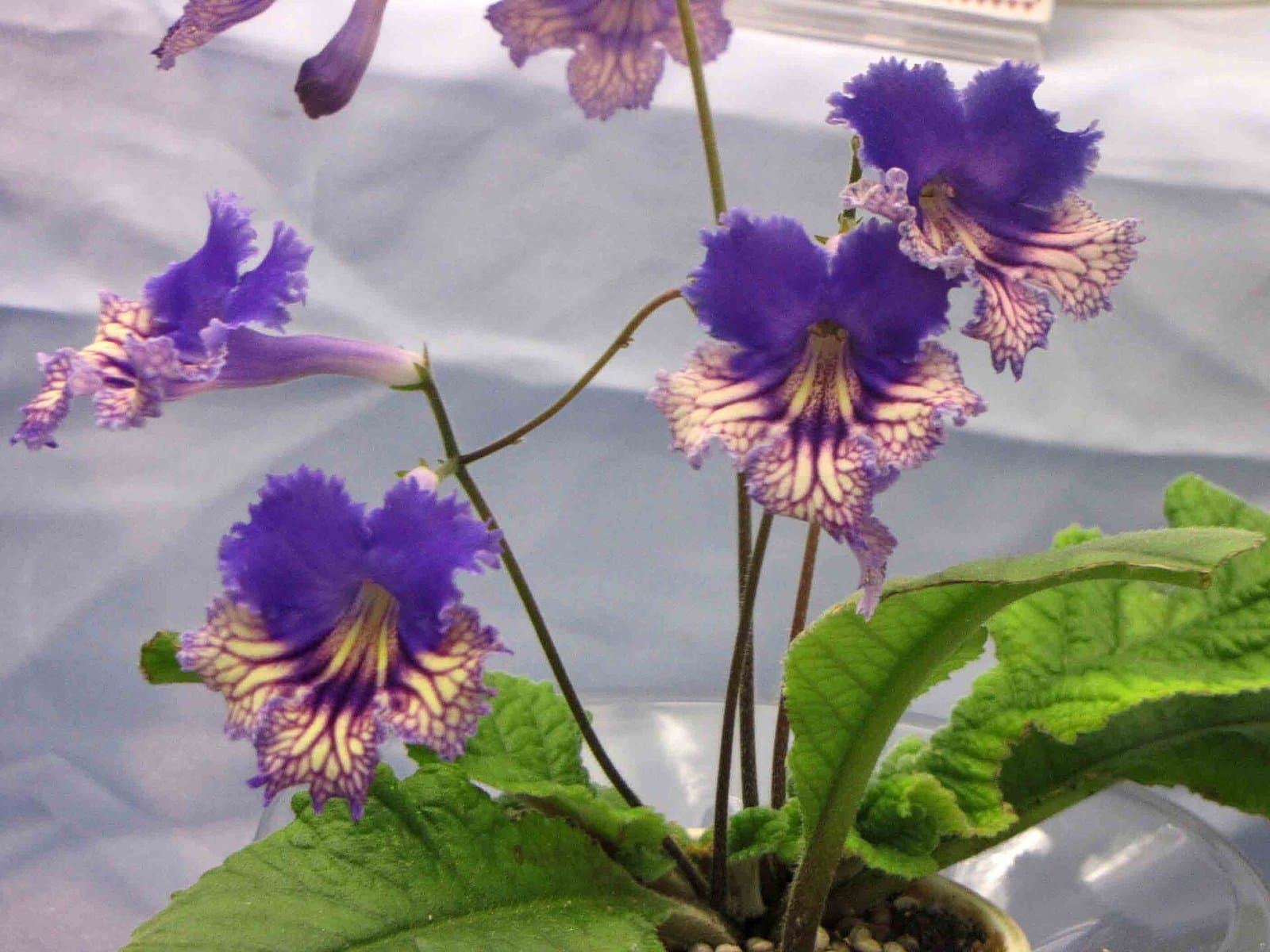
Cape Primrose
Flowers for most of the year in bright indirect light; snap spent stalks off at the base and expect a pause in the darkest weeks.
Cape Primrose is a hybrid flowering plant derived from species in the genus Streptocarpus, native to shaded rocky hillsides, cliffs, and montane habitats across central, eastern, and southern Africa. Indoors it is grown for its prolific, trumpet-shaped blooms that hover above the foliage on arching stems in colors ranging from white and pink to deep violet and bicolor combinations. The hybrid lineage has produced an enormous range of forms, and modern cultivars are bred specifically for compact growth and extended flowering under indoor conditions.
The plant is particular about watering and will rot quickly if the crown or roots sit in standing water. Bottom watering - setting the pot in a shallow tray of water for 20 to 30 minutes and then removing it to drain - keeps foliage dry and is by far the most reliable method indoors. Crown rot from water pooling at the base of the leaves is the single most common way growers lose this plant. It also dislikes heat; above roughly 80°F growth stalls and flowering slows, so a spot away from heating vents and out of direct summer sun is important.
Cape Primrose grows as a flat rosette of long, heavily textured leaves and stays compact enough for windowsills and smaller spaces. Individual leaves can be used to start new plants through a simple leaf-section cutting technique, making it easy to multiply a favorite cultivar without specialized equipment.
Bright indirect light means a spot within two to three feet of an east-facing window, or pulled back from a south- or west-facing window so direct rays never land on the foliage. Too little light causes slow, pale growth and a near-complete stop in flowering; too much direct sun bleaches and scorches the textured leaves quickly.
Water when the top inch of soil is dry; never let it sit in water
Feed with a diluted balanced houseplant fertiliser
Raise the humidity with a pebble tray or humidifier, or group plants together
Check leaf undersides for spider mites and mealybugs
Repot when roots crowd the pot
Remove spent flower stalks at the base