
The arching stalks come in bright light; cut each one at the base once it fades so the rosette keeps its shape.
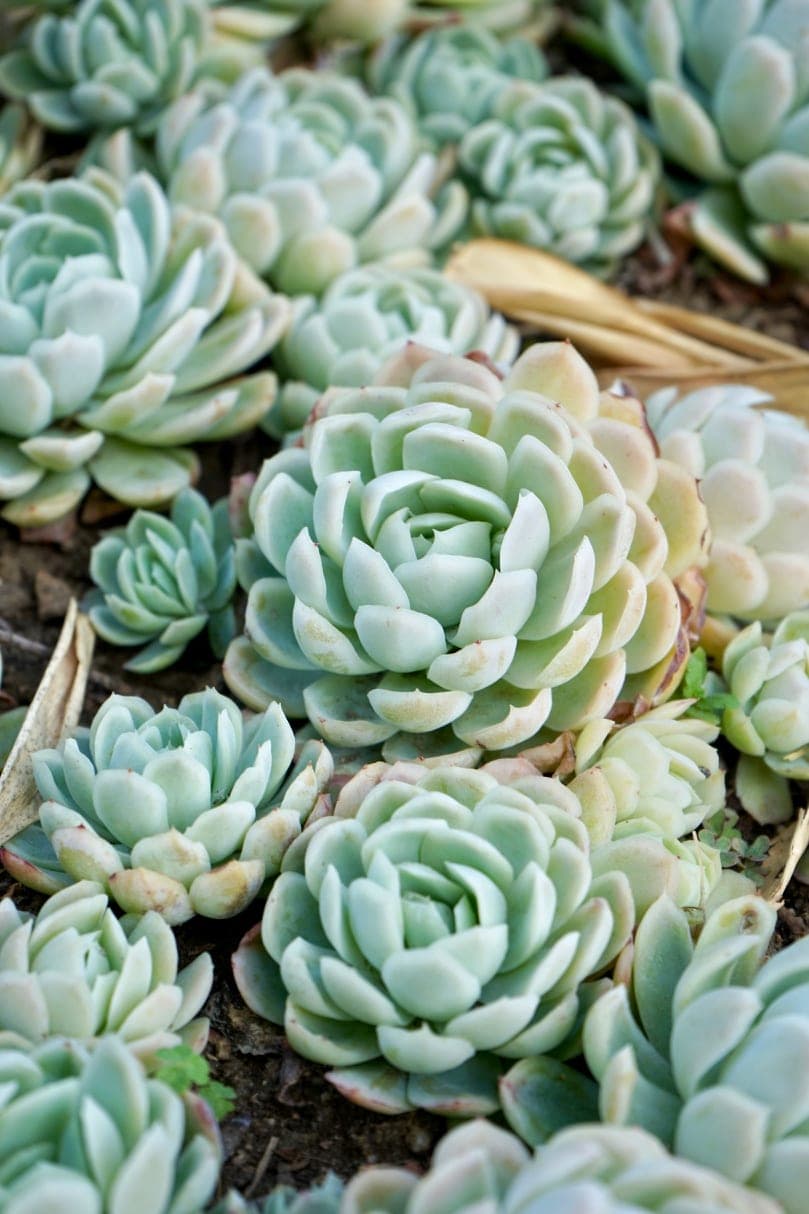
Echeveria is the classic rosette succulent - a tight, geometric whorl of plump leaves, often dusted with a pale farina you should avoid rubbing off. They ask for almost nothing except sun, and the most common way to kill one is kindness with the watering can.
Water only when the soil is bone dry, and always at the soil line - water sitting in the rosette is the fast route to rot. Stretched, reaching growth (etiolation) is the plant begging for more light; move it to your sunniest sill and the new growth will tighten back up.
Needs full sun on a windowsill. In low light the rosette stretches and the tight form collapses.
Soak the soil, then leave it bone dry before watering again
Feed with a dilute succulent fertiliser
Watch for stretching - a sign it needs more light
Check for mealybugs nestled between the leaves
Repot into gritty cactus mix when the rosette outgrows its pot