
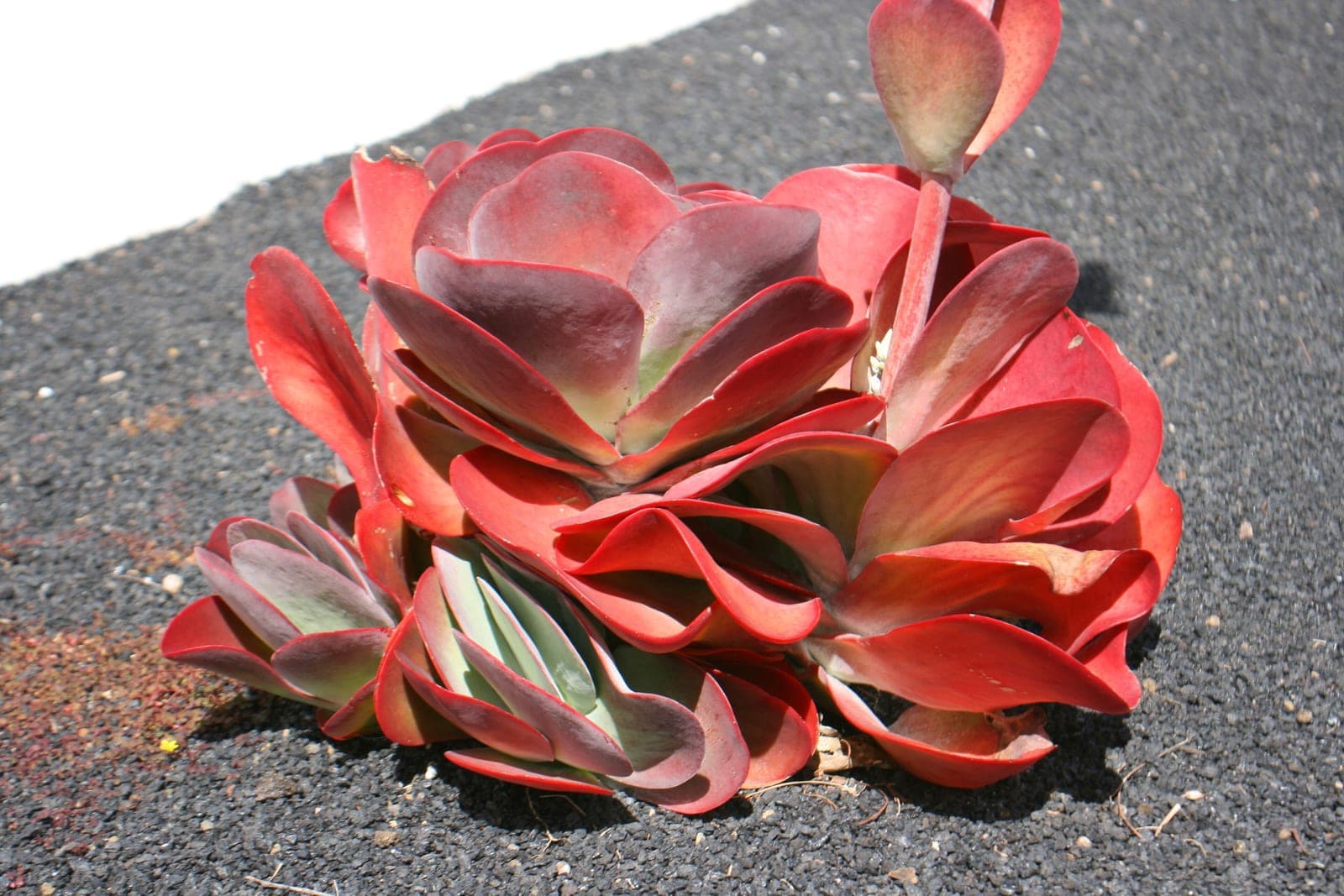
Paddle Plant / Flapjack
The paddle plant stacks broad, flat leaves like a pile of dropped flapjacks, and in strong sun the edges flush a deep coral-red - the whole reason to grow it. Give it as much direct light as a windowsill allows; without it you get the shape but none of the colour.
Treat it like any other succulent: hard sun, gritty soil, water only when fully dry. One quirk - it's monocarpic, so a mature rosette will eventually throw a tall flower spike and then die, but it leaves a ring of pups behind to carry on. Note this one is genuinely toxic to pets, unlike most succulents.
Bright direct sun brings out the red blush on the leaf edges; shade keeps it flat green.
Water only once the soil is completely dry
Feed lightly with succulent fertiliser
Expect the parent rosette to flower then die - keep the pups
Check for mealybugs and aphids on new growth