
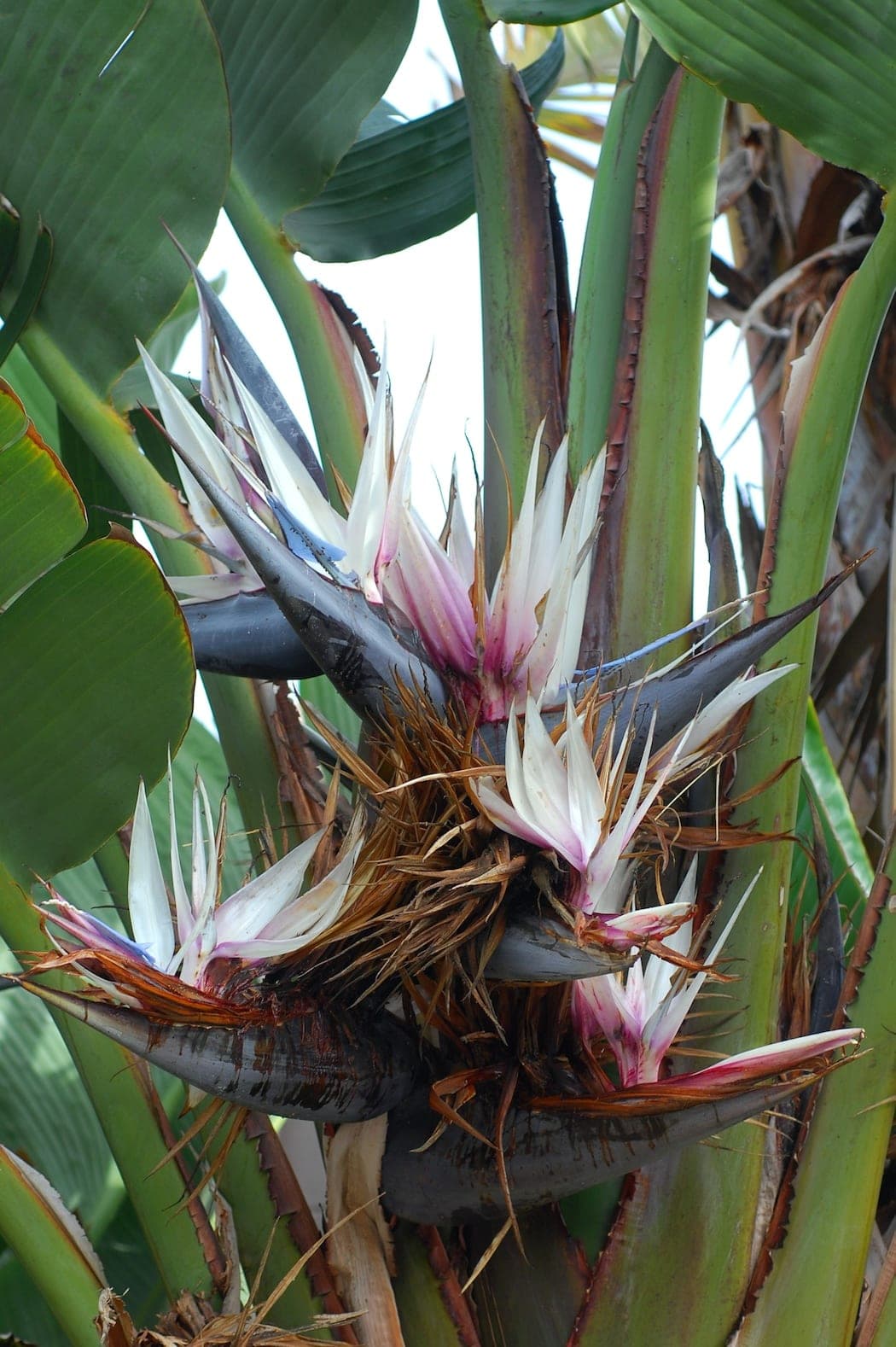
Bird of Paradise
The giant white bird of paradise is the plant people buy for the leaves, not the rare indoor flower. Give it the sunniest corner in the house and it rewards you with broad, banana-like paddles that turn a room tropical. Starve it of light and it sulks - leggy, pale, and flowerless.
The famous splits in older leaves are normal, not damage: the plant tears its own foliage so wind (or your hallway draft) passes through without shredding it. Wipe the big paddles every couple of weeks so they can actually photosynthesise, and turn the pot a quarter-turn when you do to keep it growing straight.
Wants the brightest spot you have - several hours of direct sun. Too little light and it will never flower and grows weak, floppy leaves.
Water once the top inch of soil is dry
Feed with a balanced houseplant fertiliser
Wipe the leaves and rotate the pot a quarter-turn
Check leaf undersides for spider mites in dry indoor air
Repot when roots crowd the pot - it flowers better slightly root-bound