
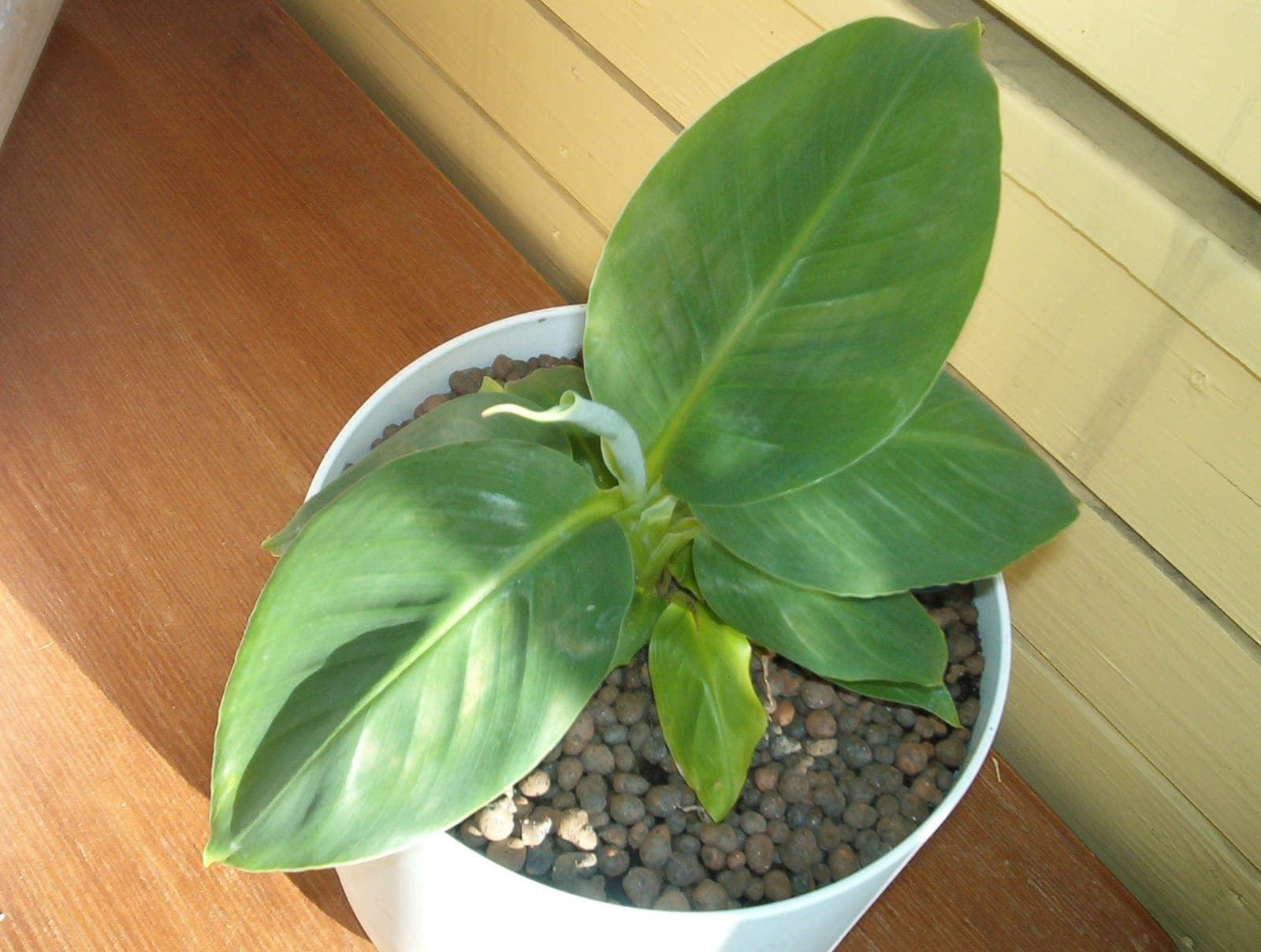
Dwarf Banana
Dwarf Cavendish is a compact cultivar of the edible banana, grown indoors for its large, paddle-shaped leaves and genuine tropical scale. It is the same variety produced commercially for fruit, but fruiting indoors is uncommon and the real draw is the foliage - each leaf can reach two to three feet long, and a well-grown specimen commands a room. Most people keep it in a sunroom, a greenhouse window, or directly in front of a large south-facing window where it can access the direct sunlight it requires.
This banana is more demanding than most houseplants. It needs the brightest indoor spot available, consistently warm temperatures above 60°F, and humidity levels of 50 percent or higher - ideally closer to 60 to 70 percent. Dry indoor air causes the leaf edges to brown and crisp quickly, and a humidifier or pebble tray placed nearby makes a measurable difference. The most common mistake is placing the plant in bright indirect light and expecting it to thrive; without direct sun it produces smaller leaves, grows slowly, and gradually weakens. Overwatering a pot that drains poorly is a close second, as the large roots are susceptible to rot in soggy, compacted soil.
The plant spreads naturally by sending up offshoots called pups from the base of the rhizome. The main stem dies back after flowering, and a healthy pup takes over as the primary growth - this is normal cycling behavior, not a sign of decline. Pups can be separated and potted once they have developed two or three leaves of their own, making propagation straightforward for anyone who wants additional plants.
Direct light indoors means positioning the plant within one to two feet of a large south- or west-facing window where it receives unfiltered sun for at least four to six hours a day; without this, leaves stay small, the plant etiolates, and vigor declines. Glass can amplify afternoon sun intensity in summer and scorch the broad leaf surfaces, so watch for pale or bleached patches and shift the plant slightly if that occurs.
Putting it outside for summer? See its garden profile - hardiness zones, bloom window, and when to bring it back in.Water once the top inch of soil is dry
Feed with a balanced houseplant fertiliser
Wipe the leaves to remove dust and check them over
Check leaf undersides for spider mites and mealybugs
Repot when roots crowd the pot
Give it the sunniest window you have; in low light it stays small and the leaves yellow