
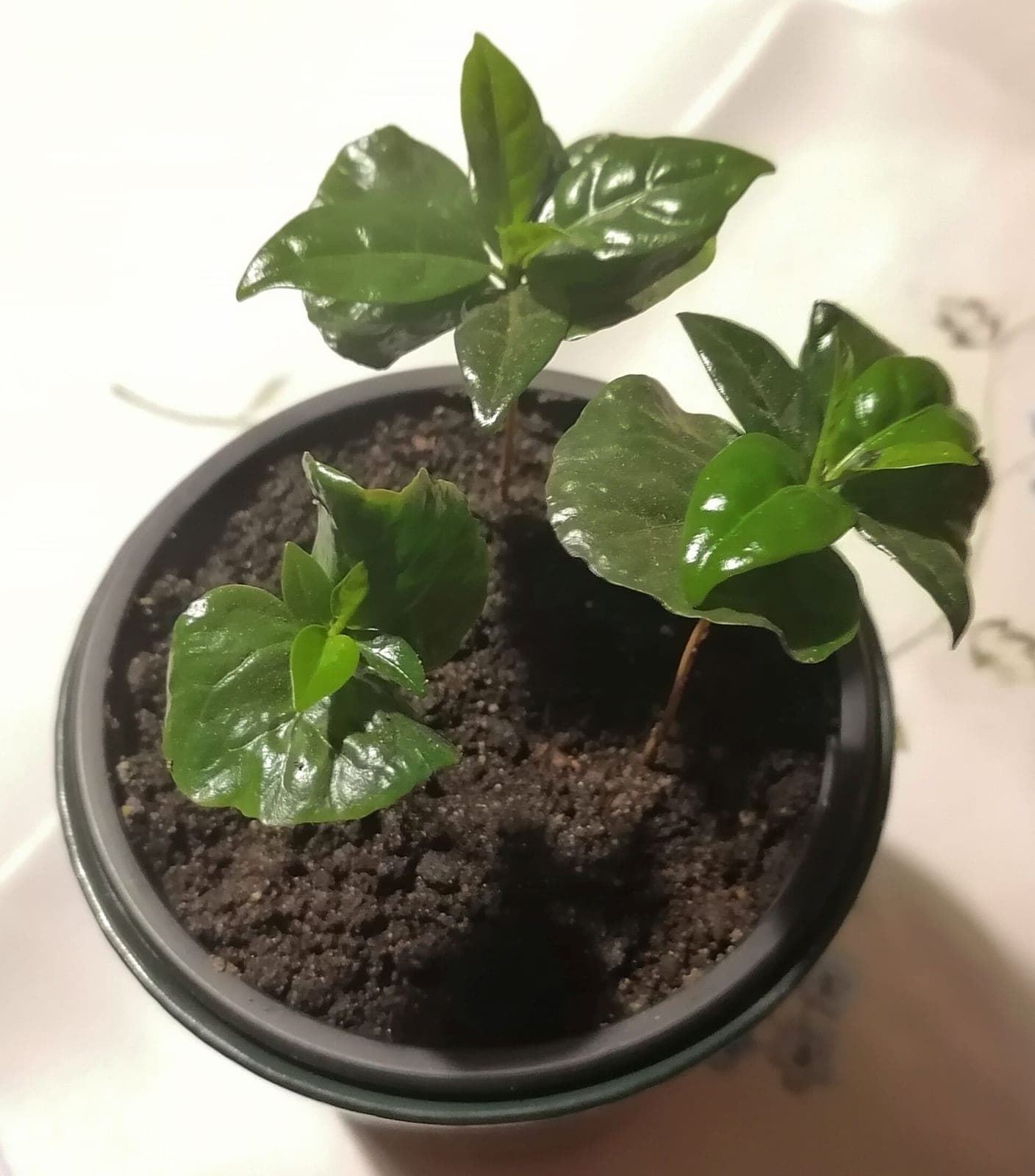
Takes 3 to 4 years and real sun; the jasmine-scented flowers are followed by cherries if you hand-pollinate.
Coffea arabica is the species behind roughly 60 percent of the world's commercial coffee supply, native to the highland forests of South Ethiopia, South Sudan, and Yemen. Grown as a houseplant, it earns its place indoors through its glossy, deep green leaves and upright form, and with enough patience and the right conditions it can produce small, fragrant white flowers followed by the red coffee cherries most people only know from a bag.
Keeping a coffee plant healthy indoors comes down to consistent humidity, steady warmth, and bright light. It wants a spot close to a window but shielded from harsh direct sun, and it needs high humidity - dry indoor air causes leaf yellowing, curling, and drop more reliably than almost any other problem. Water thoroughly but allow the top inch of soil to dry between sessions, and keep the plant away from cold drafts or air conditioning vents; temperatures below about 60°F slow growth noticeably and can cause leaf damage.
A coffee plant grown from seed or a young cutting will take several years to reach flowering size indoors, and fruiting requires sustained warmth and light that most homes can only approximate. It can be propagated from semi-ripe stem cuttings or from fresh, unroasted seeds - dried or roasted beans will not germinate.
Bright indirect light means strong ambient light without extended direct sun hitting the leaves; a spot a foot or two back from a south- or west-facing window is ideal. Too little light produces slow, leggy growth and pale foliage, while harsh afternoon sun will scorch the leaves brown.
Water when the top inch of soil is dry; never let it sit in water
Feed with a diluted balanced houseplant fertiliser
Raise the humidity with a pebble tray or humidifier, or group plants together
Check leaf undersides for spider mites and mealybugs
Repot when roots crowd the pot
Pinch the tips to keep it bushy and compact