
The daisy flowers come in autumn from a plant kept bone dry all summer; watering before then rots it.
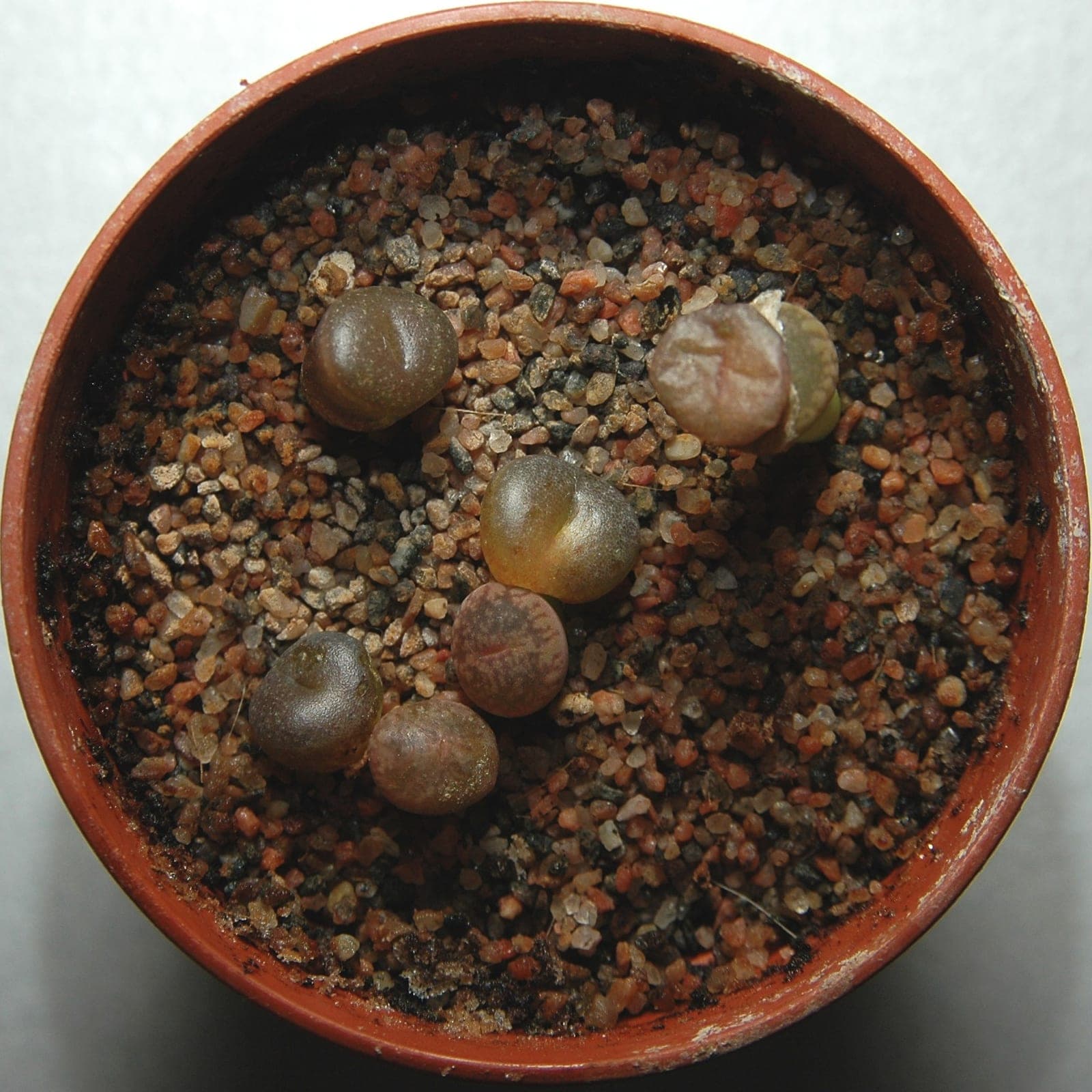
Lithops are a genus of dwarf succulents native to the rocky, mineral-poor soils of southern Africa, where they grow partially buried with only their leaf tips exposed. Each plant body is made up of a single fused pair of swollen leaves packed with water-storing tissue, and their mottled, stone-like coloration is functional camouflage that evolved to deter herbivores. People grow them indoors because they are genuinely unlike anything else on a windowsill - compact enough to keep a dozen varieties in a small tray - and because they produce surprisingly bright, daisy-like flowers directly from the central fissure between the leaves.
Lithops need the most intense light a home can offer: a south- or west-facing window with several hours of unobstructed direct sun each day. They want lean, extremely fast-draining soil, low humidity, and almost no water by houseplant standards. The single most common way people kill them is watering on a fixed schedule without accounting for the annual shedding cycle. Each year a new leaf pair forms inside the old one, and during that period the plant must receive no supplemental water - the developing leaves draw all the moisture they need from the collapsing outer pair. Adding water at this stage causes the outer leaves to rot rather than dry down, and the new growth typically dies along with them.
A mature Lithops body splits open once a year to release the fresh leaf pair growing within, and a healthy plant kept in strong indoor light will often produce a flower from that same central fissure. Clumps develop slowly as the plant multiplies over years. New plants are most reliably started from seed, which is widely available and germinates readily in a warm, bright spot on a barely moist gritty surface.
Direct sun for at least four to five hours a day from a south or west window is the practical minimum; without it, Lithops etiolate - stretching pale and weak - and rarely survive long indoors. Intense heat radiating through glass in summer can bleach or pucker the leaf tops, so monitor the plant if it sits flush against a hot pane.
Water sparingly once the soil has been dry for weeks, and only in its growing months
Give it the sunniest spot you have; weak light makes it stretch
Repot only when crowded, into very gritty mix
Never water while the old leaf pair is splitting and shrinking: the new pair is feeding on it