
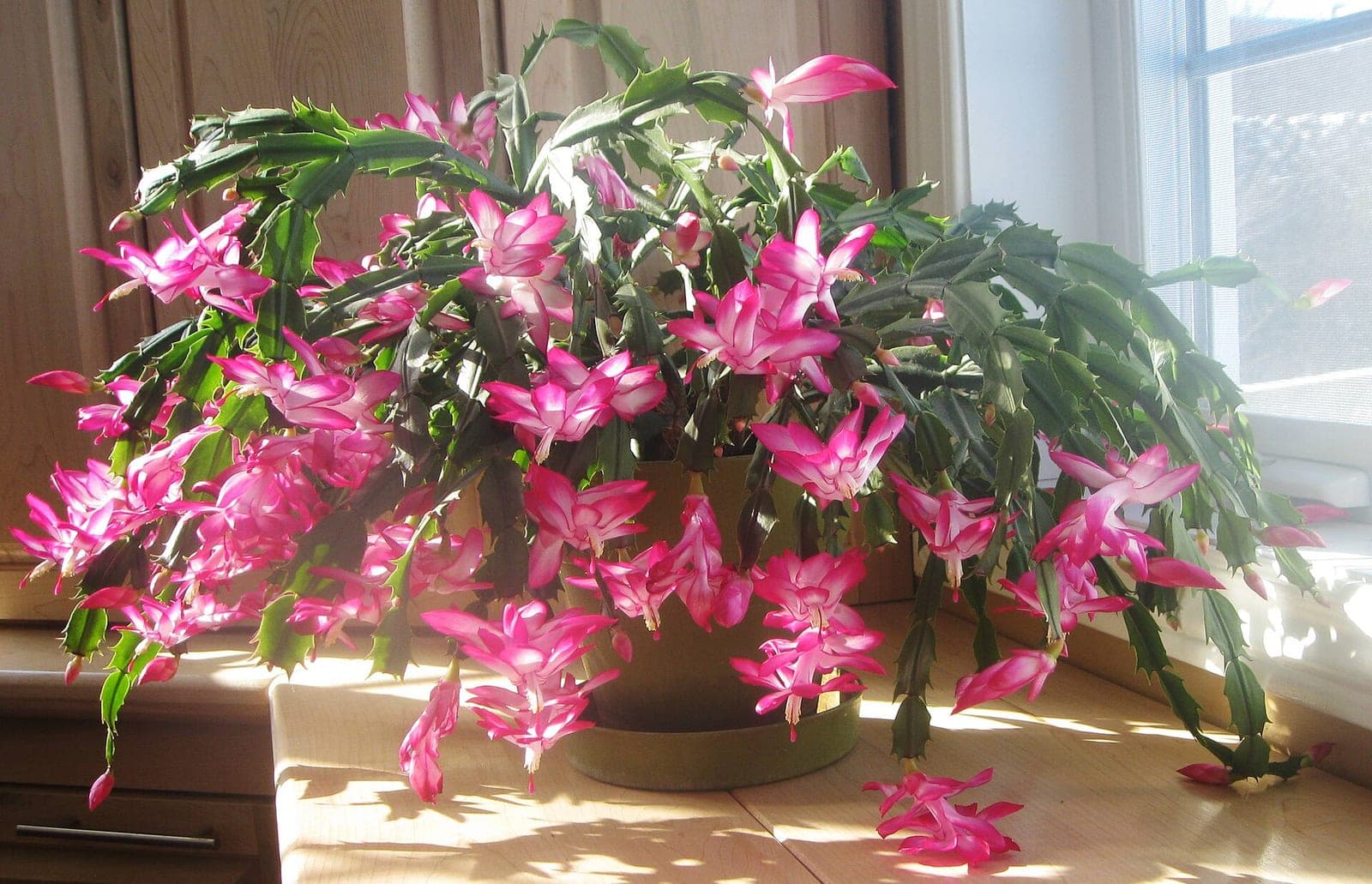
Christmas Cactus
To encourage bloom: Six weeks of long nights (12 to 14 hours of real dark) and cooler temperatures from late September set the buds.
Once buds show, leave it where it is and water a little less; moving it, a hot draft, or a dry spell drops them.
Schlumbergera × buckleyi is a hybrid cactus native to the coastal cloud forests of southeastern Brazil, where it grows as an epiphyte on trees and rocks in shady, humid conditions - nothing like the sun-baked desert most people picture when they hear the word cactus. Indoors, it is grown for its arching, segmented stems and the tubular flowers that emerge from the stem tips in shades of red, pink, white, and purple. It is one of the longest-lived common houseplants, with well-kept specimens surviving for decades.
The forest origin of this plant shapes every aspect of its care. It needs more consistent moisture than a desert cactus, a fast-draining but somewhat moisture-retentive potting mix, and protection from harsh direct sun. The most common mistake is treating it like a succulent and withholding water: prolonged drought causes the stem segments to shrivel, and moisture stress just before or during flowering triggers bud drop. Water regularly during active growth and ease off only when the plant is clearly resting in mid-winter.
The trailing stems lengthen steadily over the years, making a hanging basket or an elevated shelf the ideal home for a mature plant. Because the plant flowers on new growth at the tips of the stems, keeping it slightly root-bound rather than over-potted tends to encourage a better display. Cuttings root easily, making it a common pass-along plant.
Bright indirect light means a position close to a window where direct sun rays never land on the stems - an east-facing window or a spot set back from a south or west window both work well. Too little light produces pale, elongated segments and reluctant flowering; prolonged direct sun scorches the stem tips and causes bleaching or browning.
Water when the top inch of soil is dry; let it drain well
Feed with a balanced houseplant fertiliser
Check for mealybugs and scale along the stems
Repot only when it is crowded; it likes a snug pot
To set buds, give 12–14 hours of darkness and cool nights (about 55°F) for 6 weeks