
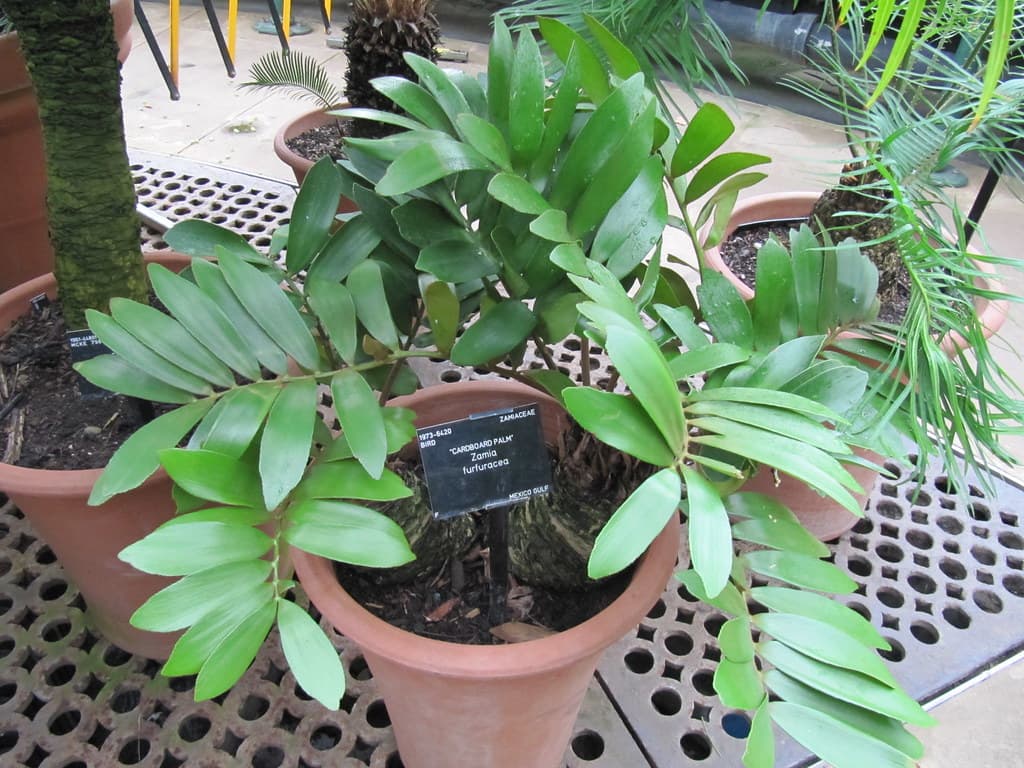
Cardboard Palm
The cardboard palm (Zamia furfuracea) is a cycad from the coast of Veracruz in eastern Mexico, not a true palm. It grows from a short, thick, partly buried stem and sends out arching fronds of stiff, leathery, blunt-tipped leaflets with the texture of heavy card, which is where the common name comes from. New fronds emerge covered in a rusty, felt-like fuzz (the species name means scurfy) before the leaflets harden and turn glossy dark green. It is one of the toughest and most architectural foliage plants for a bright room.
Indoors, the two things that matter are light and water. Give it a bright spot and let the soil dry almost completely between drinks; overwatering and a wet crown are the usual causes of yellowing and rot. It grows slowly, produces only a few new fronds a year, and does not need frequent repotting. It is also one of the more toxic common houseplants, so it belongs well away from pets and children. Outdoors it is only reliably hardy in the warmest zones, so in most of the country it lives in a pot indoors and can summer outside in the shade once nights stay warm.
Bright indirect light, or a few hours of gentle direct sun, keeps the leaflets deep green and the plant compact. In dim rooms it stalls and pushes out few new fronds, and it tolerates more direct sun than most houseplants once it has been acclimated slowly.
Water once the soil has dried out almost completely
Feed with a balanced houseplant fertilizer at half strength
Wipe the leaflets to remove dust, and rotate the pot for even growth
Check the fronds and crown for scale and mealybugs, and for yellowing that signals overwatering
Repot only when the stem crowds the pot, into fast-draining mix and a pot only slightly larger
Keep pets and children away: every part of this plant is highly toxic