
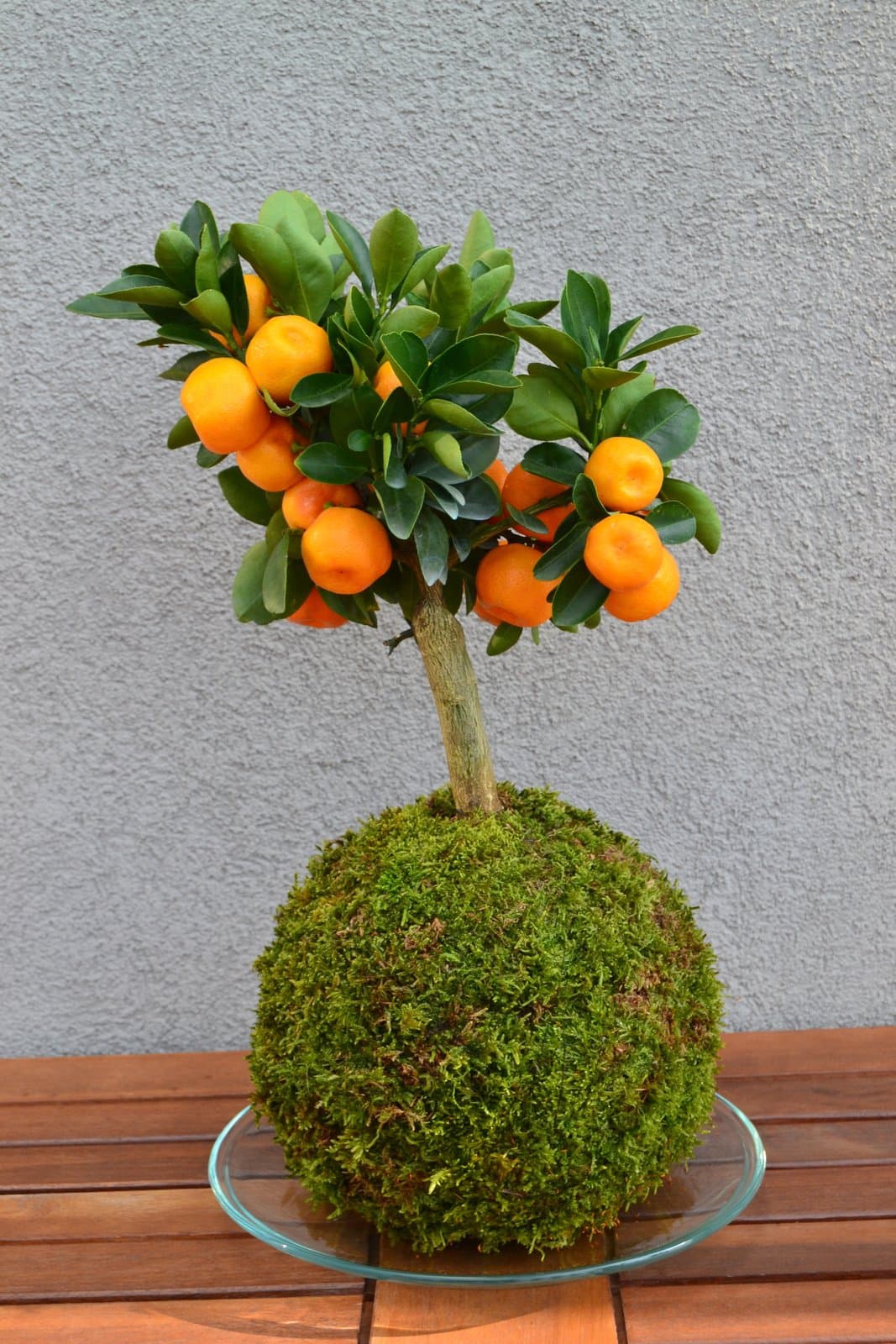
Calamondin Orange
Flowers and fruit overlap most of the year once settled; hand-pollinate with a soft brush so the flowers set.
Calamondin Orange (Citrus × microcarpa), also called calamansi or Philippine lime, is a compact citrus hybrid originating in the Philippines and widely cultivated across Southeast Asia and southern China. Indoors, it is grown for its glossy evergreen foliage, intensely fragrant white flowers, and small orange fruit that can appear simultaneously on the same plant. It functions as a living centerpiece for anyone willing to meet its high light demands.
The single most important factor for this plant is direct sun. Without a minimum of four to six hours of unobstructed sunlight each day, the plant will drop leaves, fail to flower, and produce no fruit. A south-facing window is ideal; a bright west-facing window can work in warmer months. Watering must be consistent but never excessive - citrus roots are sensitive to both drought and sitting in water, so well-draining soil and a pot with drainage holes are non-negotiable. The most common indoor failure is placing the plant in a bright room that still falls short of true direct light, then overcompensating with fertilizer when the plant stagnates.
Calamondin stays manageable in a container, typically reaching two to four feet indoors with occasional pruning. It can be propagated from semi-hardwood stem cuttings taken in late spring or summer. One practical quirk: indoor plants often carry ripe fruit, open flowers, and new buds at the same time, which makes them unusually ornamental but also demanding - a fruiting plant needs consistent feeding with a citrus-formulated fertilizer during the growing season.
Direct light means an unobstructed south or west-facing window where the sun falls on the foliage for at least four to six hours daily. In too little light the plant becomes leggy, sheds leaves, and will not fruit; in harsh summer sun magnified through glass, the leaves can scorch, so thin shade during peak afternoon hours may help in very hot exposures.
Water once the top inch of soil is dry
Feed with a citrus fertiliser
Wipe the leaves and check for scale
Trim to keep it in scale and remove crossing branches
Repot when roots crowd the pot
Keep fruit-bearing plants in the brightest window and out of cold drafts; fruit holds for months