
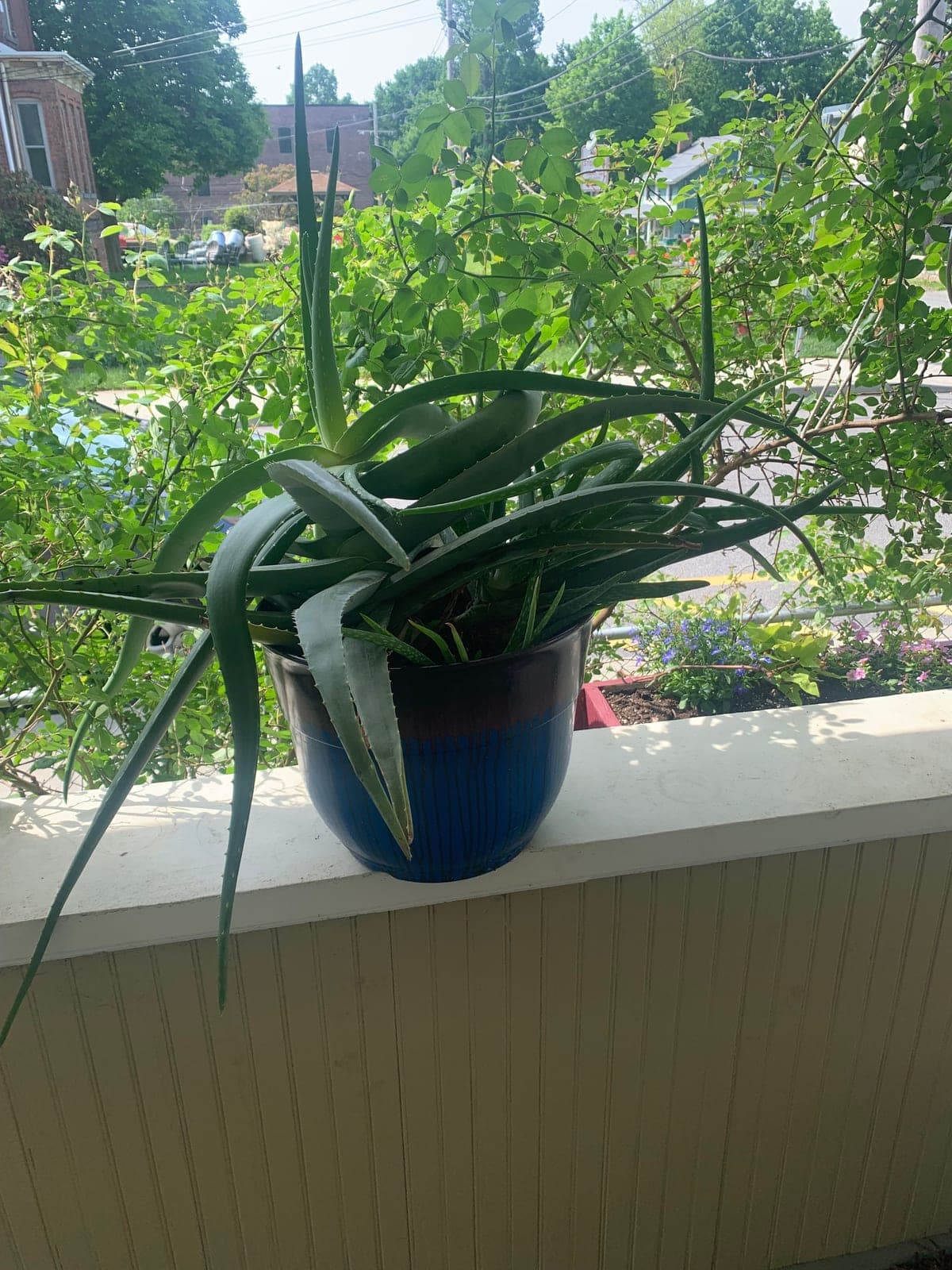
Aloe vera is the medicine cabinet on a windowsill - snap off a lower leaf and the clear inner gel soothes a burn or sunburn immediately. That practical reputation has made it one of the most commonly grown houseplants in the world, but it's worth growing for the architectural shape alone: thick, serrated, upward-pointing leaves in a tight rosette.
Treat it like the desert plant it is: full sun, gritty fast-draining soil, and water only when the soil is completely dry. The gel-filled leaves store water so effectively that overwatering is by far the greater risk. Over time it produces a ring of pups around the base that you can separate into new plants. Mature aloes may push a tall flower spike, though indoor blooms are rare without very strong sun.
Needs several hours of direct sun. In lower light it stretches, pales, and the gel-filled leaves thin out.
Water only when the soil is completely dry
Feed with a dilute succulent fertiliser
Soft, translucent leaves mean overwatering; wrinkled leaves mean underwatering
Remove offsets (pups) from the base to pot on or share
Repot when pups crowd the pot or roots emerge from the base