
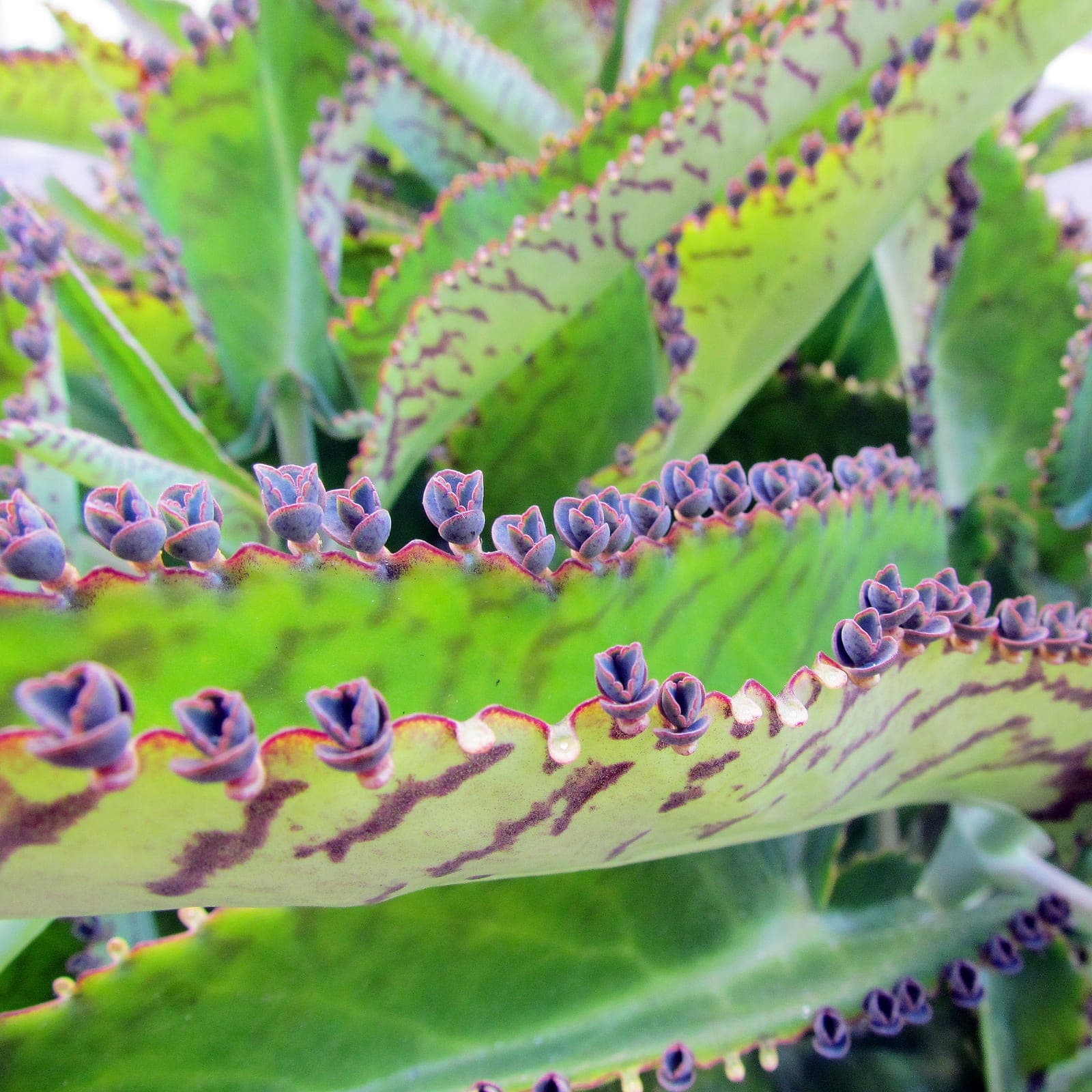
Mother of Millions
Mother of millions earns its name honestly: tiny, fully formed plantlets line the scalloped edges of every leaf and drop off constantly, rooting wherever they land. It's one of the most prolific propagators in the plant world, and a single stem will colonise a pot - or a garden - if you let it.
Indoors that self-seeding energy is easily managed: keep it in a pot, pull the dropped plantlets before they root, and enjoy the sculptural stems of mottled, elongated leaves. The upright habit and bold patterning make it a striking specimen for a sunny shelf. Like its Kalanchoe relatives (the paddle plant, flaming Katy), it's monocarpic - the main stem eventually throws a tall flower spike and dies - but the ring of plantlets carries on. Note the toxicity, which is genuinely serious and puts it in a different category from most succulents.
Full direct sun keeps the leaves upright and compact; in lower light the plant stretches toward the window and the mottled markings fade.
Water only when the soil is completely dry
Feed lightly with a succulent fertiliser
Remove leaf-edge plantlets regularly to control spread
Expect the parent stem to flower then die - keep the pups
Check for mealybugs in the leaf axils