
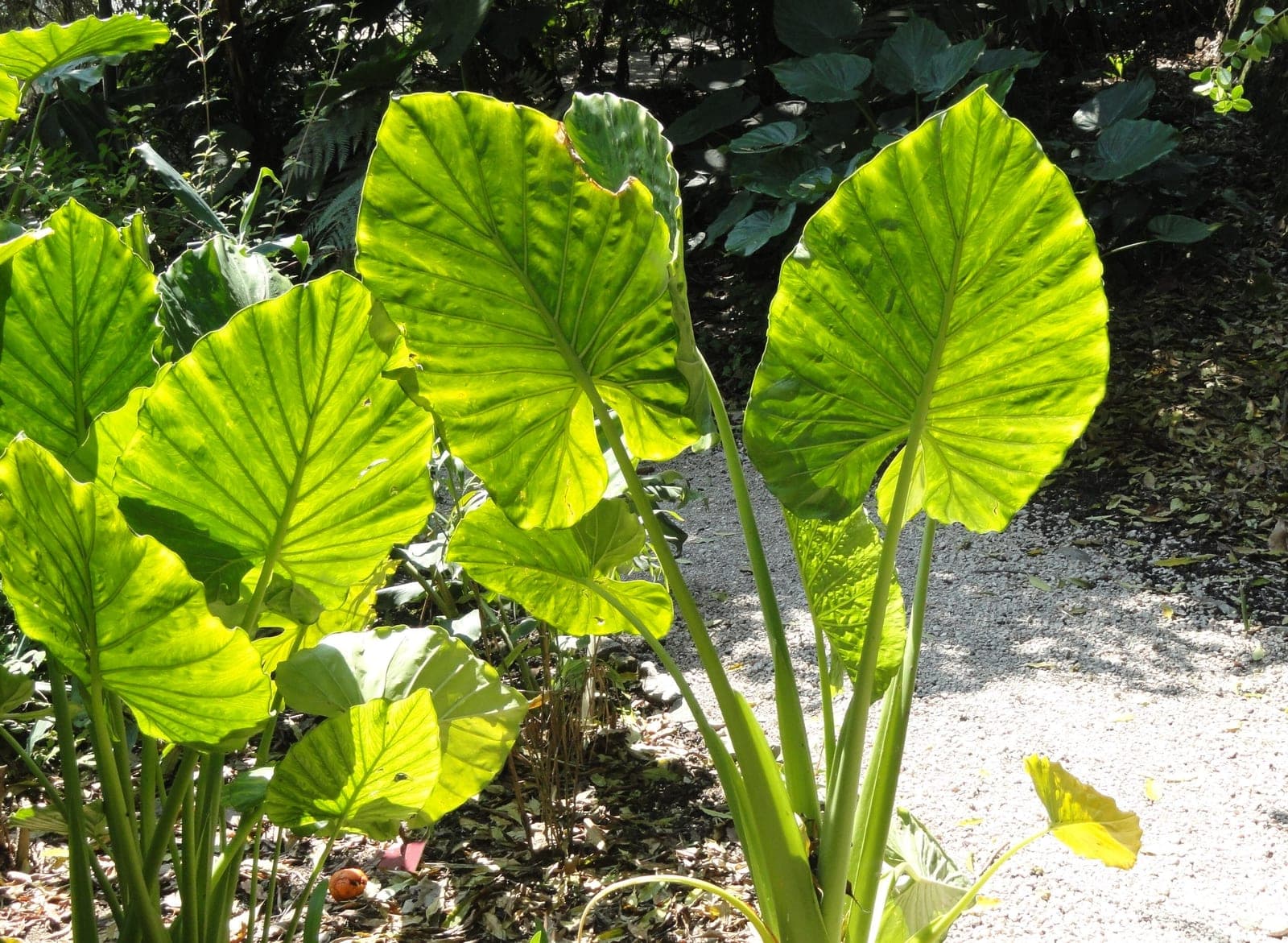
Alocasias - elephant ears, jewel alocasias, the dramatic Polly and zebrina - are grown for their bold, sculptural, often metallic or deeply veined leaves. They're spectacular and unapologetically demanding: they want warmth, high humidity, bright indirect light, and a watering touch that keeps them lightly moist but never cold and soggy.
They're also prone to a sulk that alarms new owners: dropping leaves or going fully dormant, especially as the days shorten. Often the corm is still alive underground, so keep it lightly moist, warm, and patient and it usually returns. Spider mites adore them in dry indoor air, so inspect the leaf undersides regularly. Not a beginner plant, but a thrilling one.
Bright indirect light; some morning sun is fine. Too little light brings weak, droopy growth.
Keep lightly moist; water when the top inch dries
Wipe leaves and keep humidity high; check undersides for mites
Feed with a balanced fertiliser
Leaf drop or dormancy is often recoverable - keep the corm warm and barely moist
Divide offsets and refresh soil