
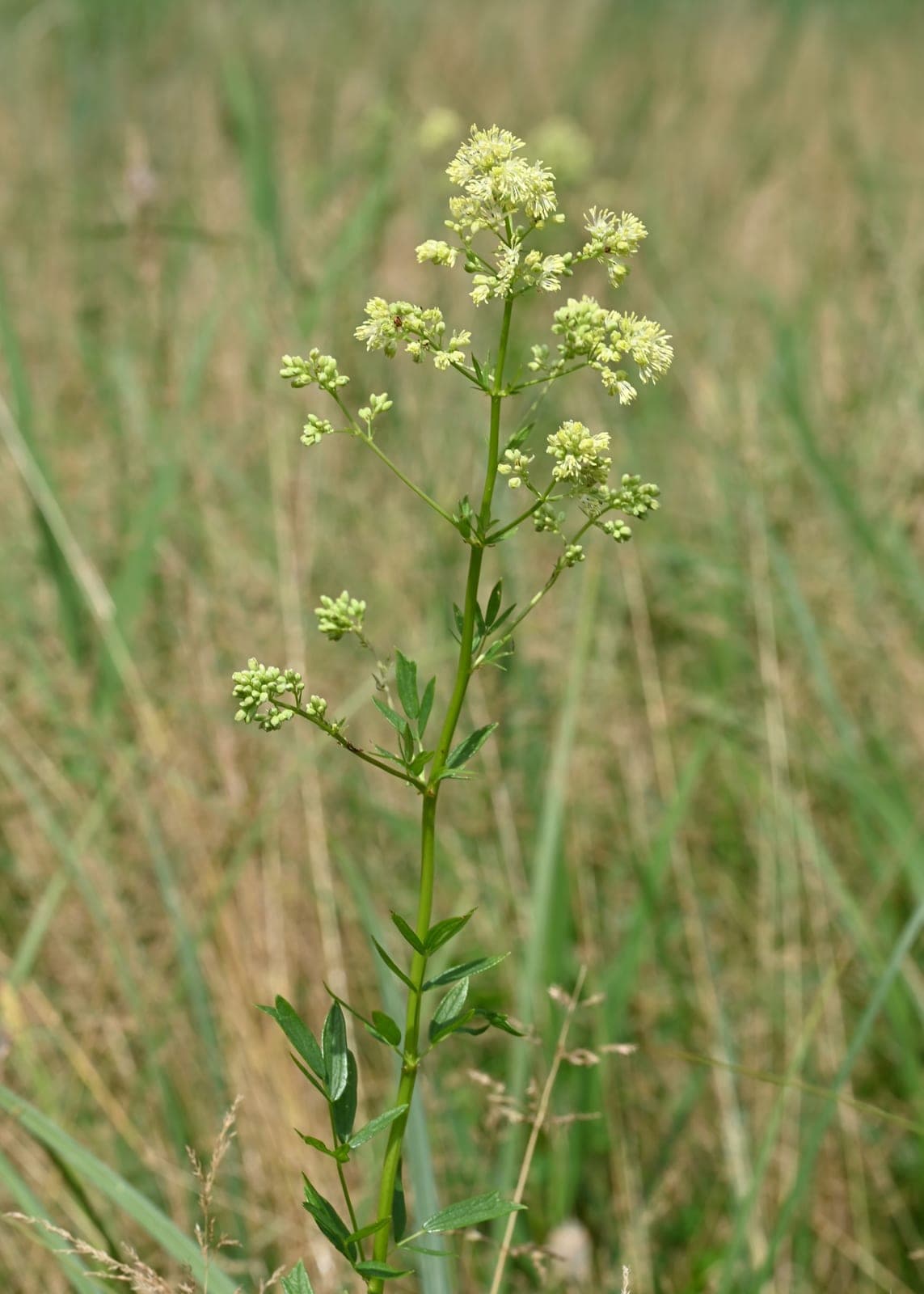
Thalictrum flavum is a tall herbaceous perennial native to riverbanks, wetlands, and damp meadows across temperate Eurasia and North Africa. It carries finely divided, blue-green foliage resembling a large maidenhair fern, topped in early to midsummer by dense, fluffy clusters of pale yellow, lightly fragrant flowers. The subspecies glaucum, with intensely glaucous leaves, is the form most widely offered in ornamental horticulture and can reach five feet in rich, moist ground.
Plants establish best in consistently moist, fertile soil with a mulch layer to hold moisture through summer. They spread slowly by rhizome into stable clumps that rarely need staking in sheltered sites. Divide every three to four years in early spring to maintain vigor. Seeds require a cold period to break dormancy; direct sow in autumn for spring germination, or cold-stratify indoors for six weeks before a late-winter sowing. Yellow meadow rue is effective at the back of a border alongside other moisture-tolerant perennials and tolerates the dappled shade of open woodland edges.
The roots contain berberine and related alkaloids common to Ranunculaceae. Historically, the roots were used to produce a yellow textile dye within parts of its Eurasian native range. The folk name 'poor man's rhubarb' reflects historical use of the leaf stalks in some regions, though the plant is not a food crop and should not be treated as one.
Powdery mildew
White or grey powdery coating on leaves - usually starting on older growth in humid conditions or when nights cool.
Improve air circulation by thinning plants. Apply neem oil or potassium bicarbonate spray at first sign. Avoid overhead watering.
Rust
Orange to brown raised pustules on the undersides of leaves, with yellow spotting on the upper surface. Heavy infections cause leaves to yellow and drop.
Remove and destroy infected leaves. Avoid overhead watering and improve air circulation. Apply a sulfur or copper-based fungicide if it spreads. Clear plant debris in fall.
Root rot
Plants wilt, yellow, and stunt even in moist soil; lower stems and roots turn brown, soft, and mushy and the plant may collapse. Most common in heavy, wet, or poorly drained ground.
Improve drainage and stop overwatering, and never plant too deep. Lift and destroy badly affected plants along with the soil around the roots. Grow in raised or free-draining beds to prevent it returning.