
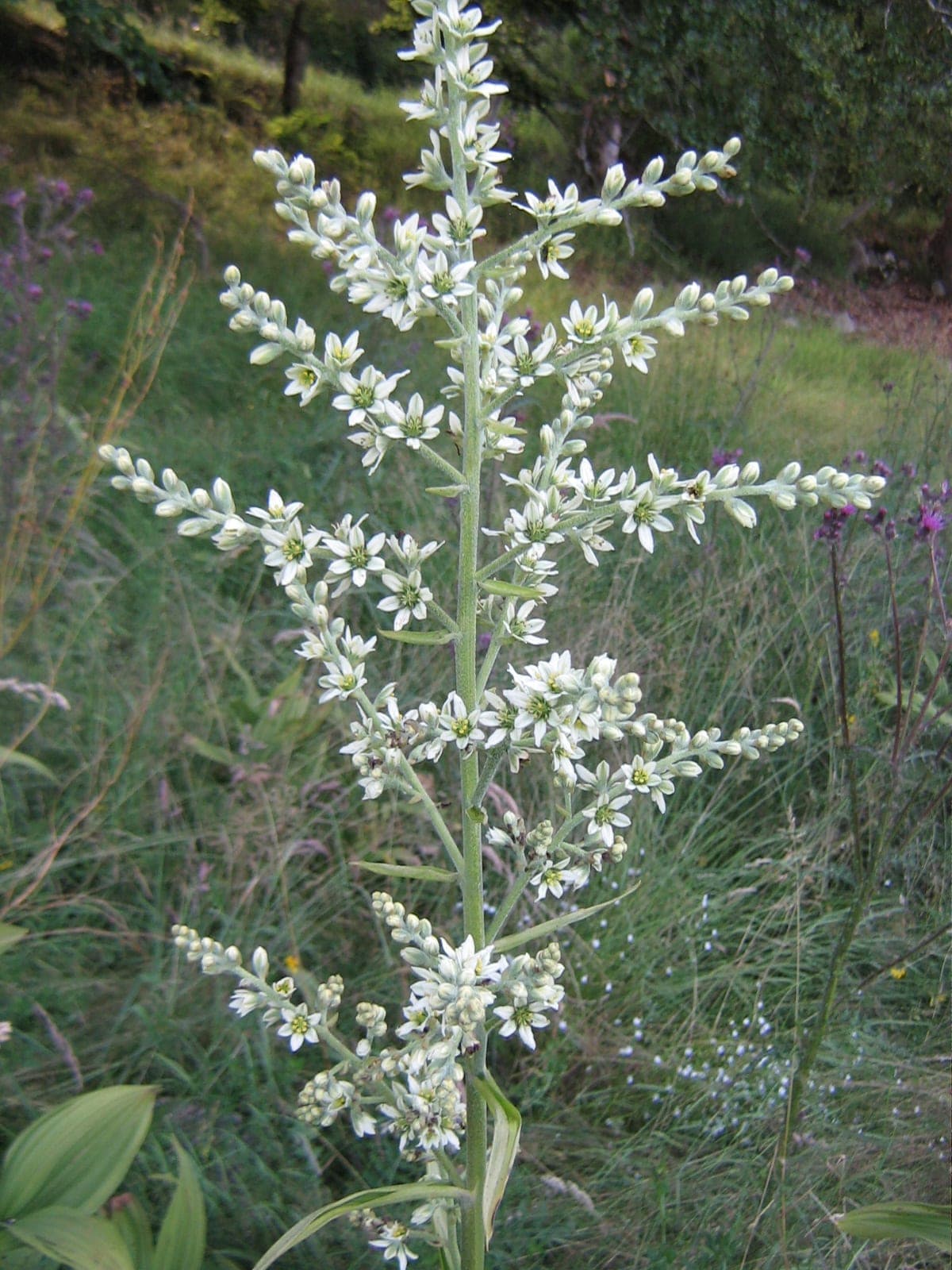
Veratrum album is a tall, clump-forming perennial native to mountain meadows and subalpine zones across Europe and western Asia. It produces broad, deeply pleated leaves arranged in dramatic whorls from ground level, making it one of the boldest foliage plants available to temperate gardeners. All parts of the plant are severely toxic and must be kept away from children and livestock.
Established plants grow slowly, often taking several years before sending up tall flowering stems. The species thrives in consistently moist, humus-rich soil with adequate drainage and tolerates cold to zone 3a. In garden settings it performs best in partial shade, though it can handle more sun where moisture is reliable and summer temperatures stay cool. A deep mulch layer helps retain soil moisture and buffer the crown through hard winters. The large pleated leaves closely resemble those of wild ramp and similar edibles; clear permanent labeling is essential to prevent dangerous misidentification.
All parts of the plant contain steroidal alkaloids including jervine and cyclopamine. European folk medicine used the plant historically to treat fever, rheumatism, and hypertension, though its toxicity makes any internal use extremely hazardous. Cyclopamine has attracted modern pharmacological research as an inhibitor of the Hedgehog signaling pathway with implications in cancer biology. The plant was also used historically as an agricultural insecticide.
Botrytis (grey mould)
Grey fuzzy mould on petals and stems, worst in cool wet conditions.
Remove affected parts immediately. Improve air circulation. Avoid overhead watering. Apply copper fungicide if severe.
Root rot
Plants wilt, yellow, and stunt even in moist soil; lower stems and roots turn brown, soft, and mushy and the plant may collapse. Most common in heavy, wet, or poorly drained ground.
Improve drainage and stop overwatering, and never plant too deep. Lift and destroy badly affected plants along with the soil around the roots. Grow in raised or free-draining beds to prevent it returning.
Fungal leaf spot
Brown or purplish spots on the leaves, often ringed with a yellow halo, that spread and merge in warm, humid, or wet weather; heavily spotted leaves yellow and drop early.
Pick off spotted leaves and clear fallen debris to remove overwintering spores. Improve air circulation by thinning, and water at the base so foliage dries quickly. If it persists, apply a copper- or sulfur-based fungicide at the first sign.