
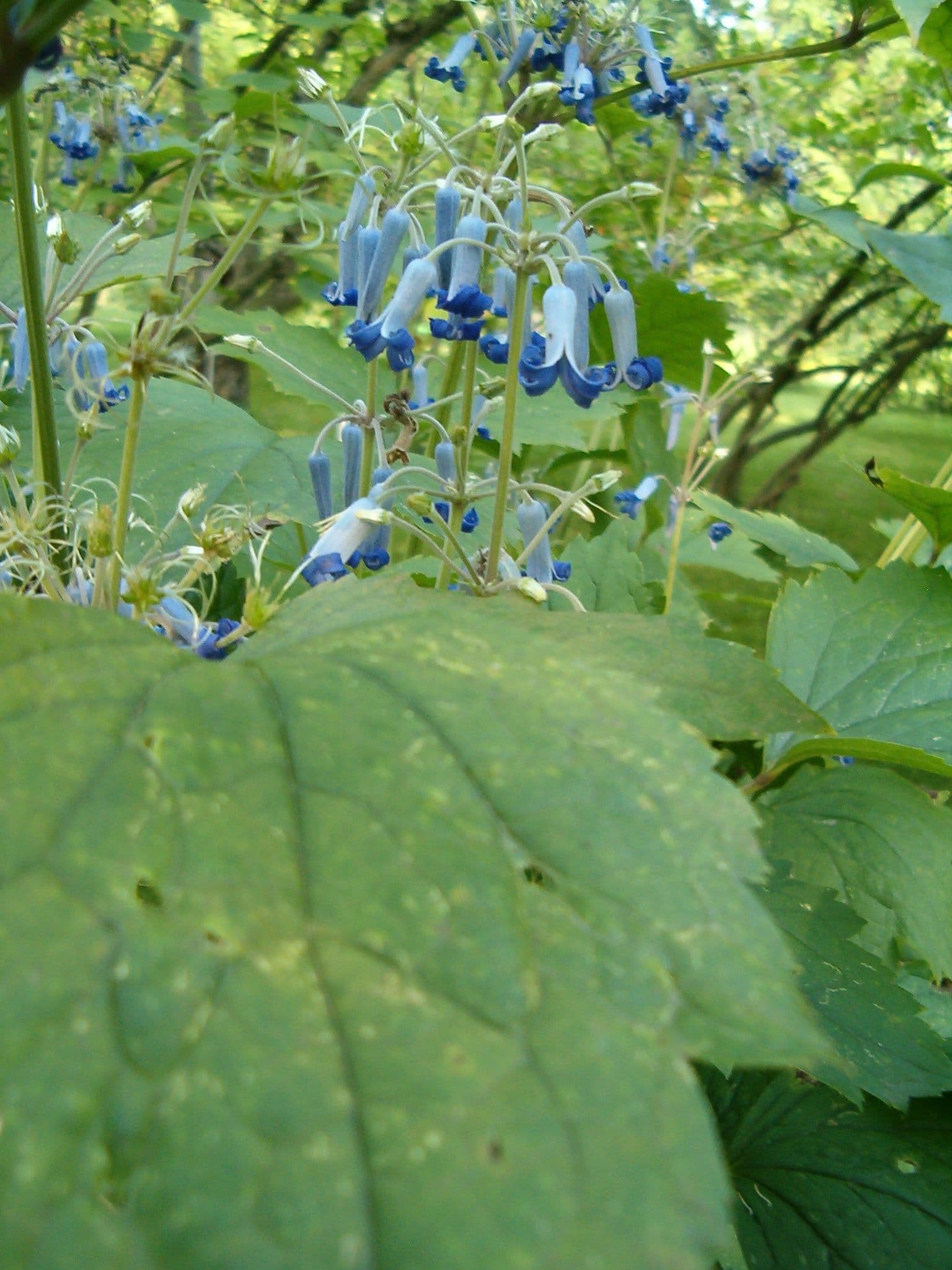
Tube clematis is a scrambling subshrub from central and northern China that behaves nothing like a typical clematis vine. It forms a mounding clump of bold, hogweed-like leaves and produces dense clusters of small, hyacinth-scented tubular blue flowers from midsummer into fall - a window when few other hardy perennials are at peak.
Unlike climbing clematis, it needs no trellis. Stems sprawl to 2–4 feet and lean naturally against neighboring plants or can be supported by a low stake. It dies back to the crown each winter and re-emerges reliably even in zone 3. A generous mulch over the crown through the first winter aids establishment. It tolerates clay and performs best at neutral to slightly alkaline pH - notably more forgiving than most clematis relatives.
The fragrant late-season flowers draw bumblebees and other native pollinators at a time when forage is thinning. Silky, ornamental seed heads follow and persist into autumn.
Not sure when to prune this one? Read the Clematis Growing Guide - the three pruning groups and when to cut each.Clematis Wilt
Sudden wilting and blackening of stems and leaves, often just before flowering. Whole shoots collapse rapidly while roots remain healthy. Caused by the fungus Calophoma clematidina.
Cut affected stems back to ground level and dispose of them, not in compost. Water at the base to keep foliage dry, improve air circulation, and plant the crown deep so the plant can regenerate from below soil. Apply a fungicide if the problem recurs.
Powdery mildew
White or grey powdery coating on leaves - usually starting on older growth in humid conditions or when nights cool.
Improve air circulation by thinning plants. Apply neem oil or potassium bicarbonate spray at first sign. Avoid overhead watering.
Root rot
Plants wilt, yellow, and stunt even in moist soil; lower stems and roots turn brown, soft, and mushy and the plant may collapse. Most common in heavy, wet, or poorly drained ground.
Improve drainage and stop overwatering, and never plant too deep. Lift and destroy badly affected plants along with the soil around the roots. Grow in raised or free-draining beds to prevent it returning.
Fungal leaf spot
Brown or purplish spots on the leaves, often ringed with a yellow halo, that spread and merge in warm, humid, or wet weather; heavily spotted leaves yellow and drop early.
Pick off spotted leaves and clear fallen debris to remove overwintering spores. Improve air circulation by thinning, and water at the base so foliage dries quickly. If it persists, apply a copper- or sulfur-based fungicide at the first sign.