
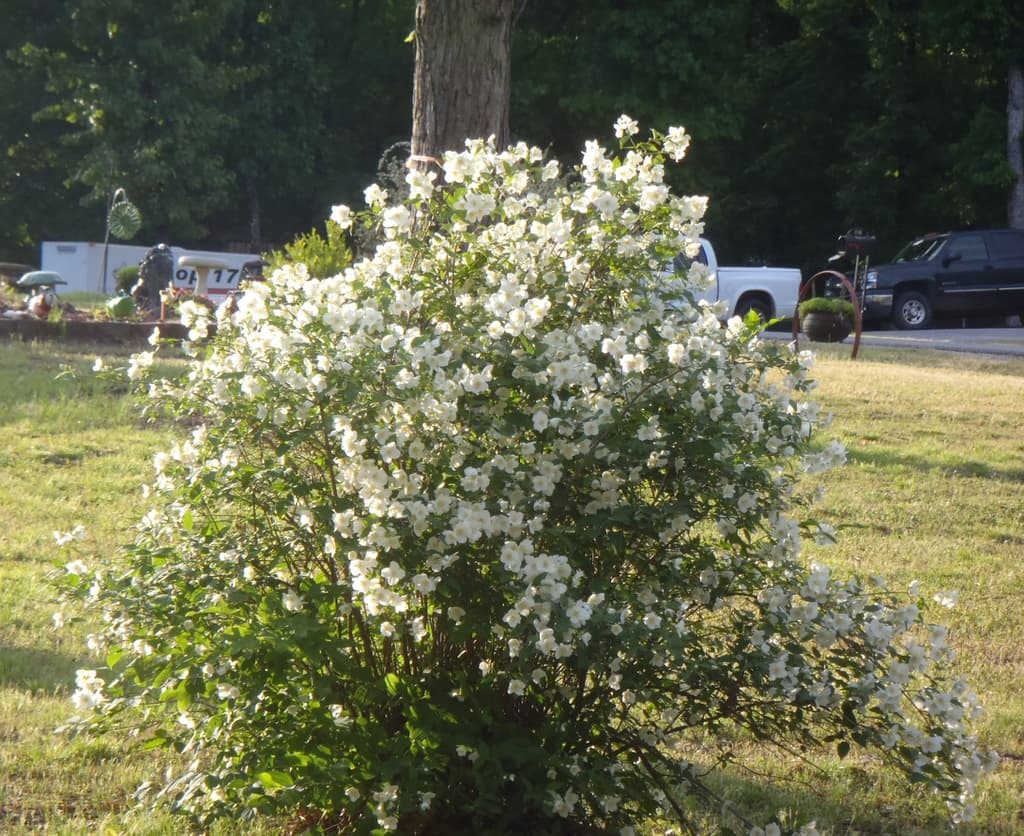
Philadelphus coronarius is a deciduous shrub from southern Europe and the Caucasus, grown for the cloud of creamy white, four-petaled flowers it carries in late spring. The scent is the draw: sweet, citrusy, and strong enough to fill a garden on a warm evening, which is where the common name comes from. It has been a cottage-garden staple for centuries, and it has naturalized in parts of eastern North America.
It is an easy, forgiving shrub. It tolerates clay, loam, and sand as long as drainage is decent (soil pH from acidic to neutral, about 6.0 to 8.0), handles part shade, and needs little water once established. Plants spread by suckers, which can also be dug and replanted, and layering or stem cuttings work for propagation. The flowers open on the previous season's wood, so pruning timing matters: cut after flowering, never in late summer or winter. Each year, take out up to one-third of the oldest, thickest stems at the base to keep the plant full of flowering wood instead of leggy and sparse. Without that renewal cut, it gets tall and bare at the bottom. The golden-leaved form 'Aureus' stays more compact and brightens a shady corner, though its leaves scorch in hot afternoon sun.
Site it where the fragrance can be enjoyed, near a path, patio, or open window. The flowers are visited by bees and hoverflies, and short stems can be cut for a small, very fragrant vase that lasts a few days.
Powdery mildew
White or grey powdery coating on leaves - usually starting on older growth in humid conditions or when nights cool.
Improve air circulation by thinning plants. Apply neem oil or potassium bicarbonate spray at first sign. Avoid overhead watering.
Fungal leaf spot
Brown or purplish spots on the leaves, often ringed with a yellow halo, that spread and merge in warm, humid, or wet weather; heavily spotted leaves yellow and drop early.
Pick off spotted leaves and clear fallen debris to remove overwintering spores. Improve air circulation by thinning, and water at the base so foliage dries quickly. If it persists, apply a copper- or sulfur-based fungicide at the first sign.