
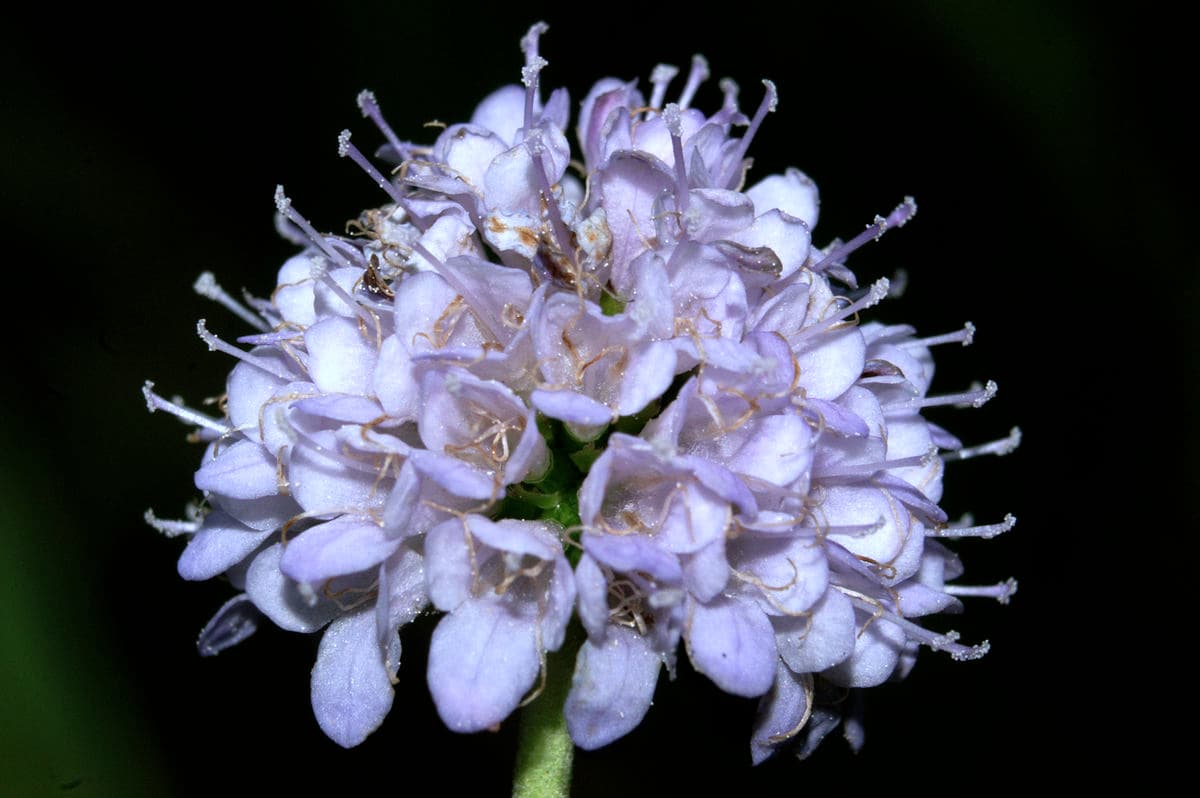
Succisella inflexa is a close relative of the pincushion-flower family, native to damp meadows and streambanks across central and southern Europe. Wiry, freely branching stems rise from a tidy basal rosette and carry a haze of small, rounded lilac-blue flowerheads from late summer into fall - a see-through, airy presence that reads well threaded through the front and middle of a border rather than planted as a solid block. The cultivar 'Frosted Pearls' is prized for an especially pale, silvery-lilac flower color.
It prefers more consistent moisture than most late-summer border perennials and is a strong choice for a spot that stays damp without being waterlogged. Deadheading isn't essential - spent flowerheads keep some structural interest - but shearing lightly after the first flush can encourage a second round of bloom. Rarely troubled by deer, and its late timing makes it a valuable late-season nectar source for bees and butterflies.
Powdery mildew
White or grey powdery coating on leaves - usually starting on older growth in humid conditions or when nights cool.
Improve air circulation by thinning plants. Apply neem oil or potassium bicarbonate spray at first sign. Avoid overhead watering.