
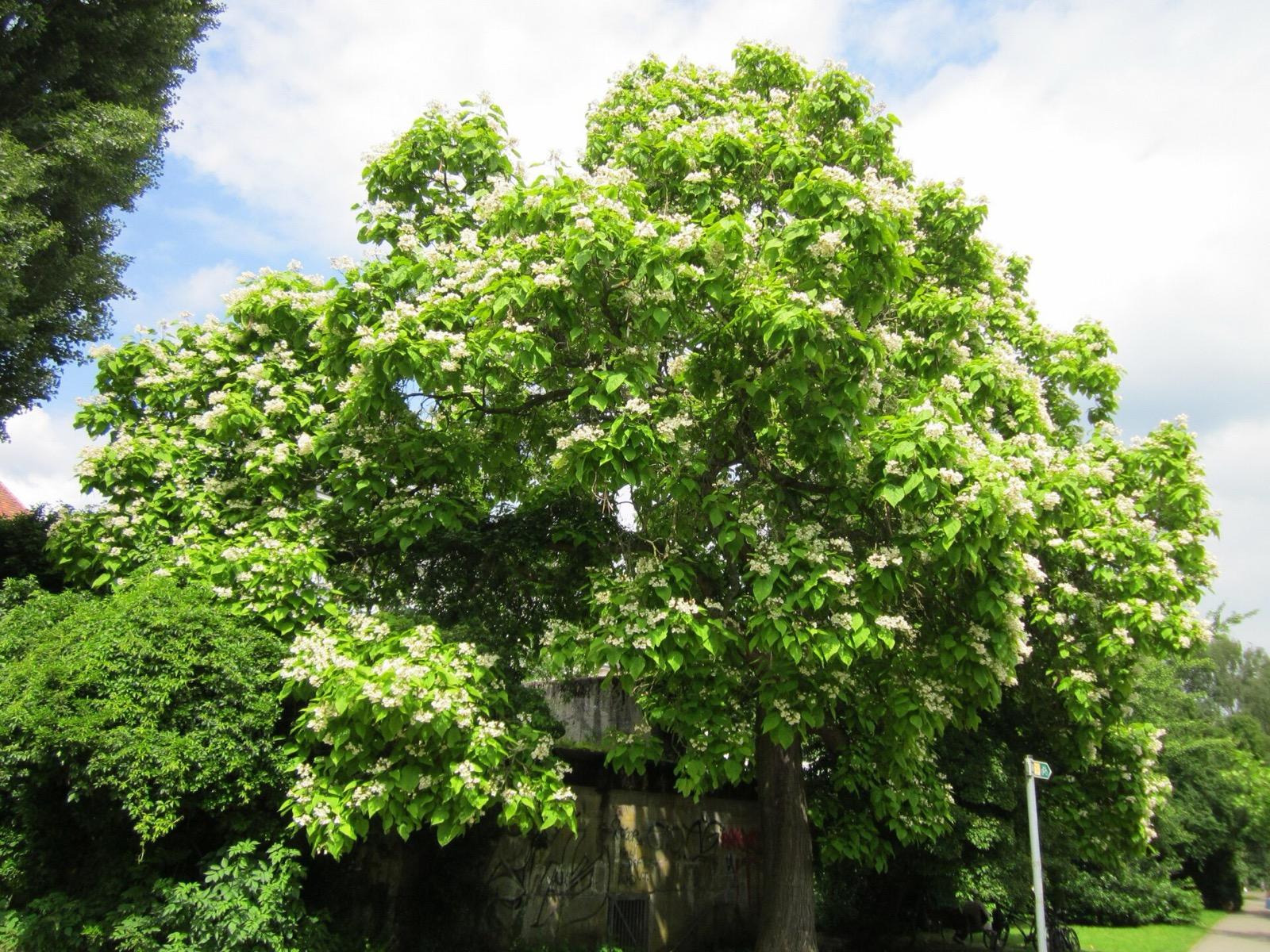
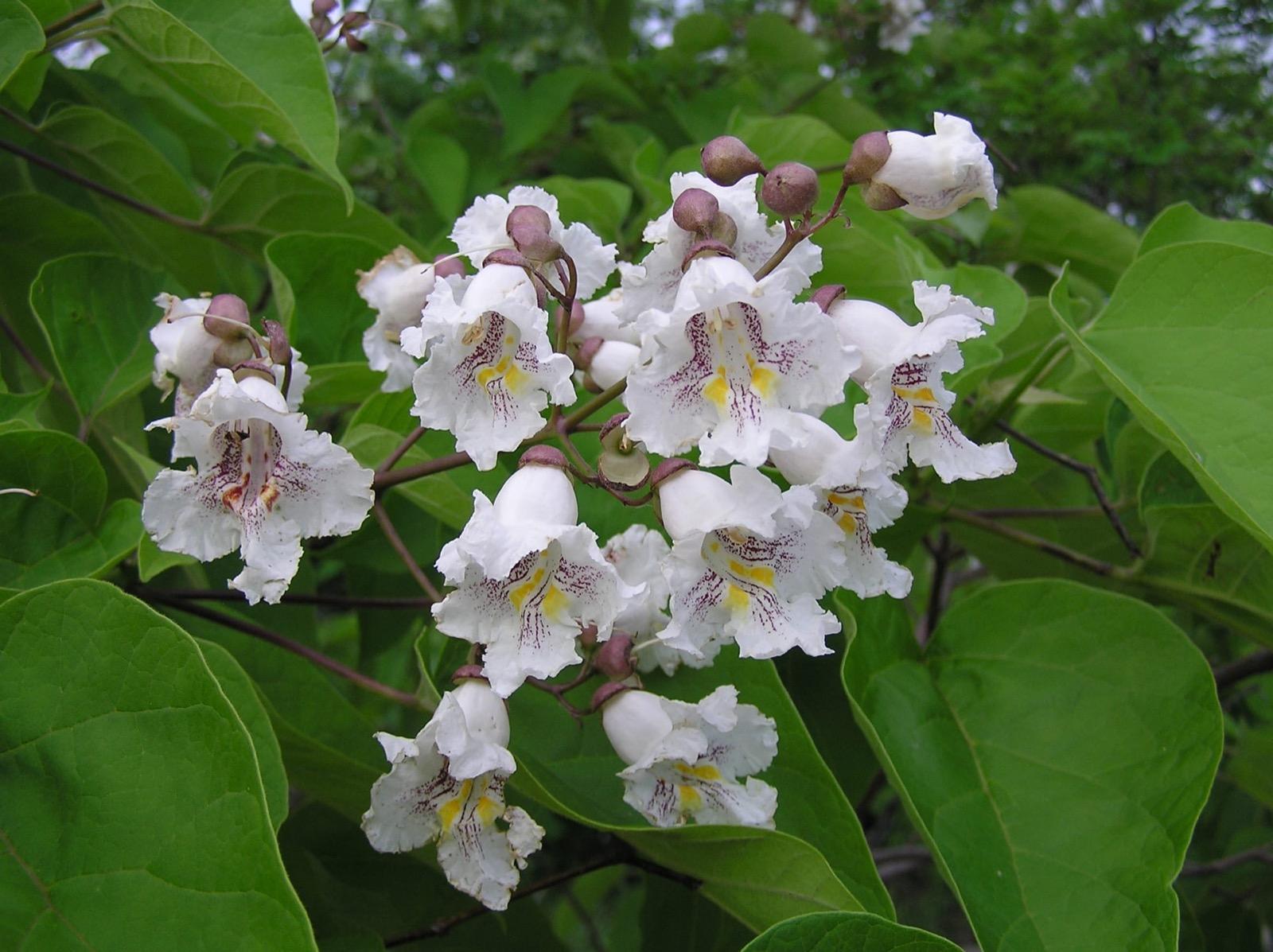
Southern Catalpa is a fast-growing deciduous tree native to a small area of the southeastern US - Alabama, Florida, Georgia, Louisiana, and Mississippi - but widely planted as a street and garden tree across North America and Europe. It is recognized by its very large heart-shaped leaves, clusters of white flowers marked with purple and yellow in late spring, and slender cigar-like seed pods 8–20 inches long that persist through winter.
The tree establishes quickly and tolerates clay, compacted soil, urban pollution, and periodic drought once rooted. It naturalizes readily from seed and can self-sow aggressively beyond its native range. The catalpa sphinx moth (Ceratomia catalpae) is its primary insect associate; larvae can strip foliage heavily in summer but rarely kill the tree, and anglers prize them as catfish bait. pH between 5.5 and 7.0 and well-drained to moist soil suit it best; mulching the root zone helps in colder parts of its range. Prune only while dormant to reduce disease entry points.
Historically, the rot-resistant heartwood was used for fence posts and railroad ties. Native American groups prepared bark decoctions as an anthelmintic and to treat fevers. Catalpol, an iridoid glycoside concentrated in the leaves and bark, has been studied for anti-inflammatory and neuroprotective properties.
Ecoregions:Eastern Temperate Forests
These dates are for Zone 6b. Enter your ZIP to time every job to your own frost dates.
- buy · Jan 2 - Jan 16Order nursery stock - about two months before planting
- plant · Mar 13 - Mar 27Plant container stock before bud break, away from paths and patios that would catch the dropped flowers and long pods
- watch · Any time in summerLook for catalpa sphinx caterpillars stripping leaves; trees leaf out again, and anglers prize the caterpillars as bait
Problems & troubleshooting
Common problems
Powdery mildew
White or grey powdery coating on leaves - usually starting on older growth in humid conditions or when nights cool.
Improve air circulation by thinning plants. Apply neem oil or potassium bicarbonate spray at first sign. Avoid overhead watering.
Verticillium Wilt
Lower leaves yellow and wilt, often on one side of the plant, with brown streaking in the stem and crown tissue when cut open. Plants are stunted and decline over the season.
Remove and destroy affected plants. Avoid planting in soil that has grown infected tomatoes, peppers, or other susceptible crops. Rotate beds and improve drainage; there is no cure once a plant is infected.
Fungal leaf spot
Brown or purplish spots on the leaves, often ringed with a yellow halo, that spread and merge in warm, humid, or wet weather; heavily spotted leaves yellow and drop early.
Pick off spotted leaves and clear fallen debris to remove overwintering spores. Improve air circulation by thinning, and water at the base so foliage dries quickly. If it persists, apply a copper- or sulfur-based fungicide at the first sign.