
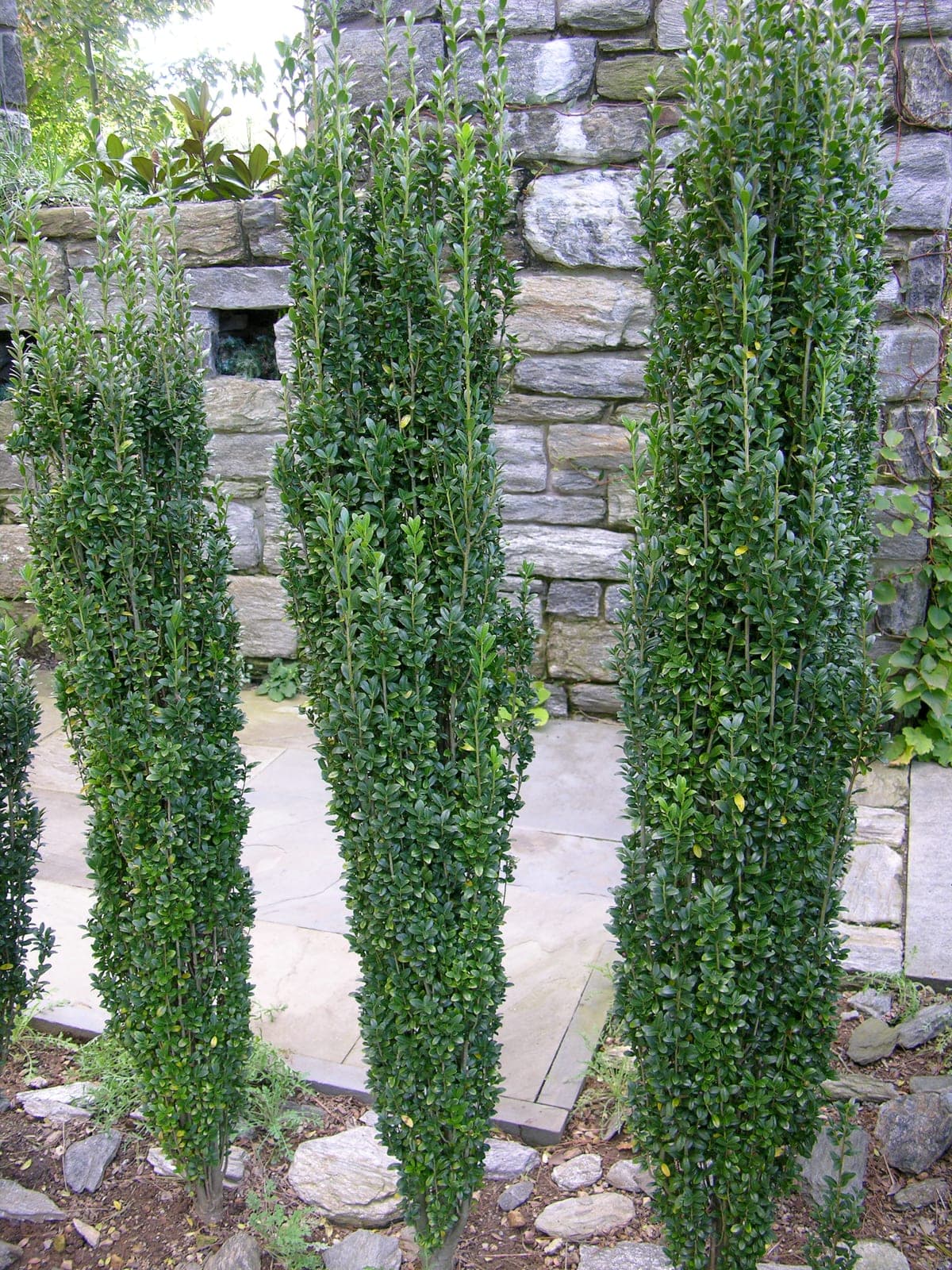
Sky Pencil Holly is a fastigiate cultivar of Ilex crenata, the Japanese holly, selected for its extremely narrow, columnar habit. It reaches 6–10 ft tall but stays 1–2 ft wide, placing it among the slenderest broadleaf evergreens for temperate gardens. Small, glossy dark leaves clothe the upright stems year-round, and female plants produce small black berries in fall that persist into winter.
Performs best in moist, well-drained, acidic soil with a pH around 5.0–6.5. It tolerates part shade but holds its tight columnar form more reliably with at least half a day of direct sun. Growth is slow-typically 4–6 inches per year-so minimal shaping is needed to maintain the silhouette. Mulching with shredded bark or leaf mold retains moisture and gradually acidifies the root zone. In Zone 6, exposure to drying winter winds can scorch foliage; siting plants near a wall or windbreak reduces this risk.
Holly Tar Spot
Yellow spots appear on upper leaf surfaces in early summer and enlarge into raised, black, tar-like lesions by late summer; infected leaves drop early.
Rake and dispose of all fallen leaves in autumn to eliminate overwintering spores. Apply a copper-based fungicide at bud break if infection was heavy the prior season.
Phytophthora Root Rot
Wilting despite moist soil, yellowing leaves, stunted growth, and dark, decayed roots and crown tissue. Vines may collapse during hot weather.
Plant in well-draining soil and avoid waterlogging. Remove and destroy affected vines. Improve drainage with raised beds or amended soil and avoid overwatering.
Root rot
Plants wilt, yellow, and stunt even in moist soil; lower stems and roots turn brown, soft, and mushy and the plant may collapse. Most common in heavy, wet, or poorly drained ground.
Improve drainage and stop overwatering, and never plant too deep. Lift and destroy badly affected plants along with the soil around the roots. Grow in raised or free-draining beds to prevent it returning.