
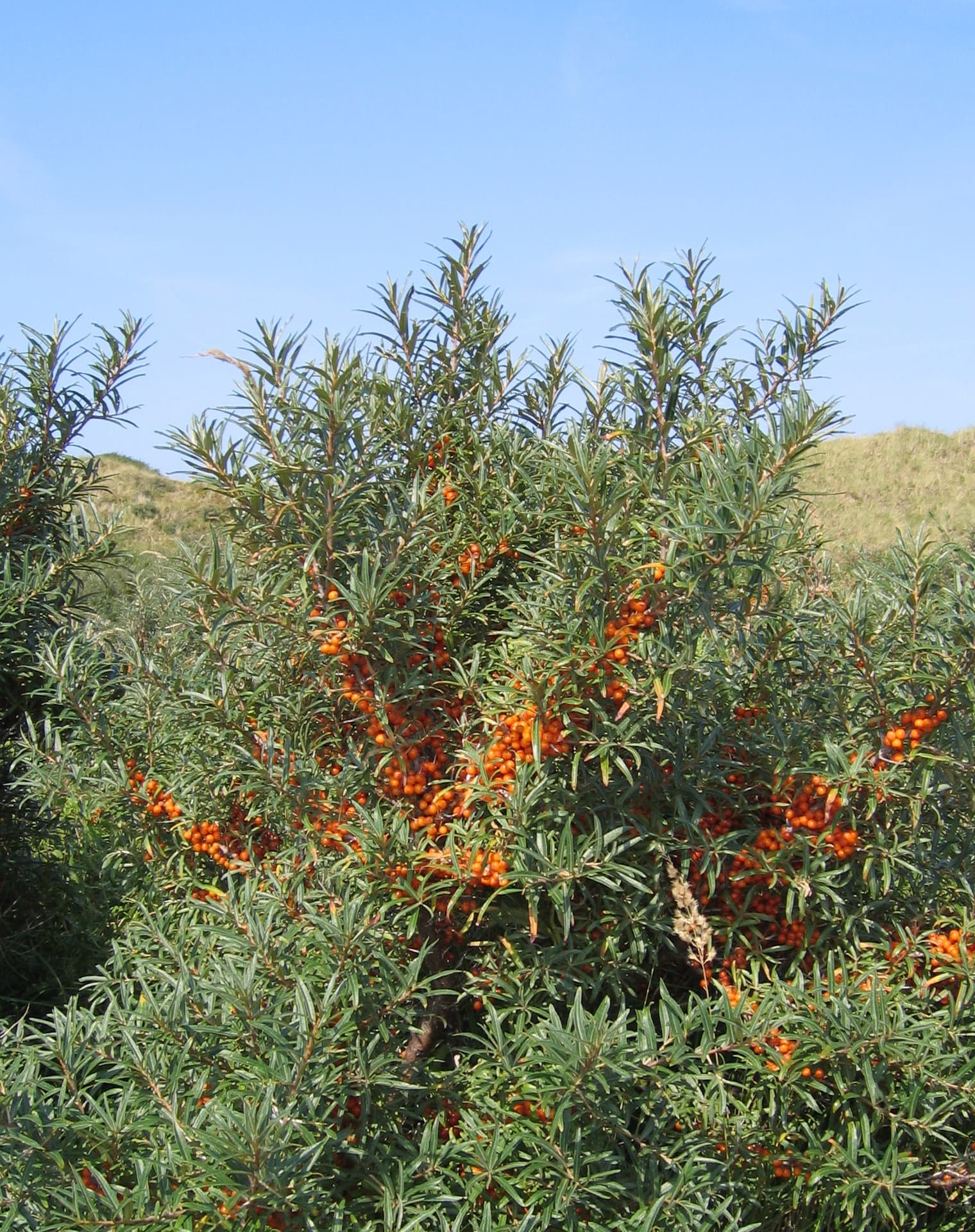
Sea buckthorn (Hippophae rhamnoides) is a spiny, deciduous shrub native to cold-temperate Eurasia. It produces dense clusters of bright orange to yellow berries in fall that are exceptionally rich in vitamins C and E, carotenoids, and all four omega fatty acids, including the rare palmitoleic acid (omega-7). It earns a place in the landscape as a productive fruiting shrub, a windbreak, and wildlife cover.
The species is dioecious: both male and female plants are required for fruit set. One male can pollinate up to eight females via wind in early spring before leaves emerge. Sea buckthorn fixes atmospheric nitrogen through root-nodule symbiosis with Frankia actinomycetes, gradually improving soil fertility. It spreads aggressively by root suckers; cut them at the soil line regularly to contain spread. Prefers well-drained sandy or loamy soil with neutral to slightly alkaline pH; tolerates drought, salt spray, and coastal winds once established.
Berries are used in juices, jams, wines, and sauces. Seed and pulp oil is used commercially in cosmetics and nutraceuticals. Clinical research supports applications in mucositis, skin wound healing, and gastric ulcer management, consistent with its long history in Tibetan, Chinese, and Ayurvedic traditional medicine.
Verticillium Wilt
Lower leaves yellow and wilt, often on one side of the plant, with brown streaking in the stem and crown tissue when cut open. Plants are stunted and decline over the season.
Remove and destroy affected plants. Avoid planting in soil that has grown infected tomatoes, peppers, or other susceptible crops. Rotate beds and improve drainage; there is no cure once a plant is infected.
Fusarium wilt
Sudden wilting, brown streaks in stems, yellowing leaves. Affects sweet basil varieties most.
No cure. Remove and destroy plants. Do not replant in the same spot for 3+ years. Choose resistant varieties.
Phytophthora Root Rot
Wilting despite moist soil, yellowing leaves, stunted growth, and dark, decayed roots and crown tissue. Vines may collapse during hot weather.
Plant in well-draining soil and avoid waterlogging. Remove and destroy affected vines. Improve drainage with raised beds or amended soil and avoid overwatering.
Fungal leaf spot
Brown or purplish spots on the leaves, often ringed with a yellow halo, that spread and merge in warm, humid, or wet weather; heavily spotted leaves yellow and drop early.
Pick off spotted leaves and clear fallen debris to remove overwintering spores. Improve air circulation by thinning, and water at the base so foliage dries quickly. If it persists, apply a copper- or sulfur-based fungicide at the first sign.