
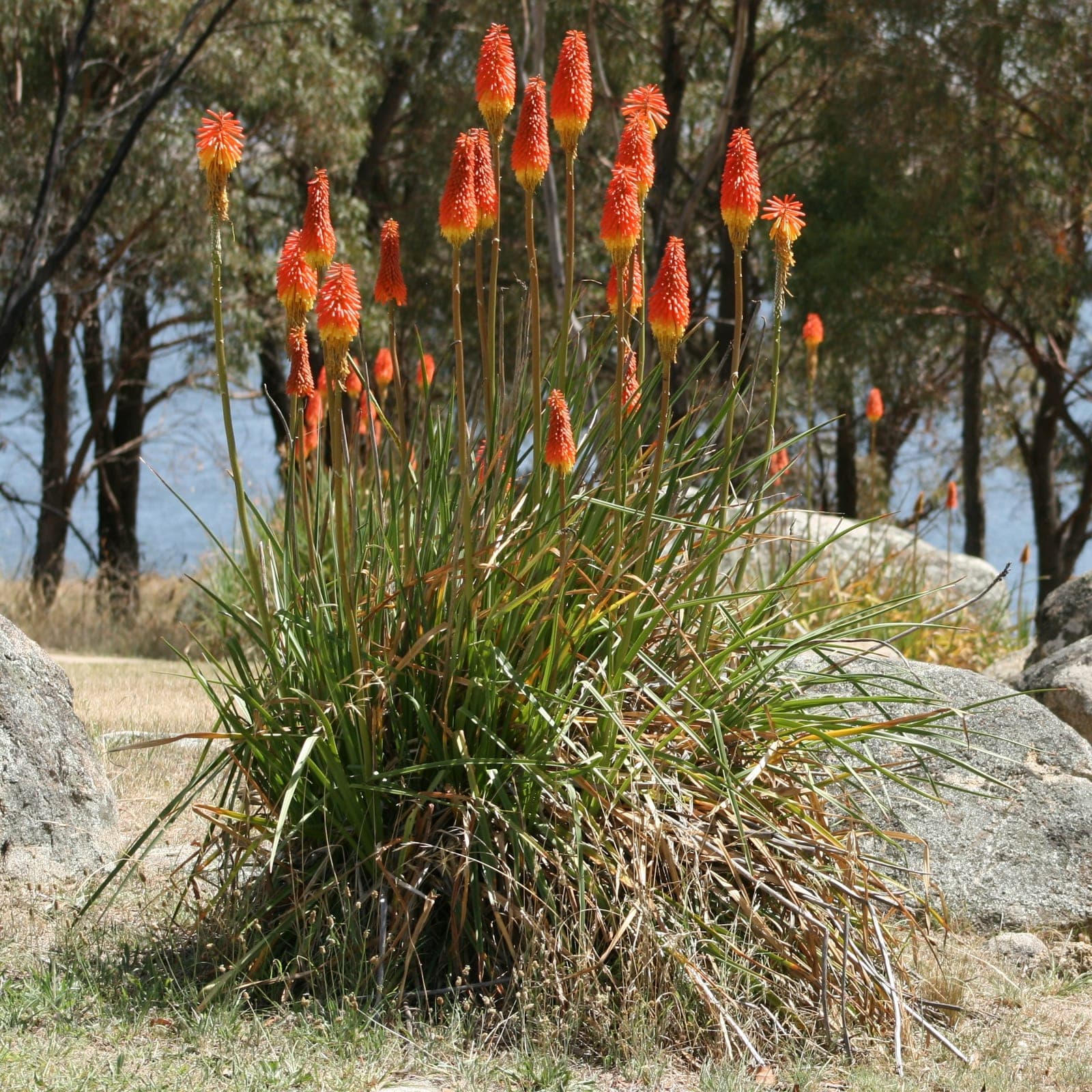
Kniphofia uvaria, the red hot poker or torch lily, is a South African clump-forming perennial grown for its bold, bicolor flower spikes - dense torches of coral-red buds opening to yellow-orange from the base up, held well above a fountain of grassy, blue-green foliage. It is one of the most reliable hummingbird plants in the summer border and reads as a strong vertical accent among softer, mounding perennials.
It wants full sun and, above all, drainage: soggy winter soil around the crown is the most common way to lose a plant, far more so than cold. In its hardiness range it is otherwise low-maintenance and long-lived, resents being divided too often, and is largely ignored by deer and rabbits. Where marginal, gardeners tie the strappy leaves up over the crown before winter to shed water and add a loose mulch, rather than cutting the foliage away.
Root rot
Plants wilt, yellow, and stunt even in moist soil; lower stems and roots turn brown, soft, and mushy and the plant may collapse. Most common in heavy, wet, or poorly drained ground.
Improve drainage and stop overwatering, and never plant too deep. Lift and destroy badly affected plants along with the soil around the roots. Grow in raised or free-draining beds to prevent it returning.
Crown Rot
Lower leaves yellow and wilt; the base of the rosette turns brown and soft, sometimes with white fungal threads at the soil line. Plants collapse in wet conditions.
Remove and destroy affected plants. Improve drainage and avoid overhead watering. Do not mulch directly against the crown. Space plants for airflow and avoid replanting in the same wet spot.