
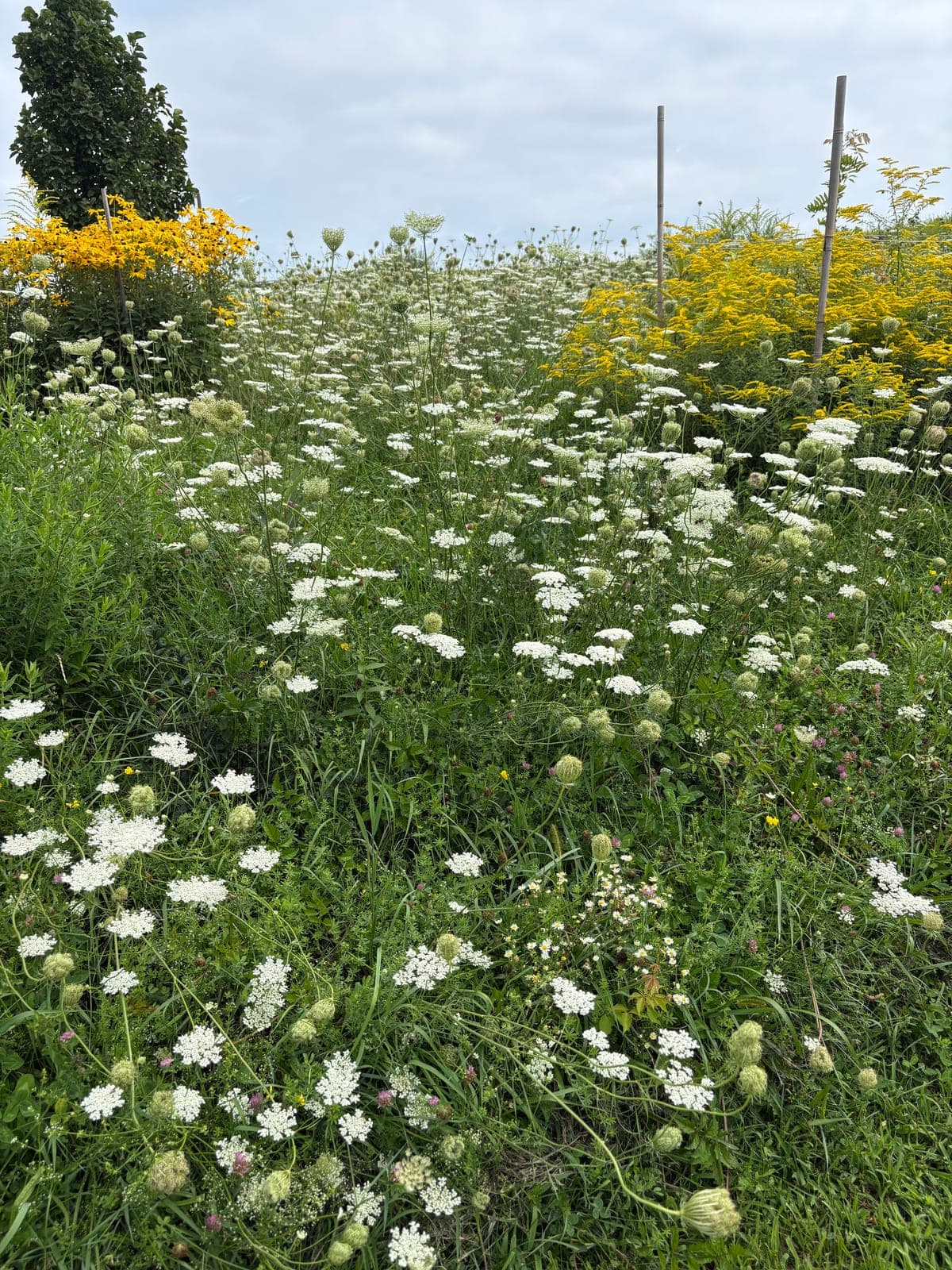
Queen Anne's lace in a meadow, from the author's photos
Queen Anne's Lace (Daucus carota) is a biennial wildflower and the wild ancestor of the cultivated carrot. In its second year it produces flat-topped white umbel clusters - typically with a single dark purple floret at the center - on branching stems 2–4 ft tall. It is native to temperate Afro-Eurasia, has naturalized across most of North America, and is designated a noxious weed in several U.S. states.
First-year plants form a low rosette of feathery, carrot-scented leaves; the flowering stalk emerges in year two. It self-seeds freely, and removing spent flower heads before seeds ripen is the primary way to limit spread. The umbels attract parasitic wasps, hoverflies, and predatory beetles, and the foliage serves as a larval host for the Black Swallowtail butterfly.
Young taproots are edible with a flavor similar to cultivated carrot but tougher in texture. Seeds have a documented history of use as a diuretic and digestive aid, and in folk medicine as an emmenagogue.
Powdery mildew
White or grey powdery coating on leaves - usually starting on older growth in humid conditions or when nights cool.
Improve air circulation by thinning plants. Apply neem oil or potassium bicarbonate spray at first sign. Avoid overhead watering.
Aster Yellows
Deformed, greenish flowers, stunted growth, and yellowed foliage. Flower centers may produce tufts of leafy growth instead of normal petals.
No cure. Remove and destroy infected plants immediately to stop spread. Control leafhoppers, which transmit the disease, and remove nearby weed hosts.
Alternaria blight
Brown circular spots with yellow halos on leaves; spreads rapidly in wet weather.
Remove affected leaves immediately. Water at the base only. A copper-based fungicide can help if caught early.
Root rot
Plants wilt, yellow, and stunt even in moist soil; lower stems and roots turn brown, soft, and mushy and the plant may collapse. Most common in heavy, wet, or poorly drained ground.
Improve drainage and stop overwatering, and never plant too deep. Lift and destroy badly affected plants along with the soil around the roots. Grow in raised or free-draining beds to prevent it returning.