
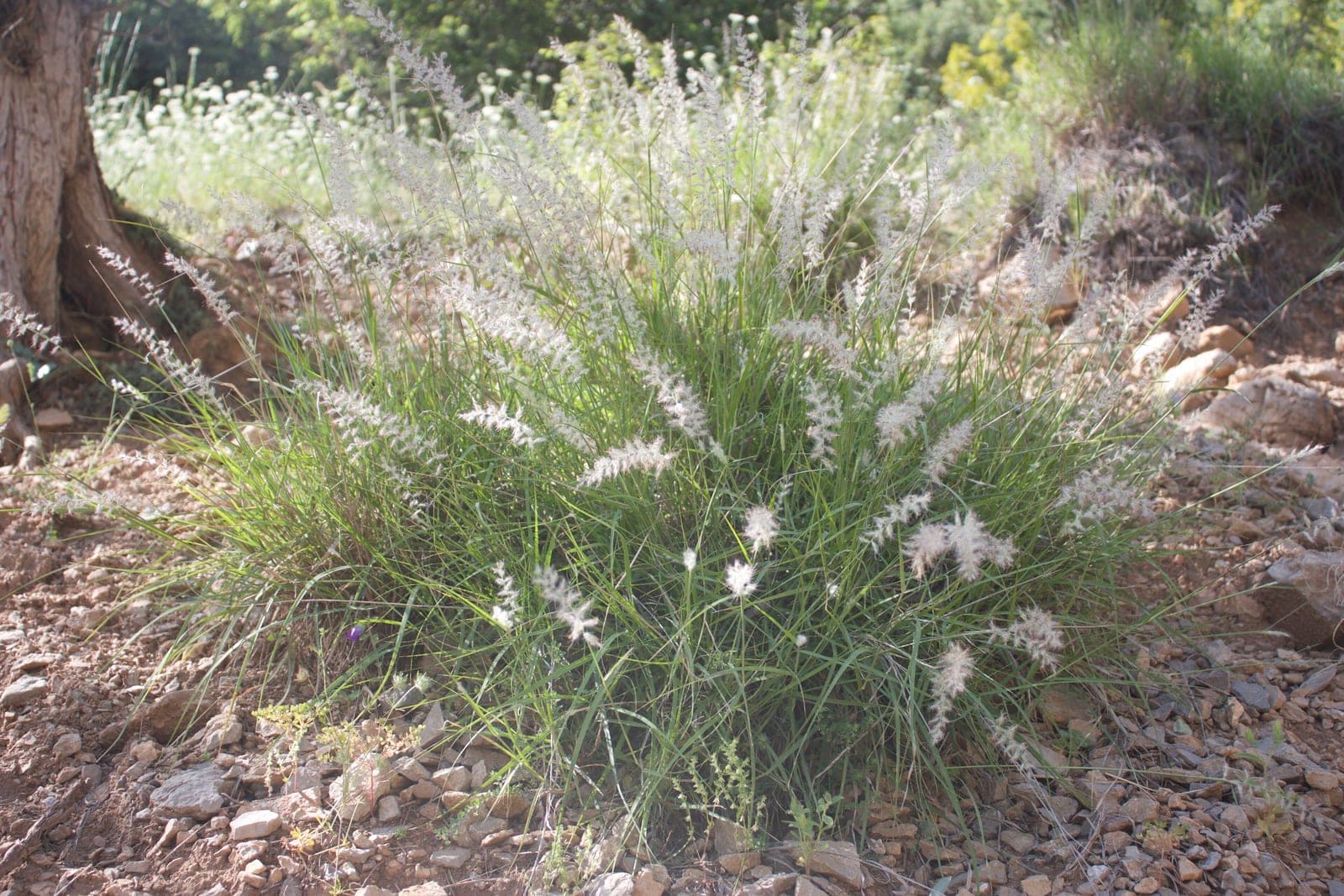
'Fairy Tails' forms a tidy, rounded clump of fine green foliage topped with soft, pink-tinged plumes that fade to tan as they age. It starts blooming earlier in the season than most fountain grasses and keeps going into fall, giving it one of the longest bloom windows in the genus. In mild winters it stays semi-evergreen, holding structure through the cold months instead of collapsing to bare crowns.
It's an easy, low-input grass once established: full sun and average, well-drained soil are all it asks for, and it shrugs off heat and short dry spells without complaint. Cut it back hard in late winter before new growth emerges to keep the clump tidy - old foliage left in place shelters overwintering insects but can look ragged by spring.
Rust
Orange to brown raised pustules on the undersides of leaves, with yellow spotting on the upper surface. Heavy infections cause leaves to yellow and drop.
Remove and destroy infected leaves. Avoid overhead watering and improve air circulation. Apply a sulfur or copper-based fungicide if it spreads. Clear plant debris in fall.