
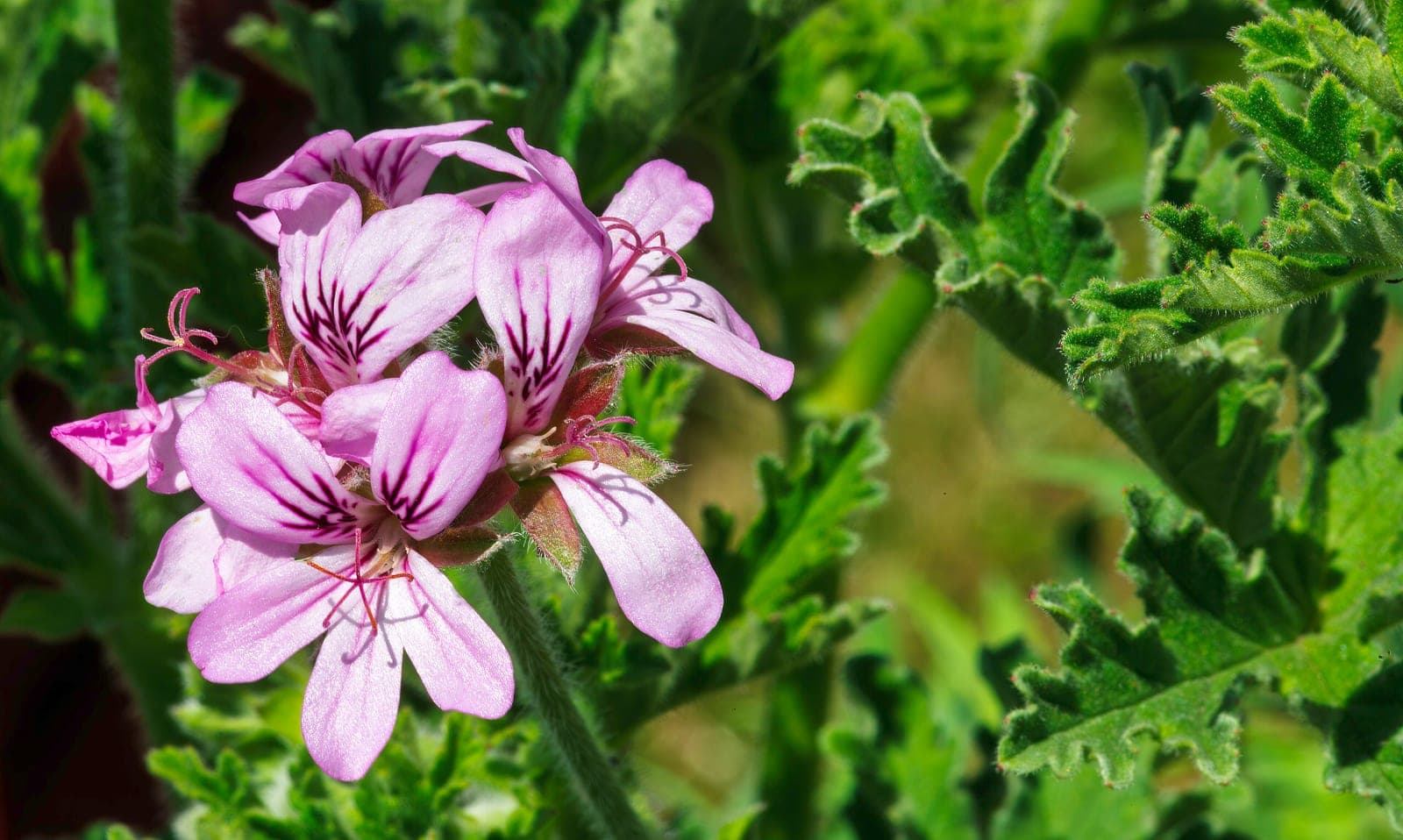
Rose-scented geranium is grown far more for its foliage than its flowers: deeply cut, softly hairy leaves release a strong rose fragrance when brushed or crushed, used to flavor sugar, cakes, and jellies, and to scent potpourri and skincare. Small pale-pink flowers appear through summer but are secondary to the foliage display. Native to South Africa, it's a tender perennial grown as a container or bedding annual in cold-winter zones, and the variegated cultivar 'Lady Plymouth' pairs the same rose scent with cream-edged leaves.
Like other Pelargonium, it prefers to dry out somewhat between waterings - constant wet soil causes stem and root rot - and it's easy to overwinter as cuttings taken in late summer before the first frost. It's rarely troubled by deer thanks to its strongly scented foliage, and its fine, cut-leaf texture makes it a useful foil for bolder-leaved plants in a container or border edge.
Botrytis (grey mould)
Grey fuzzy mould on petals and stems, worst in cool wet conditions.
Remove affected parts immediately. Improve air circulation. Avoid overhead watering. Apply copper fungicide if severe.
Bacterial Blight of Geranium
Small water-soaked or brown spots with yellow halos on leaves, V-shaped yellow wedges along leaf margins, wilting, and blackened stems.
Remove and destroy infected plants; avoid overhead watering and handling wet foliage. Use clean tools and disease-free cuttings, and space plants for airflow. No chemical cure once infected.