
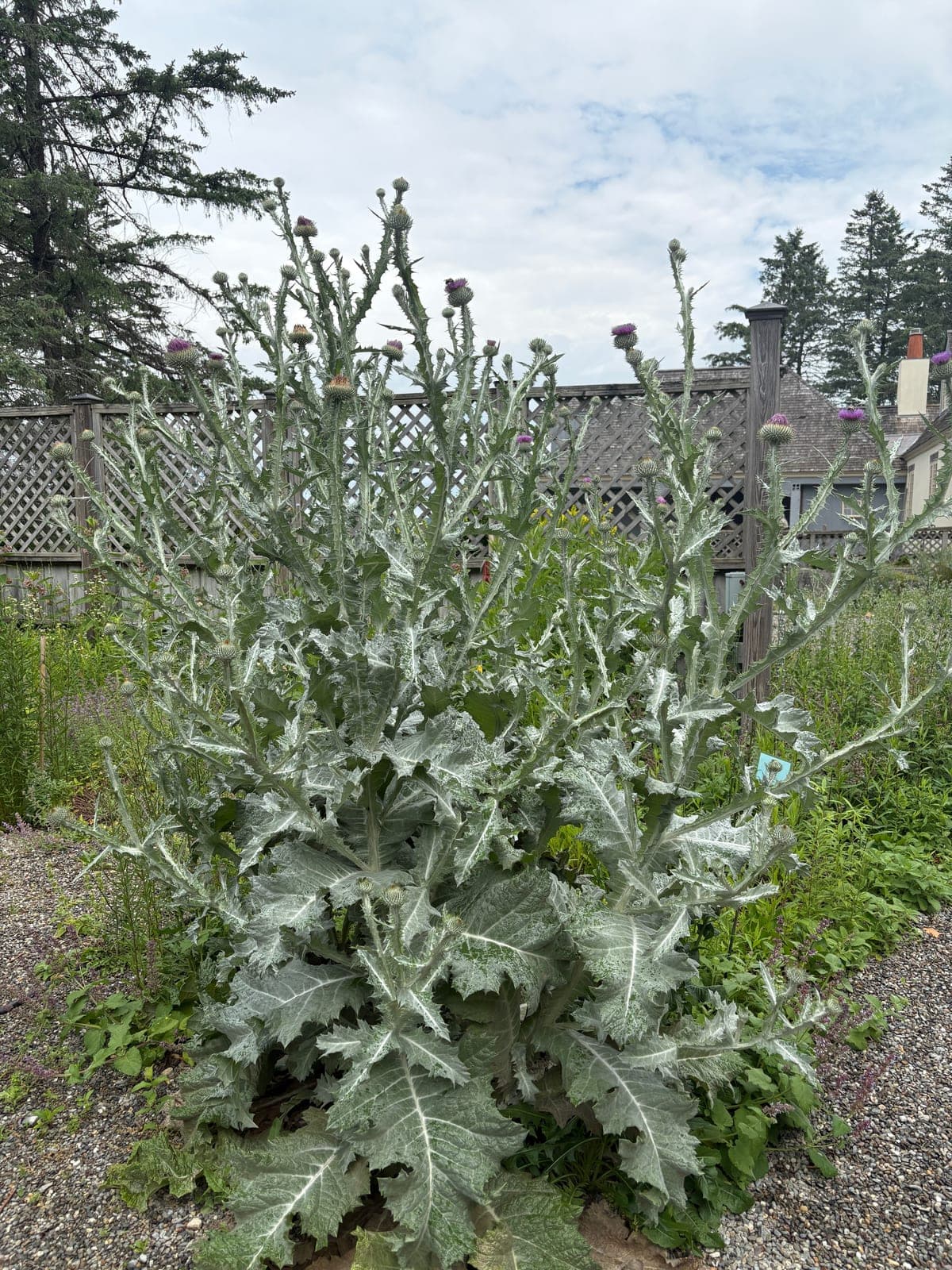
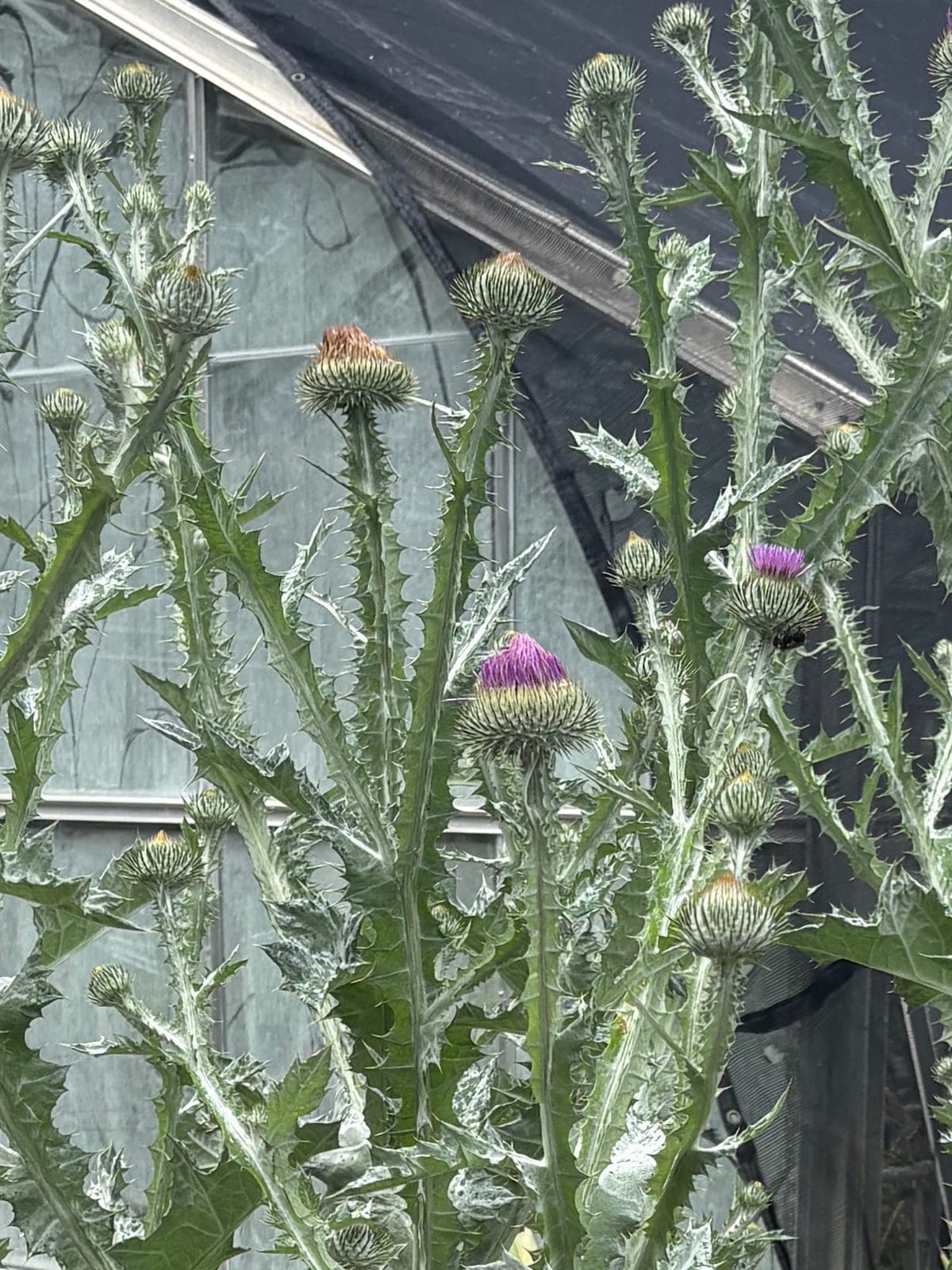
Scotch thistle is a biennial, so the key to success is thinking two years ahead. Sow seed directly in late summer or early fall of year one - surface sow or just barely cover, as it needs light to germinate well. It will spend its first year as a spectacular rosette of deeply lobed, silver-white woolly leaves that can span nearly a metre across. In year two it sends up those towering, winged stems and blooms with abandon. Soil prep matters less here than drainage: this plant absolutely hates sitting in waterlogged ground over winter. A gritty, lean soil in full sun will produce the most robust plants. The single biggest mistake gardeners make is being too generous - rich, fertile soil causes lush but floppy growth and can actually reduce longevity. Direct sow is almost always better than transplanting, since the taproot resents disturbance. Do keep in mind it self-seeds very freely and is considered invasive in several regions, so deadhead diligently after bloom if you want to keep it in check.
Traditionally, Onopordum acanthium has a modest place in European herbal medicine, used much like its cousin milk thistle (Silybum marianum) - preparations from the leaves and stems were historically applied as a liver tonic and to support digestion, though it lacks the same concentration of silymarin. Poultices from the leaves were used in folk medicine for minor wounds and skin irritations. On the culinary side, young first-year stems can be peeled and eaten much like cardoon - they are quite edible once the spines are carefully removed, and have a mild, artichoke-like flavour when braised or boiled. The flowerheads, harvested before fully open, can also be cooked and eaten similarly to globe artichoke hearts. For companion planting, yarrow works beautifully nearby - both thrive in lean, dry conditions and yarrow helps attract the predatory insects that keep aphids off the thistle's stems in summer.