
Medlar is a small, slow-growing tree in the rose family, grown in Europe and western Asia for well over two thousand years and eaten from Roman through medieval times before it fell out of fashion. It's easy to see why it's a curiosity now: the fruit is hard and astringent when picked and only turns edible after bletting, a softening that sets in once frost has hit it. Chaucer and Shakespeare both took swipes at it, and for centuries the open, flared calyx on the fruit earned it a rude nickname.
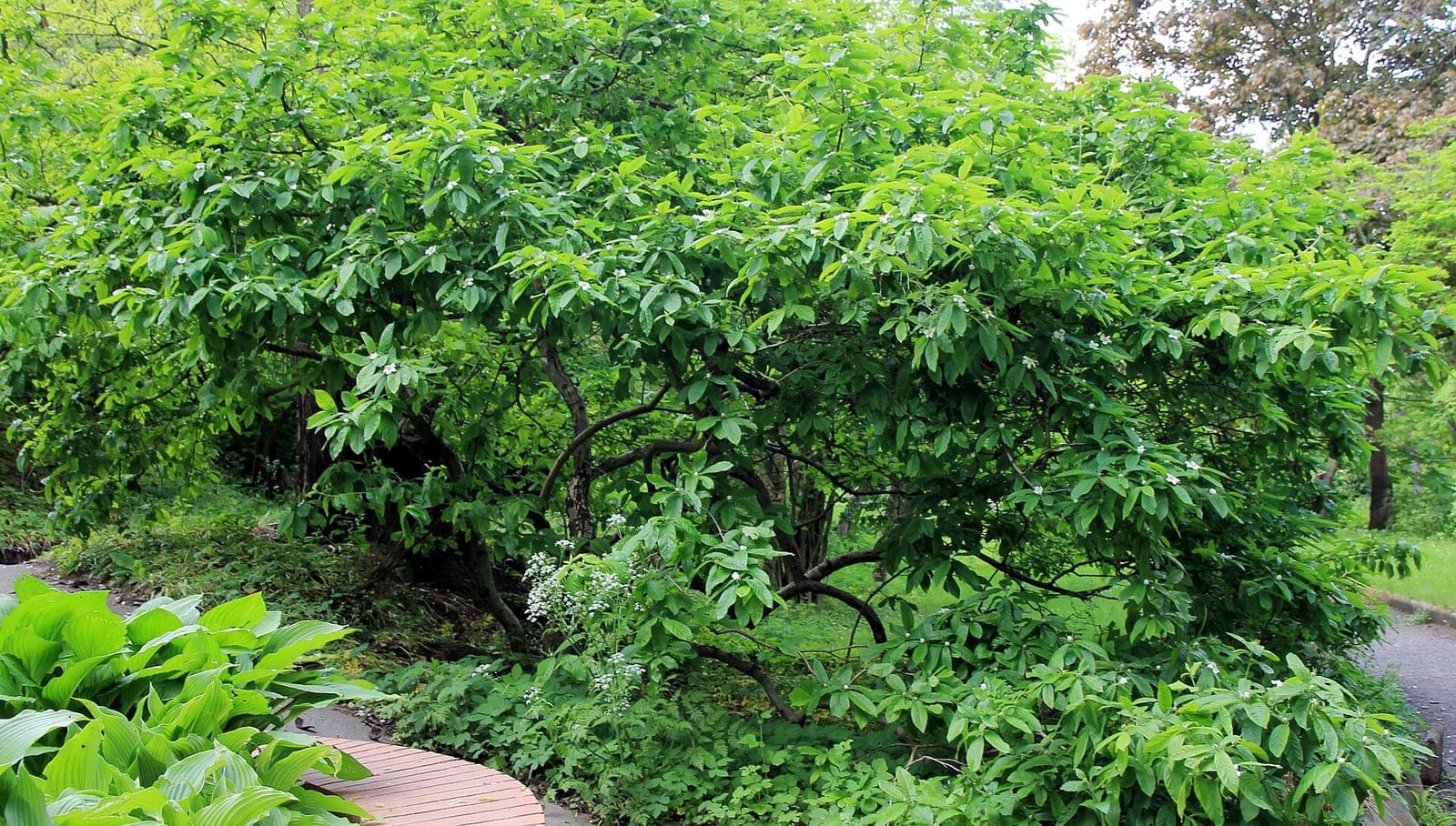
The tree itself is the better argument for planting one. It tops out around 20 ft with a gnarled, spreading shape, opens large white flowers in May and June, and turns a deep red in fall. Late bloom means frost rarely catches the flowers, and the flowers are self-fertile and busy with bees. It wants full sun and free-draining, slightly acidic loam, and hates wet feet or chalky soil. Water and mulch it for the first two or three years, then largely leave it alone. Prune only to clear dead, crossing, or damaged wood at the end of dormancy. Brown rot on the fruit is the one problem worth watching for. Trees fruit within a few years and live a modest 30 to 60.
Leave the fruit on until the leaves are down and a hard frost or two has passed; it should snap off the stem easily. Fruit picked earlier can be brought indoors to blet, which takes a few weeks to a couple of months. Ripe flesh is soft, brown, and rich, a little like spiced applesauce. It's eaten with a spoon or cooked into jelly and paste. The seeds are toxic, so don't eat them. Medlar is compact enough to sit in a small garden or under a taller tree, and raspberries make a good understory.
Fire Blight
Water-soaked, wilting blossoms and young stems that rapidly turn brown to black. Infected shoot tips curl into a characteristic shepherd's crook. Bark beneath the infection may show reddish-brown discoloration.
Prune infected wood 8–12 inches below visible symptoms during dry weather. Sterilize tools with 70% isopropyl alcohol or a 10% bleach solution between cuts. Avoid high-nitrogen fertilizers that produce soft, disease-susceptible growth. Copper-based bactericides applied at early flowering can reduce spread in high-pressure years.
Brown Rot
Blossoms turn brown and cling to the twig rather than dropping (blossom blight). Developing or ripe fruit shows soft, rapidly expanding brown lesions covered in distinctive ash-gray powdery spore tufts. Infected fruit shrivels into hard mummies that persist on branches through winter.
Remove and destroy mummified fruit from branches and the ground at pruning time. Apply sulfur or a registered fungicide at full bloom and again 2–3 weeks before harvest during wet seasons. Thin fruit to reduce canopy density and direct fruit-to-fruit contact, which speeds spread.