
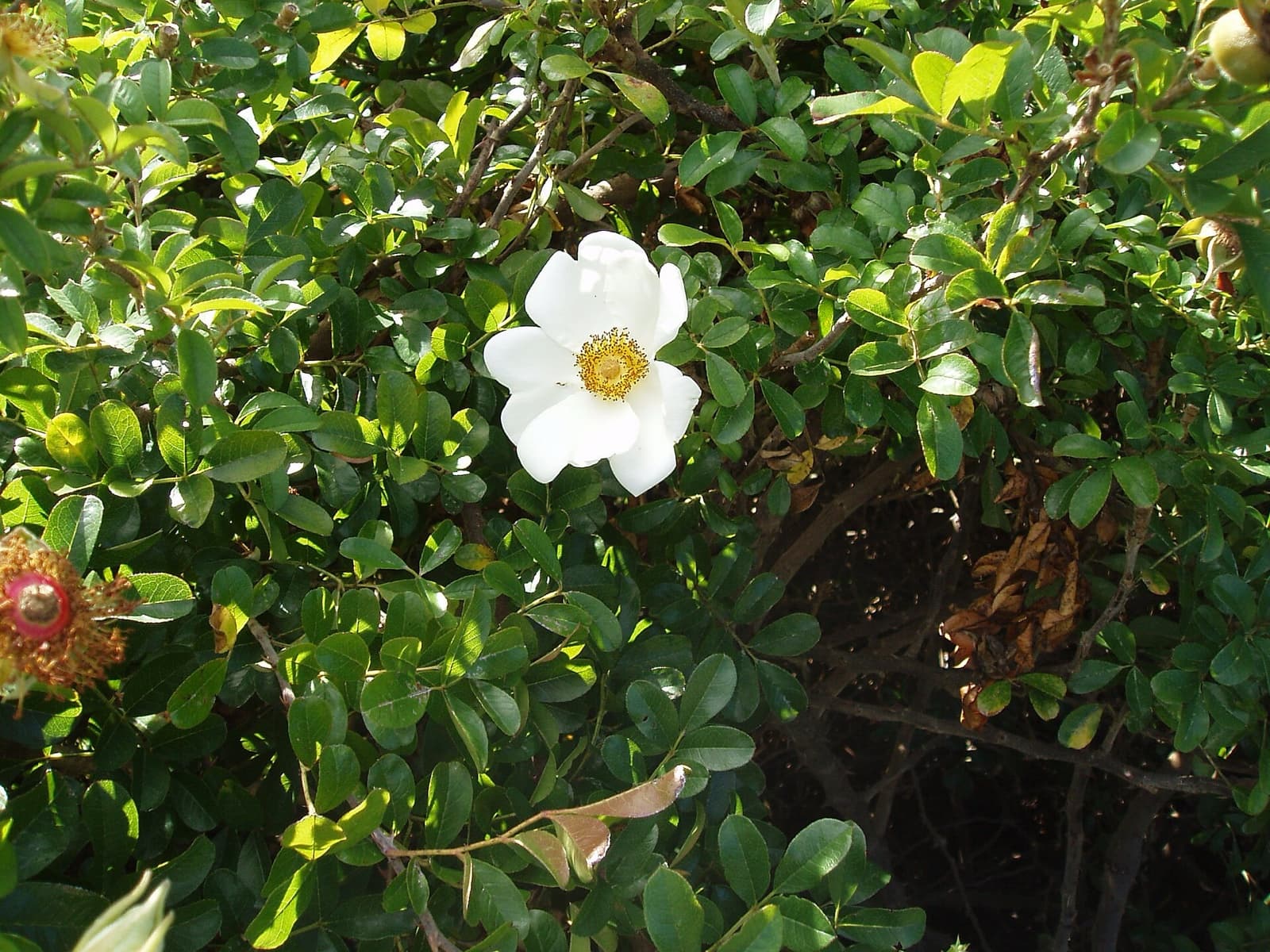
Macartney rose is an evergreen climbing rose from southern China, named for Lord Macartney, whose embassy brought it to England in 1793. It reached the United States in the 1800s and was planted across the South for hedges and erosion control. It escaped into pastures, roadsides and fence lines from Virginia to Texas, where it now forms dense, thorny thickets that crowd out grass and make land unusable for grazing. It is a major pasture weed in Texas and along the Gulf Coast.
It grows 6 to 10 feet tall, or higher where it climbs into trees, with glossy dark evergreen leaves, paired hooked thorns, and large single white flowers with prominent yellow stamens. It flowers for a long season and sets round orange hips covered in fine hairs. The leafy, fringed bracts just under each flower are the giveaway, and the source of its name.
To remove it, cut the canes at the base and dig out the crown and roots, since it resprouts from roots left behind. Remove hips before they ripen so birds and livestock cannot spread the seed, and check the ground again for seedlings.
Growing roses? Read the Rose Care Calendar - pruning by class, feeding, pests, climbers, and growing for hips, timed to your frost dates.These dates are for Zone 6b. Enter your ZIP to time every job to your own frost dates.
- overwinter · Mar 27 - Apr 17First feed and mulch: As the buds break, work a balanced rose feed into the soil around the base and lay a thick mulch of compost or well-rotted manure over the root zone (keep it off the stems).
- watch · Apr 24 - Jun 5Watch for black spot and aphids: As the new growth softens, aphids cluster on the tips and the first spots of fungal disease appear on the lower leaves.
- cut · Any time in springCut canes at the base and dig out the crown and roots - it resprouts from any root left in the ground
- watch · Jun 12 - Jun 26Second feed after the first flush: Once the first big flush fades, feed again to fuel the repeat.
- watch · Any time in summerCheck pastures, fence lines and ditches for seedlings and new sprouts; established plants form thickets that are hard to clear
- watch · Sep 4 - Sep 18Last feed of the year: Stop feeding six to eight weeks before your first frost.
- overwinter · Nov 20 - Dec 25Winter tidy and protect: After leaf-fall, shorten very long canes by a third so winter wind can't rock the roots loose, and mound compost or bark over the graft union of grafted roses in cold zones.
- cut · Any time in fallRemove hips before they ripen - birds and livestock spread the seed