
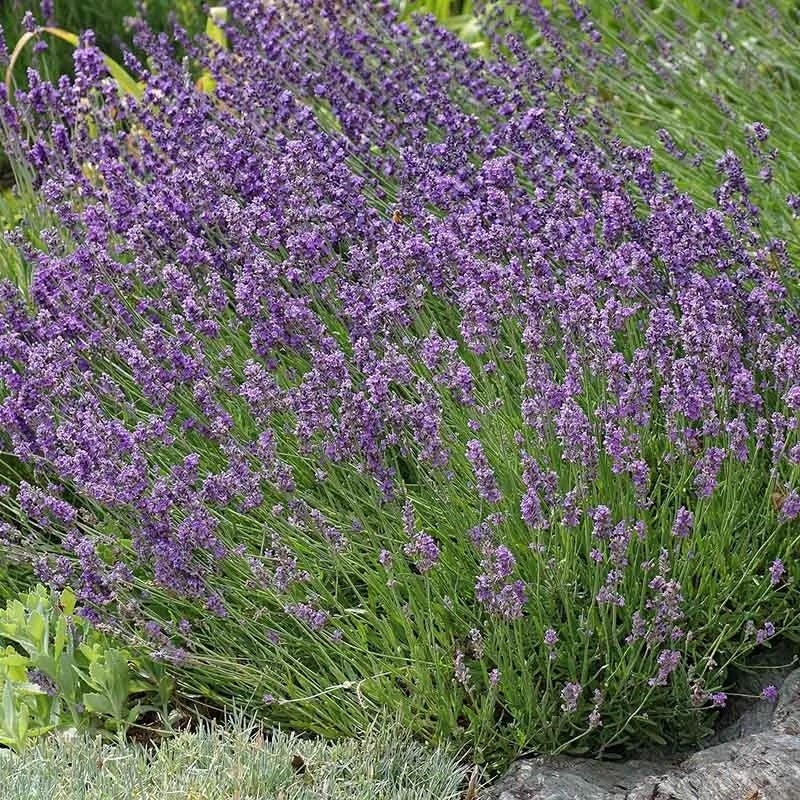
Lavandula angustifolia 'Buena Vista' is a compact English lavender cultivar that produces dense, vivid violet-purple stems over a tightly mounded base of silver-gray foliage. It works well as a low hedge, edging plant, or container specimen and reliably reblooms when cut back after the first flush.
Sharp drainage and full sun are non-negotiable; consistently moist or heavy soil is the primary cause of plant loss. Lean, slightly alkaline soil produces stronger fragrance and tighter growth than rich, fertile ground. A 2–3 in layer of gravel mulch around the crown improves drainage and reflects heat from the soil surface. Established plants are drought tolerant. Wet winters are more damaging than cold alone, and good air circulation reduces fungal pressure in humid climates.
The flowers and foliage are used in baking, herbal teas, and culinary herb blends such as Herbes de Provence. Essential oil from Lavandula angustifolia has a long history of topical use for wound care and headache relief, and peer-reviewed clinical trials support its role in reducing mild anxiety and improving sleep quality.
Growing lavender? Read the Lavender Growing Guide - which species suits your zone, drainage, pruning, and harvesting for drying, timed to your frost dates.These dates are for Zone 6b. Enter your ZIP to time every job to your own frost dates.
- overwinter · Oct 23 - Nov 20Mulch marginal plants for winter: In zones at the cold edge of a species' range, leave the season's growth in place (don't cut back) and mulch lightly around - not over - the crown after the ground begins to cool.
- buy · Feb 13 - Feb 27Buy plants - about two months before planting out
- cut · Mar 20 - Apr 24First light shear: On established plants, shear off any winter-damaged tips and shape lightly just as new growth resumes - still cutting into green growth only, never into bare woody stems that won't regenerate.
- plant · Apr 24 - May 22Plant into sharp drainage: Set out nursery plants or rooted cuttings once the soil has warmed and the last frost has passed.
- plant · Apr 24 - Jun 19Take softwood cuttings: Take 3–4 in non-flowering shoot tips and root them in gritty, well-drained propagation mix.
- watch · May 1 - Jun 19Watch for root and crown rot: Spring rains are when lavender is most at risk.
- cut · May 15 - Jul 24Harvest for drying: Cut stems when about a third of the florets on each spike have opened - this is the point of peak oil concentration.
- cut · Jun 12 - Jun 26Shear the spent spikes off as soon as the first flush fades - prompt deadheading is what brings the second flush
- cut · Jul 3 - Jul 31Shear after the main flush: Once flowering finishes, shear the whole plant back by about a third into green growth - never into old bare wood.
- watch · Jul 24 - Sep 4Watch for lavender shab and grey mould: Humid late-summer weather is prime season for lavender shab (stems wilting and dying back from the tip) and botrytis grey mould.
- cut · Sep 18 - Oct 2Make any last light tidy well before frost; new growth pushed late is killed by winter
- watch · Sep 18 - Oct 2Stop pruning before frost: Make any last light tidy at least a month before your first frost.
Problems & troubleshooting
Common problems
Lavender Shab Disease
Shoots wilt and die back individually while the rest of the plant looks healthy. Small dark fungal bodies may appear on infected stems, and dieback spreads over the season.
Prune out and destroy affected stems well below the wilted section, cleaning tools between cuts. Remove severely infected plants. Improve air circulation, avoid overhead watering, and plant in well-draining soil to limit spread.
Root rot
Plants wilt, yellow, and stunt even in moist soil; lower stems and roots turn brown, soft, and mushy and the plant may collapse. Most common in heavy, wet, or poorly drained ground.
Improve drainage and stop overwatering, and never plant too deep. Lift and destroy badly affected plants along with the soil around the roots. Grow in raised or free-draining beds to prevent it returning.
Botrytis (grey mould)
Grey fuzzy mould on petals and stems, worst in cool wet conditions.
Remove affected parts immediately. Improve air circulation. Avoid overhead watering. Apply copper fungicide if severe.