
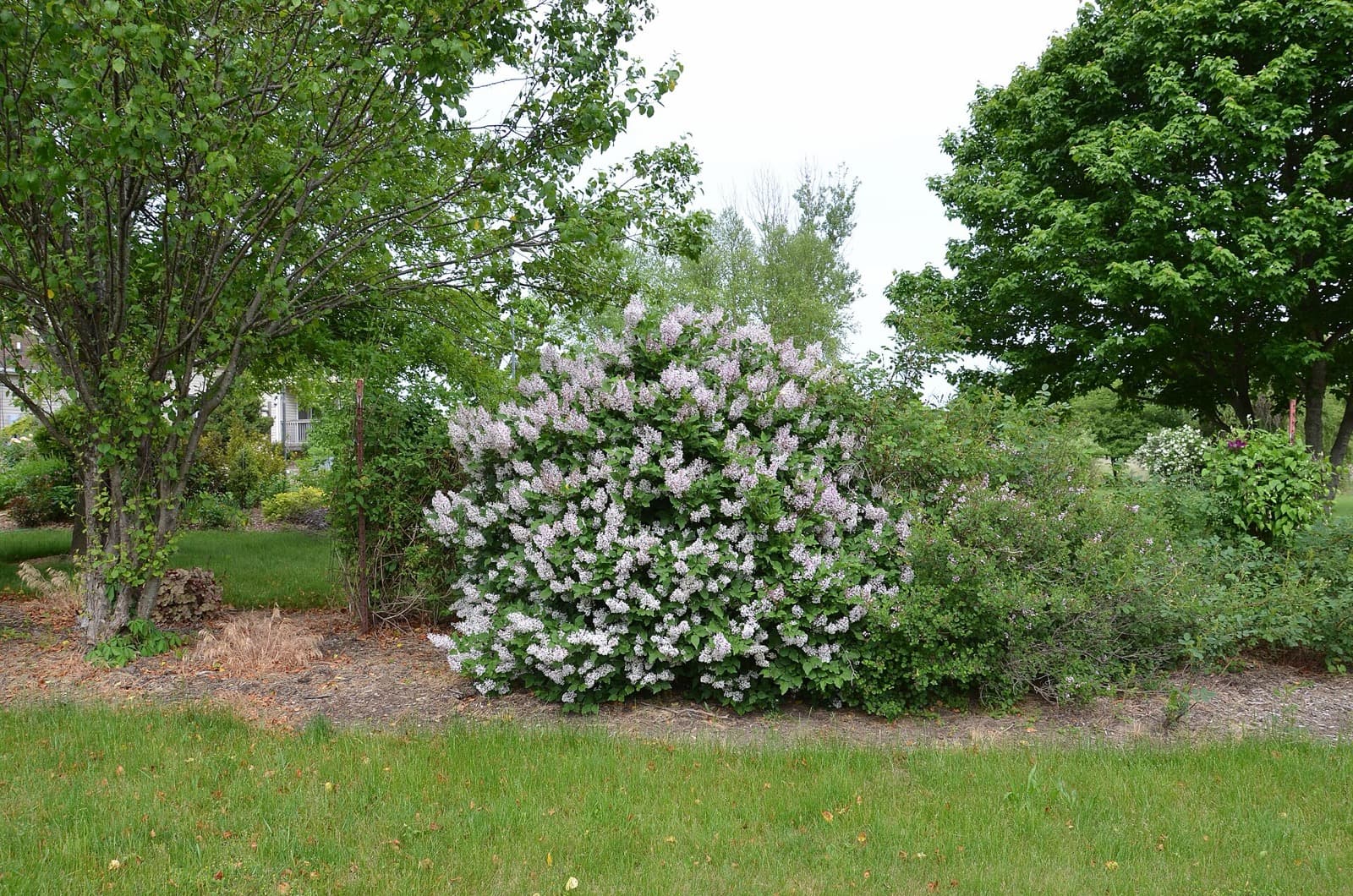
Korean lilac tree is a compact deciduous tree native to Korea and northeastern China. It produces dense clusters of pale lilac to white, intensely fragrant flowers in late spring, several weeks after common lilac finishes - a useful extender of the lilac season. Its modest stature suits urban lots, narrow borders, and confined spaces where Syringa vulgaris would quickly become unwieldy.
Grow in full sun; partial shade reduces flowering significantly. Neutral to slightly alkaline, well-drained soil at a pH of 6.5–7.5 gives the best results. Apply a 2–3 inch mulch layer over the root zone each spring, kept clear of the trunk, to moderate soil temperature and retain moisture. Trees sold grafted onto privet rootstock can send up rootstock suckers with visibly different leaves - remove these at the root as soon as they appear. Prune immediately after flowering; next year's buds set on the current season's old wood, so late pruning eliminates the following year's display.
Lilac Bacterial Blight
Young shoots wilt and collapse rapidly, turning brown to black. Leaves develop brown, water-soaked spots that expand and merge. Infected stems may form dark cankers and the shoot tip often bends into a characteristic shepherd's-crook shape. Damage is most severe in cool, wet spring weather.
Prune all affected shoots 6–8 inches below any visible symptom. Sterilize pruners between each cut using 70% isopropyl alcohol or a 10% bleach solution. Bag and dispose of infected material - do not compost it. Avoid overhead irrigation. Where blight recurs annually, apply a copper-based bactericide at bud swell and again at early leaf emergence.
Powdery mildew
White or grey powdery coating on leaves - usually starting on older growth in humid conditions or when nights cool.
Improve air circulation by thinning plants. Apply neem oil or potassium bicarbonate spray at first sign. Avoid overhead watering.
Botryosphaeria Canker
Dark, sunken cankers on stems and major branches, most often occurring after drought stress or mechanical wounding. Bark peeled back from affected areas reveals brown, discolored wood beneath. Branch tips wilt and die back progressively inward.
Prune infected branches at least 6 inches below the visible canker margin using sterilized tools, and dispose of all cuttings away from the garden. Reduce plant stress by maintaining consistent irrigation during dry periods and avoiding bark wounds during maintenance. No curative fungicide is available; keeping plants vigorous is the primary preventive strategy.
Fungal leaf spot
Brown or purplish spots on the leaves, often ringed with a yellow halo, that spread and merge in warm, humid, or wet weather; heavily spotted leaves yellow and drop early.
Pick off spotted leaves and clear fallen debris to remove overwintering spores. Improve air circulation by thinning, and water at the base so foliage dries quickly. If it persists, apply a copper- or sulfur-based fungicide at the first sign.