
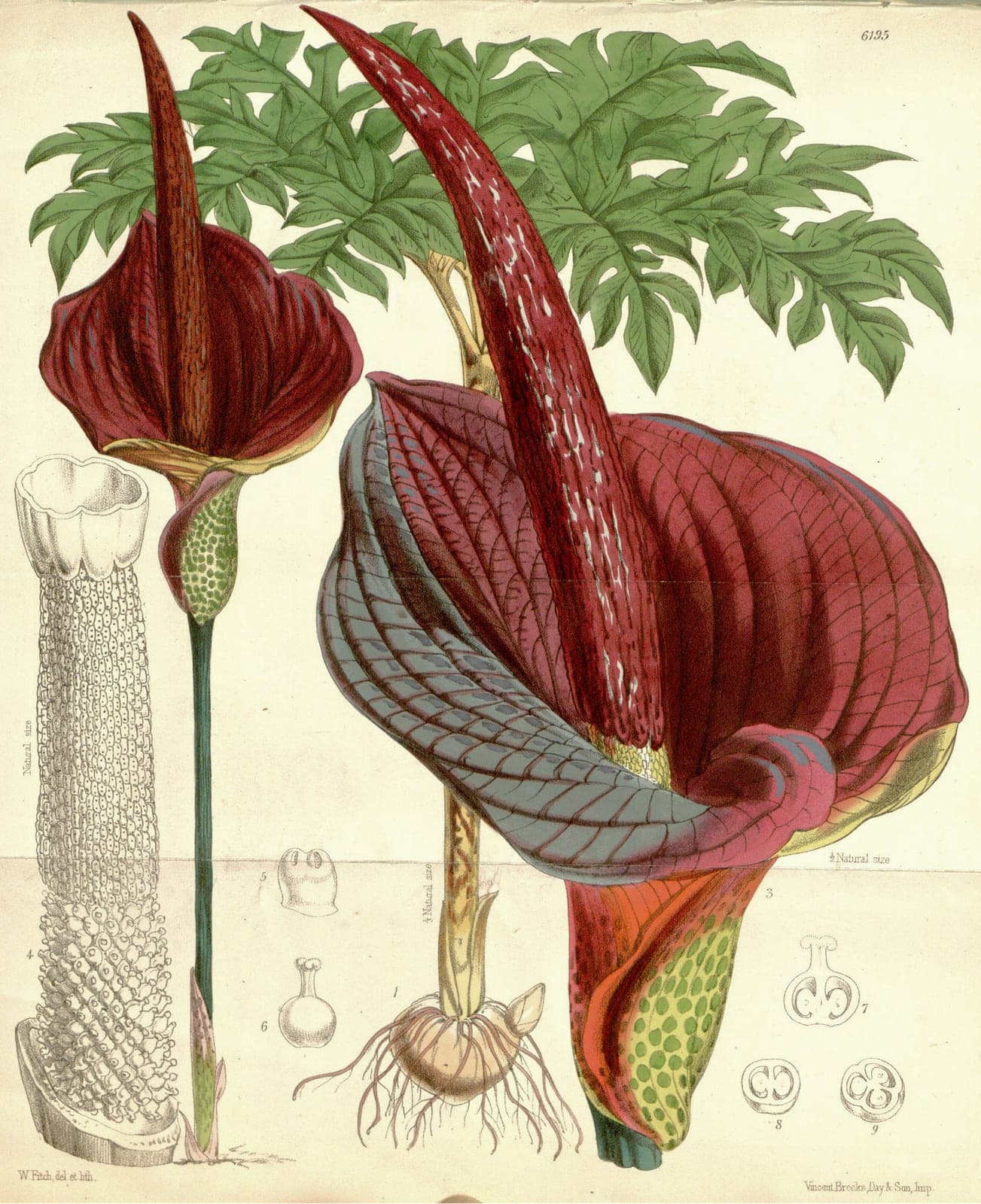
Konjac is a corm-forming perennial native to warm temperate and subtropical Asia, cultivated for centuries for the glucomannan fiber extracted from its starchy corm. A single compound leaf, held on a 3–4 ft mottled, snake-patterned petiole, can spread 4–6 ft across - one of the most dramatically textured foliage plants a temperate gardener can grow in partial shade. On large, mature corms, a briefly-appearing spathe and spadix emerges before the leaf; it generates heat and a strong fetid odor to attract pollinators.
Konjac grows rapidly once soil exceeds 60°F and demands deep, humus-rich, well-drained soil with consistent moisture. Waterlogged conditions cause rapid corm rot. A woodland garden setting - dappled light, amended soil, steady moisture - suits it well. In zones 6–7, lift corms after foliage yellows in autumn and store them at 50–55°F until spring; in zones 8 and warmer, corms overwinter in the ground under a thick mulch layer. Corms offset freely, building planting stock over several seasons. Soil pH between 6.0 and 6.8 is optimal; avoid hot, dry exposure.
Konjac glucomannan has been evaluated in clinical trials for reducing postprandial blood glucose, lowering LDL cholesterol, and supporting satiety-based weight management. Processed corm is the source material for konnyaku (a firm gel cake) and shirataki noodles, both used extensively in Japanese, Chinese, and Korean cooking as low-calorie, high-fiber staples.
Bacterial Soft Rot
Rhizomes turn mushy and foul-smelling; foliage yellows and pulls away easily at the base. Often follows borer damage or overly wet soil.
Cut away all soft tissue back to firm rhizome, let it dry, and dust the cut with sulfur. Improve drainage and avoid burying rhizomes. Destroy badly infected plants.
Root rot
Plants wilt, yellow, and stunt even in moist soil; lower stems and roots turn brown, soft, and mushy and the plant may collapse. Most common in heavy, wet, or poorly drained ground.
Improve drainage and stop overwatering, and never plant too deep. Lift and destroy badly affected plants along with the soil around the roots. Grow in raised or free-draining beds to prevent it returning.
Fusarium wilt
Sudden wilting, brown streaks in stems, yellowing leaves. Affects sweet basil varieties most.
No cure. Remove and destroy plants. Do not replant in the same spot for 3+ years. Choose resistant varieties.