
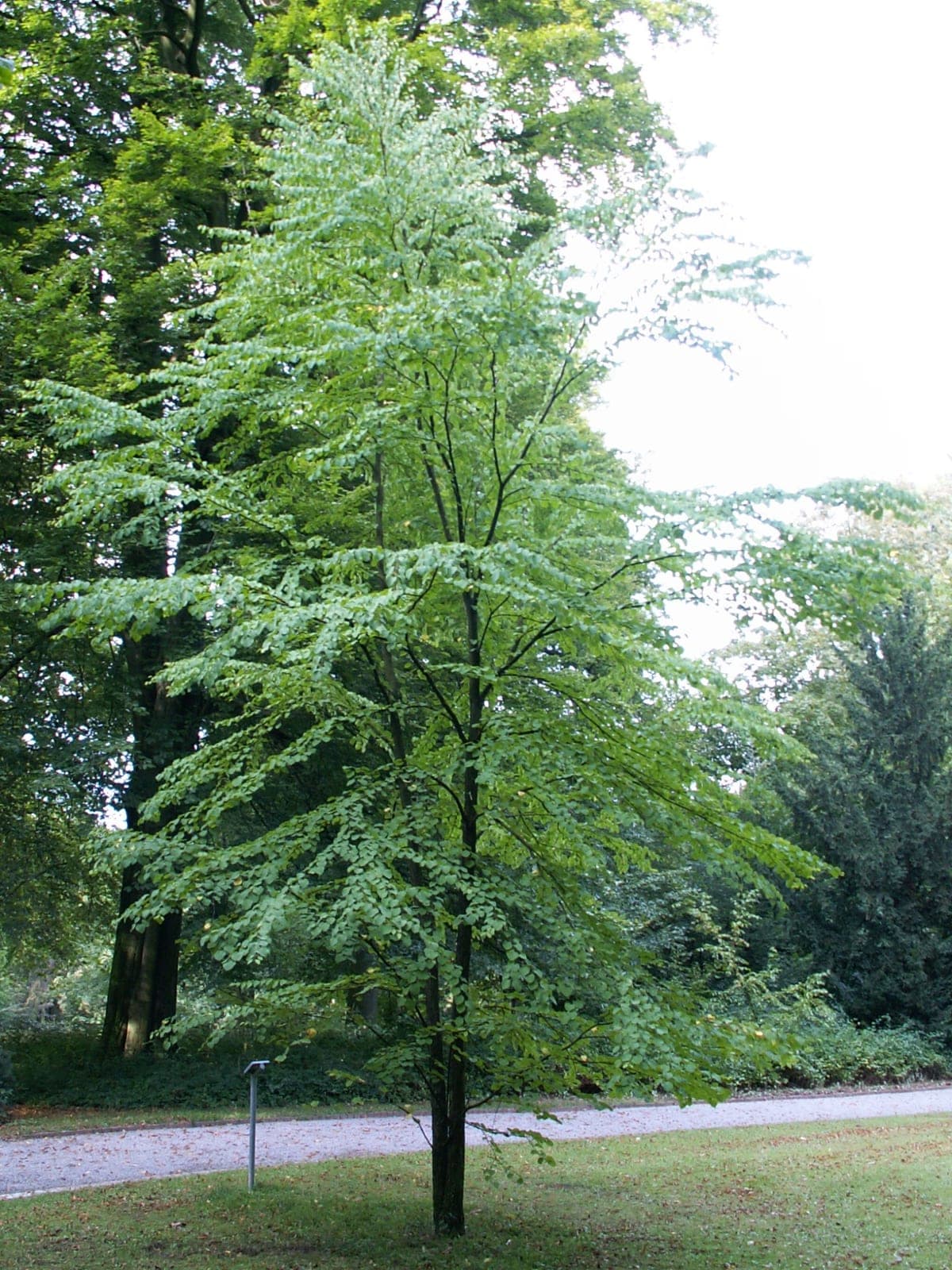
Cercidiphyllum japonicum is a large deciduous tree native to moist mountain forests in China and Japan. It offers genuine multi-season interest: new leaves emerge reddish-purple in spring, age to blue-green through summer, then turn yellow, orange, or red in fall while releasing a caramel-cotton candy scent from decomposing foliage - a quality unique among common landscape trees.
The tree is dioecious, with male and female plants equally ornamental. In cultivation it typically reaches 40–60 ft with a broad, layered crown. Consistent soil moisture is the most critical cultural requirement - leaf scorch appears quickly on dry sites, especially during the first few seasons. Slightly acidic to neutral soil rich in organic matter and a permanent mulch ring over the root zone significantly aid establishment. Katsura works as a large specimen, a multi-stem grove planting, or a street tree where adequate root run and reliable irrigation are available. Weeping selections such as 'Pendulum' suit tighter spaces. The species is largely free of serious pest and disease problems once established.
Verticillium Wilt
Lower leaves yellow and wilt, often on one side of the plant, with brown streaking in the stem and crown tissue when cut open. Plants are stunted and decline over the season.
Remove and destroy affected plants. Avoid planting in soil that has grown infected tomatoes, peppers, or other susceptible crops. Rotate beds and improve drainage; there is no cure once a plant is infected.
Fungal leaf spot
Brown or purplish spots on the leaves, often ringed with a yellow halo, that spread and merge in warm, humid, or wet weather; heavily spotted leaves yellow and drop early.
Pick off spotted leaves and clear fallen debris to remove overwintering spores. Improve air circulation by thinning, and water at the base so foliage dries quickly. If it persists, apply a copper- or sulfur-based fungicide at the first sign.