
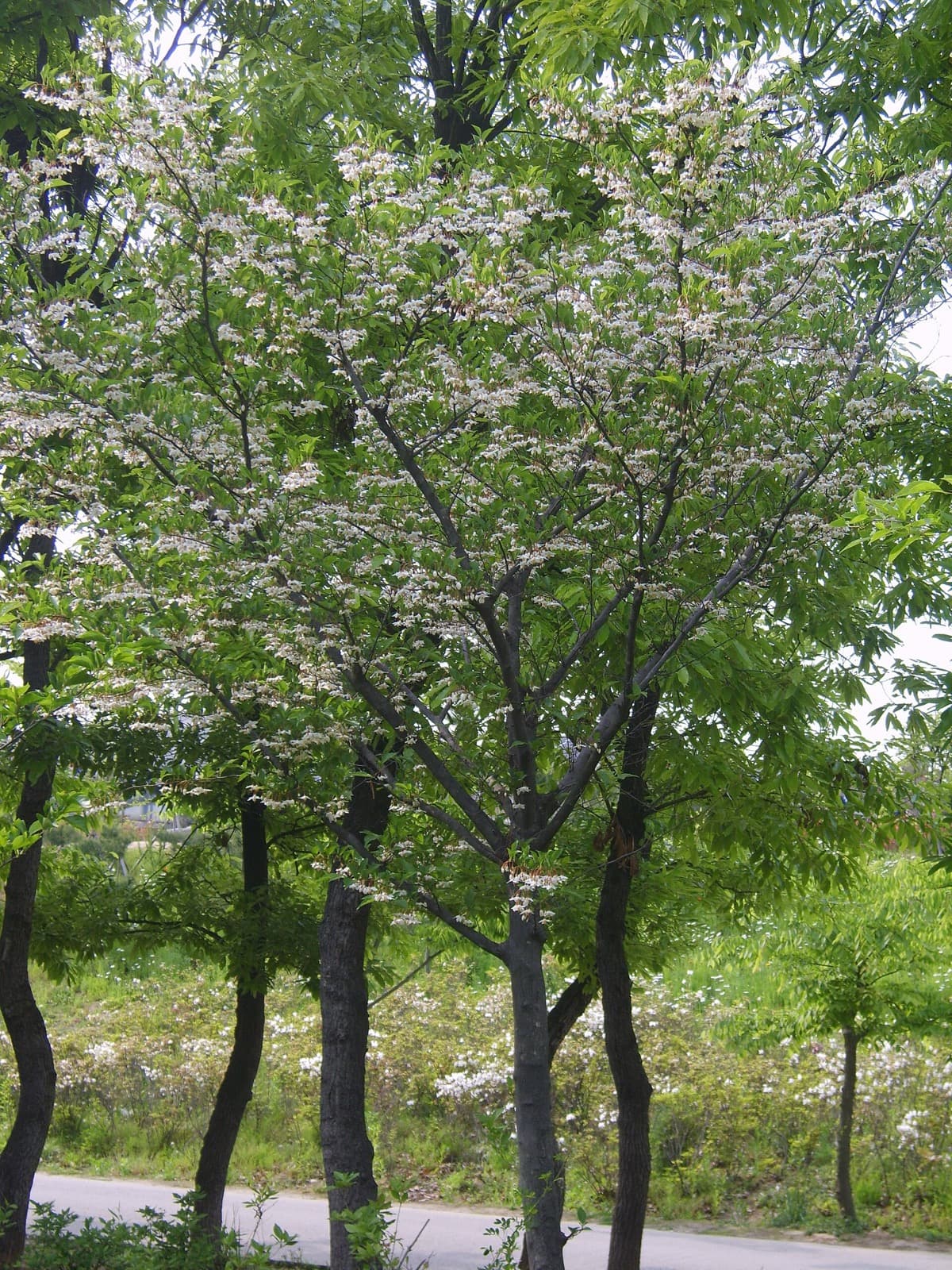
Snowcone is a compact, upright-pyramidal cultivar of Japanese snowbell (Styrax japonicus), a small deciduous tree native to Japan, China, and Korea. In late spring it produces pendulous clusters of white, lightly fragrant bell-shaped flowers with yellow stamens that hang below the foliage, creating a distinctive layered look when viewed from underneath. Oval gray-green fruit follow, and the foliage turns clean yellow in fall. The tighter, more vertical habit of this cultivar suits smaller residential lots and urban streetscapes where the species would be too broad.
Grow in moist, well-drained, humus-rich, acidic soil. A mulch layer over the root zone preserves moisture, moderates root temperature, and helps maintain the slightly acidic pH the tree requires. It tolerates more shade than most ornamental trees and benefits from afternoon shade in the warmer, more humid parts of its range. Consistent moisture through the first two to three growing seasons is critical for establishment; mature trees develop moderate drought tolerance. In zone 5, a wind-sheltered position reduces the risk of tip dieback in severe winters.
Fungal leaf spot
Brown or purplish spots on the leaves, often ringed with a yellow halo, that spread and merge in warm, humid, or wet weather; heavily spotted leaves yellow and drop early.
Pick off spotted leaves and clear fallen debris to remove overwintering spores. Improve air circulation by thinning, and water at the base so foliage dries quickly. If it persists, apply a copper- or sulfur-based fungicide at the first sign.
Botryosphaeria Canker
Dark, sunken cankers on stems and major branches, most often occurring after drought stress or mechanical wounding. Bark peeled back from affected areas reveals brown, discolored wood beneath. Branch tips wilt and die back progressively inward.
Prune infected branches at least 6 inches below the visible canker margin using sterilized tools, and dispose of all cuttings away from the garden. Reduce plant stress by maintaining consistent irrigation during dry periods and avoiding bark wounds during maintenance. No curative fungicide is available; keeping plants vigorous is the primary preventive strategy.
Root rot
Plants wilt, yellow, and stunt even in moist soil; lower stems and roots turn brown, soft, and mushy and the plant may collapse. Most common in heavy, wet, or poorly drained ground.
Improve drainage and stop overwatering, and never plant too deep. Lift and destroy badly affected plants along with the soil around the roots. Grow in raised or free-draining beds to prevent it returning.