
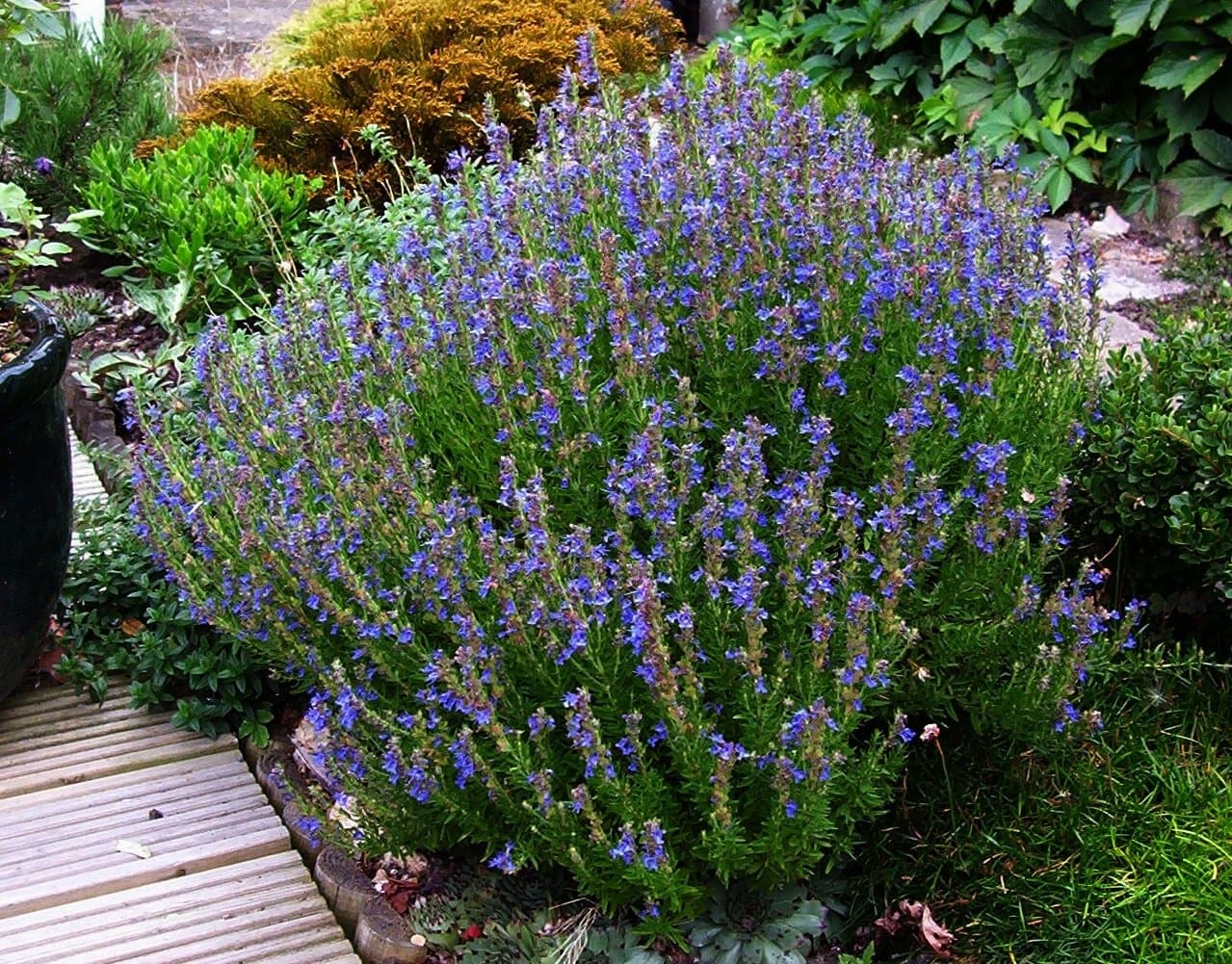
Hyssopus officinalis is a semi-evergreen subshrub in the mint family, native to southern Europe, the Middle East, and the Caspian basin. It forms dense, upright stems clothed in narrow, dark green, strongly aromatic leaves. In the garden it works simultaneously as a culinary herb, a compact edging plant, and a reliable pollinator magnet that draws bees and butterflies throughout summer.
Hyssop thrives in lean, alkaline, fast-draining soil and full sun. It handles drought well once established and resents overwatering or heavy, wet soil. Preferred pH runs 7.0–8.0; avoid acid or waterlogged conditions. Hard pruning in early spring prevents the woody, open-centered habit that develops if plants are left unchecked. Cold-hardy to zone 4 provided drainage is good.
Leaves and flowers are used in European cooking to flavor fatty meats, soups, and salads; the herb is an ingredient in Chartreuse and absinthe. Traditional European herbal medicine relied on hyssop as an expectorant, cough reliever, and antiseptic. Modern analysis of its volatile oils confirms antispasmodic and antimicrobial activity consistent with these uses.
Powdery mildew
White or grey powdery coating on leaves - usually starting on older growth in humid conditions or when nights cool.
Improve air circulation by thinning plants. Apply neem oil or potassium bicarbonate spray at first sign. Avoid overhead watering.
Root rot
Plants wilt, yellow, and stunt even in moist soil; lower stems and roots turn brown, soft, and mushy and the plant may collapse. Most common in heavy, wet, or poorly drained ground.
Improve drainage and stop overwatering, and never plant too deep. Lift and destroy badly affected plants along with the soil around the roots. Grow in raised or free-draining beds to prevent it returning.