
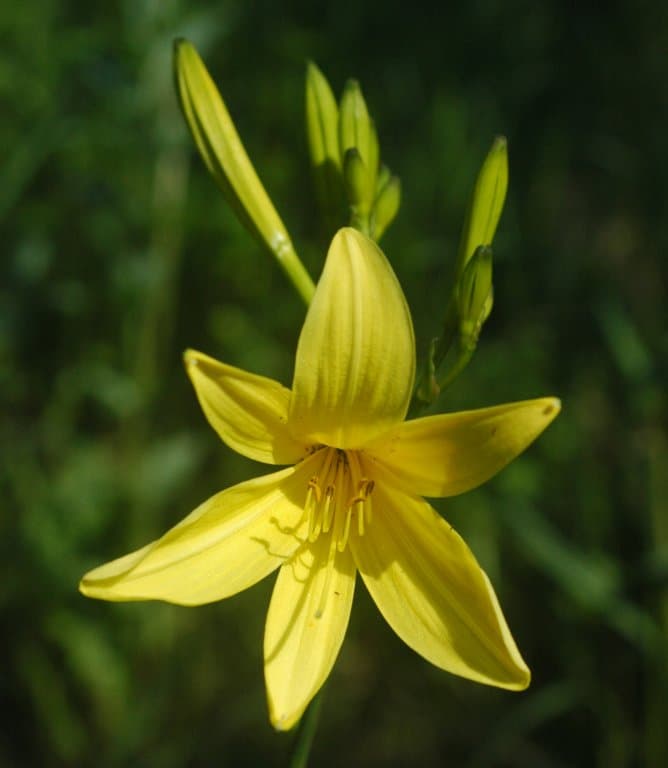
Hemerocallis fulva is a rhizomatous perennial native to Asia that has naturalized across much of North America and Europe. Each flower opens for a single day, but established clumps carry dozens of buds and bloom over three to four weeks in midsummer. It is not a true lily; the resemblance to Lilium is superficial.
This species spreads by thick rhizomes and fleshy roots, forming dense colonies that crowd out surrounding plants. In parts of the eastern United States it is considered invasive, particularly along roadsides, stream banks, and disturbed ground. It tolerates a wide pH range (5.5–7.5), poor soils, and brief drought once established. Dividing clumps every three to five years maintains vigor and controls spread. A layer of mulch during establishment conserves moisture and suppresses weeds.
All parts of H. fulva are edible. Young spring shoots are cooked as a vegetable in Chinese and Japanese cuisines. Fresh buds and open flowers can be eaten raw or cooked. Dried flower buds - called golden needles (金针) - are a staple of Chinese cooking, used in hot-and-sour soup and Buddha's Delight. In traditional Chinese medicine the plant is known as forget-sorrow herb and has been used for anxiety, depression, and edema.
Daylily Leaf Streak
Yellow streaks running lengthwise along leaves from tip toward base, progressing to tan or brown necrotic tissue; heavily infected leaves die back prematurely, leaving the clump looking scorched by midsummer.
Remove and destroy infected foliage as soon as symptoms appear. Avoid overhead irrigation. Apply a broad-spectrum fungicide labeled for Aureobasidium at first sign of infection and repeat per label intervals during wet periods. Cut all foliage to ground level in fall and dispose of debris away from the garden to reduce inoculum for the following season.
Rust
Orange to brown raised pustules on the undersides of leaves, with yellow spotting on the upper surface. Heavy infections cause leaves to yellow and drop.
Remove and destroy infected leaves. Avoid overhead watering and improve air circulation. Apply a sulfur or copper-based fungicide if it spreads. Clear plant debris in fall.
Fungal leaf spot
Brown or purplish spots on the leaves, often ringed with a yellow halo, that spread and merge in warm, humid, or wet weather; heavily spotted leaves yellow and drop early.
Pick off spotted leaves and clear fallen debris to remove overwintering spores. Improve air circulation by thinning, and water at the base so foliage dries quickly. If it persists, apply a copper- or sulfur-based fungicide at the first sign.
Crown Rot
Lower leaves yellow and wilt; the base of the rosette turns brown and soft, sometimes with white fungal threads at the soil line. Plants collapse in wet conditions.
Remove and destroy affected plants. Improve drainage and avoid overhead watering. Do not mulch directly against the crown. Space plants for airflow and avoid replanting in the same wet spot.