
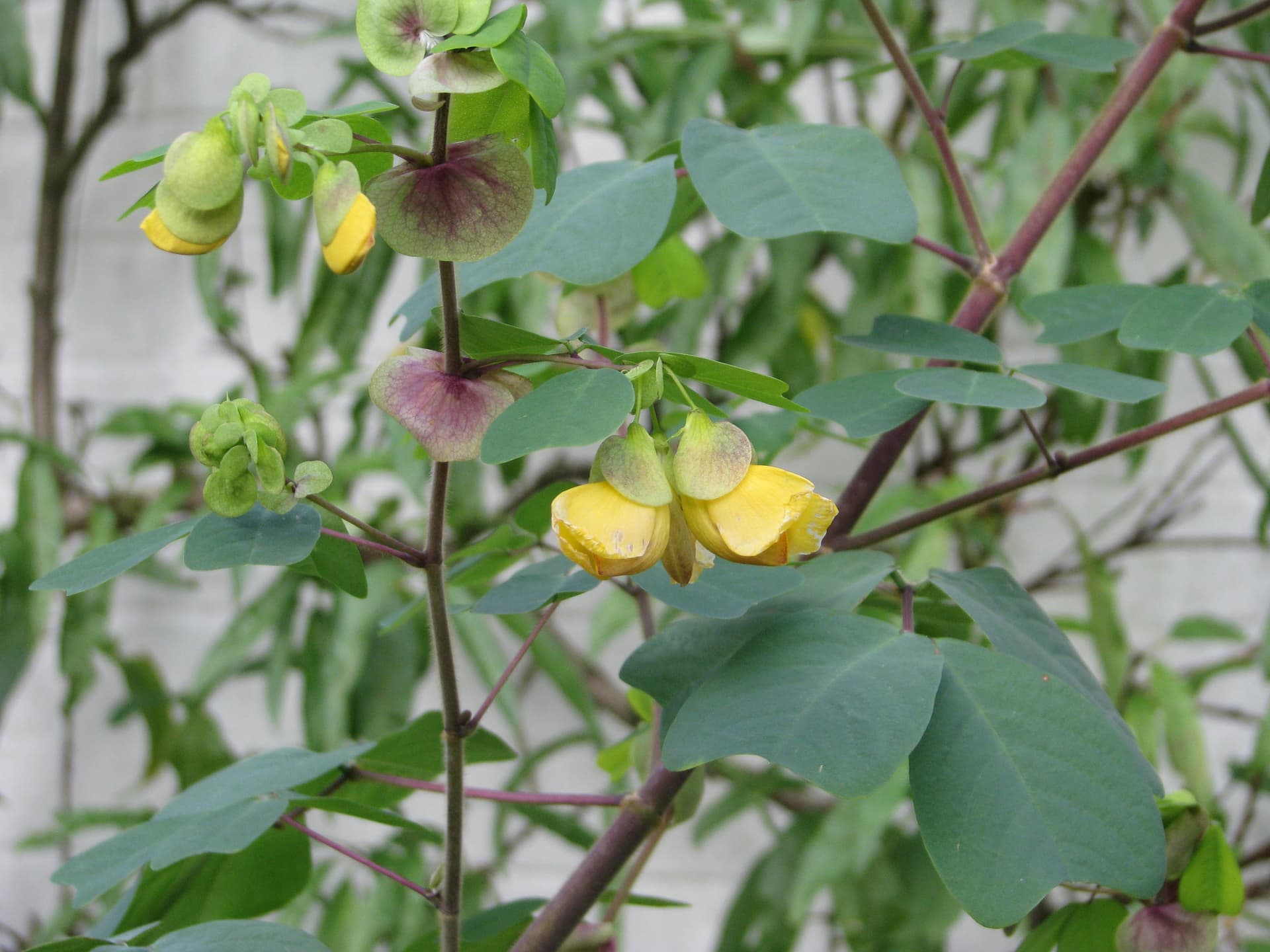
Amicia zygomeris is a fast-growing leguminous shrub from highland Mexico, grown for its bold paired leaflets and clusters of bright yellow pea-type flowers marked with purple veins. When the leaves are touched they fold downward - a thigmonastic response that accounts for the colloquial common name.
In zones 7b–8, hard frost kills stems to the ground each year and the plant regrows vigorously from a woody rootstock in spring, often reaching 5–8 feet before late-summer flowering. In zones 9–10 it maintains woody stems through winter. A deep mulch over the root zone in late fall extends survival at the cold edge of its range. As a legume, root nodules fix atmospheric nitrogen, gradually improving the surrounding soil.
Powdery mildew
White or grey powdery coating on leaves - usually starting on older growth in humid conditions or when nights cool.
Improve air circulation by thinning plants. Apply neem oil or potassium bicarbonate spray at first sign. Avoid overhead watering.
Root rot
Plants wilt, yellow, and stunt even in moist soil; lower stems and roots turn brown, soft, and mushy and the plant may collapse. Most common in heavy, wet, or poorly drained ground.
Improve drainage and stop overwatering, and never plant too deep. Lift and destroy badly affected plants along with the soil around the roots. Grow in raised or free-draining beds to prevent it returning.
Fungal leaf spot
Brown or purplish spots on the leaves, often ringed with a yellow halo, that spread and merge in warm, humid, or wet weather; heavily spotted leaves yellow and drop early.
Pick off spotted leaves and clear fallen debris to remove overwintering spores. Improve air circulation by thinning, and water at the base so foliage dries quickly. If it persists, apply a copper- or sulfur-based fungicide at the first sign.