
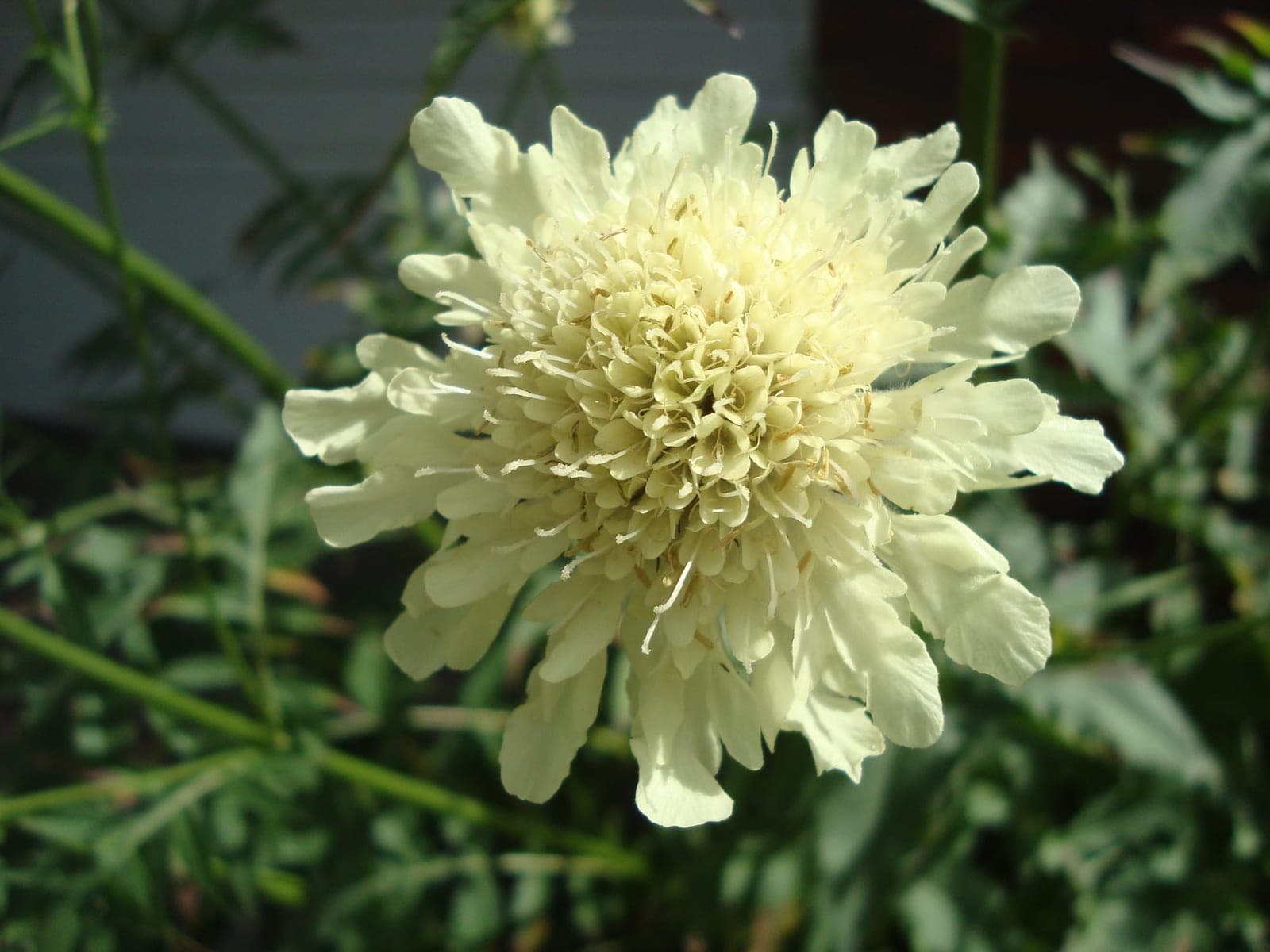
Cephalaria gigantea is a large herbaceous perennial native to the Caucasus mountains and Turkey, placed in the honeysuckle family Caprifoliaceae. It sends up branching stems reaching 6–8 feet, carrying pale primrose-yellow pincushion flowers in early to midsummer. Despite its scale, the plant has an open, airy habit that reads as informal rather than imposing at the back of a border.
It develops a deep taproot after the first season and resents disturbance once established; choose the planting site carefully before putting it in the ground. Self-seeding is moderate - deadhead after flowering if volunteers are unwanted, or leave a few heads to set seed. The plant is notably drought tolerant once roots are settled and rarely needs staking except on very exposed sites. It blooms earlier than most tall summer perennials, typically June into July, bridging the gap between late-spring and high-summer peaks.
The flowers draw bumblebees and other long-tongued pollinators reliably. Seed heads left standing through late summer provide structure and attract seed-eating birds.
Powdery mildew
White or grey powdery coating on leaves - usually starting on older growth in humid conditions or when nights cool.
Improve air circulation by thinning plants. Apply neem oil or potassium bicarbonate spray at first sign. Avoid overhead watering.
Root rot
Plants wilt, yellow, and stunt even in moist soil; lower stems and roots turn brown, soft, and mushy and the plant may collapse. Most common in heavy, wet, or poorly drained ground.
Improve drainage and stop overwatering, and never plant too deep. Lift and destroy badly affected plants along with the soil around the roots. Grow in raised or free-draining beds to prevent it returning.