
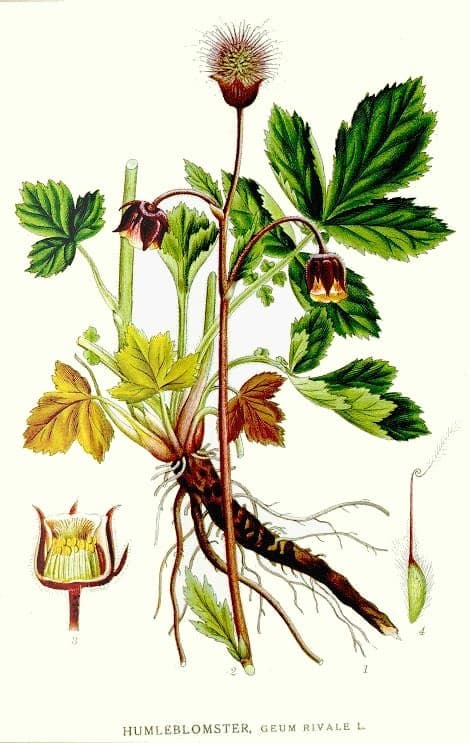
Geum 'Tangerine' is a hybrid avens bearing semi-double, tangerine-orange flowers on slender wiry stems above a compact basal rosette of lobed, deep green leaves. It blooms heavily from late spring into early summer and often produces a second flush when temperatures drop in early fall. In the mixed border it bridges the gap between spring bulbs and the main summer display.
Plants perform best in full sun to part shade with consistently moist, well-drained soil. They are not drought tolerant and decline quickly in waterlogged ground or heavy clay; reliable winter drainage is critical to prevent crown rot. Clumps should be divided every three to four years to maintain vigor, as the woody center becomes unproductive with age. In hot-summer climates, afternoon shade extends the flowering period.
Powdery mildew
White or grey powdery coating on leaves - usually starting on older growth in humid conditions or when nights cool.
Improve air circulation by thinning plants. Apply neem oil or potassium bicarbonate spray at first sign. Avoid overhead watering.
Crown Rot
Lower leaves yellow and wilt; the base of the rosette turns brown and soft, sometimes with white fungal threads at the soil line. Plants collapse in wet conditions.
Remove and destroy affected plants. Improve drainage and avoid overhead watering. Do not mulch directly against the crown. Space plants for airflow and avoid replanting in the same wet spot.
Root rot
Plants wilt, yellow, and stunt even in moist soil; lower stems and roots turn brown, soft, and mushy and the plant may collapse. Most common in heavy, wet, or poorly drained ground.
Improve drainage and stop overwatering, and never plant too deep. Lift and destroy badly affected plants along with the soil around the roots. Grow in raised or free-draining beds to prevent it returning.
Botrytis (grey mould)
Grey fuzzy mould on petals and stems, worst in cool wet conditions.
Remove affected parts immediately. Improve air circulation. Avoid overhead watering. Apply copper fungicide if severe.
Fungal leaf spot
Brown or purplish spots on the leaves, often ringed with a yellow halo, that spread and merge in warm, humid, or wet weather; heavily spotted leaves yellow and drop early.
Pick off spotted leaves and clear fallen debris to remove overwintering spores. Improve air circulation by thinning, and water at the base so foliage dries quickly. If it persists, apply a copper- or sulfur-based fungicide at the first sign.