
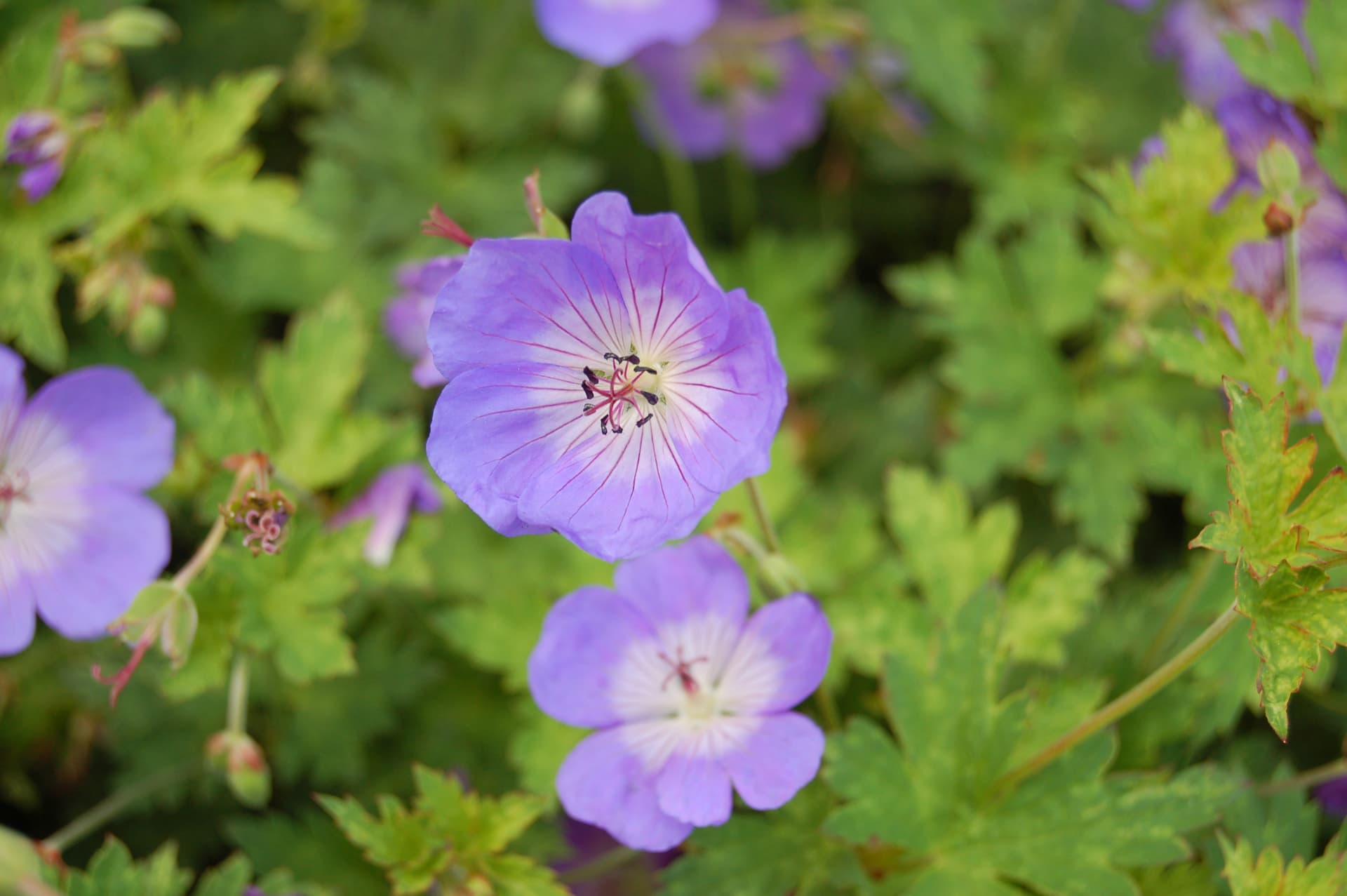
Native to the Himalayas, this sprawling hardy geranium carries masses of blue, saucer-shaped flowers with contrasting white centers over hairy, toothed leaves from midsummer well into fall - one of the longest bloom seasons in the genus. Its trailing habit makes it as useful spilling over a wall or path edge as it is threaded through a border.
It wants consistently moist soil and doesn't like to dry out for long, but otherwise adapts to a range of soil types from sandy to clay. Light shearing after the first flush encourages the continued rebloom that makes this species such a long performer.
Fungal leaf spot
Brown or purplish spots on the leaves, often ringed with a yellow halo, that spread and merge in warm, humid, or wet weather; heavily spotted leaves yellow and drop early.
Pick off spotted leaves and clear fallen debris to remove overwintering spores. Improve air circulation by thinning, and water at the base so foliage dries quickly. If it persists, apply a copper- or sulfur-based fungicide at the first sign.