
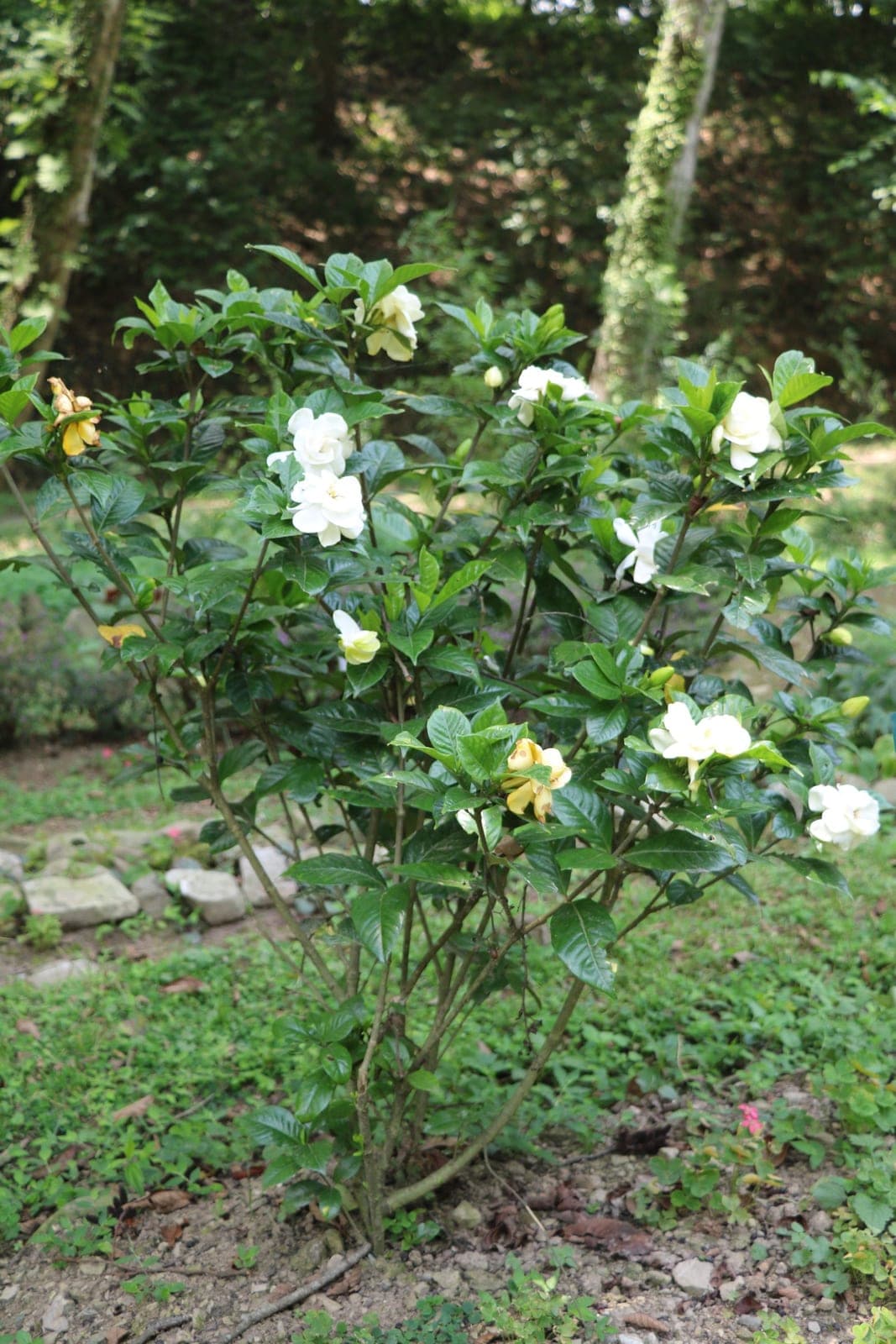
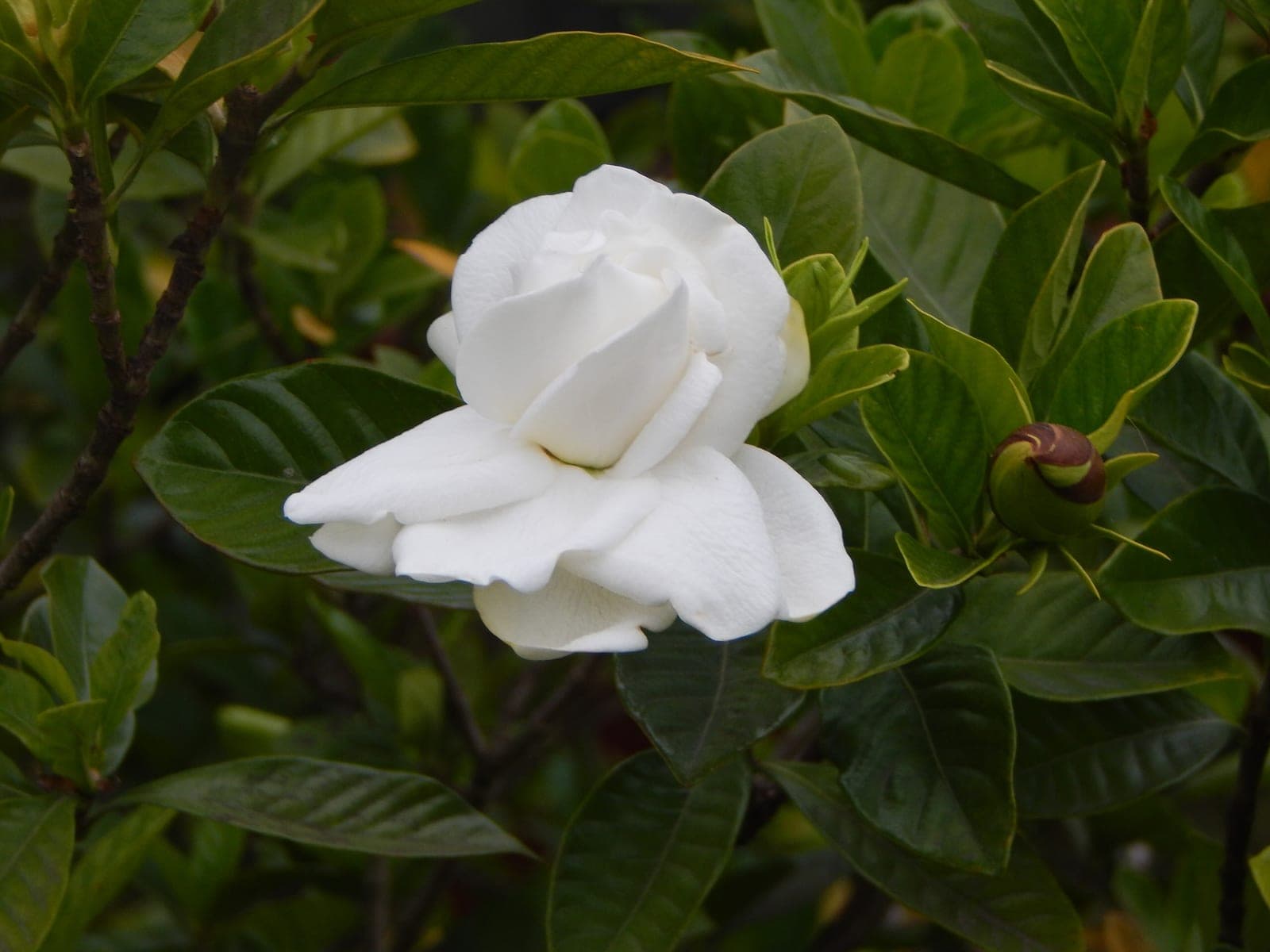
Gardenia jasminoides (cape jasmine) is a broadleaf evergreen shrub native to subtropical East Asia. It produces intensely fragrant white flowers against dark, glossy foliage and, in USDA zones 8–11, performs as a long-lived landscape shrub. In cooler regions it is widely grown in containers and overwintered indoors.
Gardenias require acidic soil at pH 5.0–6.0 and develop pronounced interveinal yellowing (chlorosis) when planted in neutral or alkaline ground. Consistent moisture is essential; uneven watering is the leading cause of bud drop before flowers open. A thick organic mulch layer stabilizes soil temperature, conserves moisture, and gradually acidifies the root zone. Afternoon shade reduces heat stress in hot inland climates and extends the flowering period. Pruning should be done immediately after the main flowering flush to avoid removing next season's buds.
The dried ripe fruit, known in Chinese medicine as Zhizi, has centuries of documented use for reducing fever, treating jaundice, and addressing inflammatory conditions. Modern research has confirmed anti-inflammatory and antioxidant activity in gardenia extracts. The fruit's carotenoid pigments (crocetin and crocin) serve as yellow food colorants in East Asian cuisines, and genipin - derived from gardenia glycosides - is under active study in biomedical research for tissue crosslinking applications.
Growing it indoors up north? See the indoor care guide - light, water, and the rhythm that keeps it flowering as a houseplant.Powdery mildew
White or grey powdery coating on leaves - usually starting on older growth in humid conditions or when nights cool.
Improve air circulation by thinning plants. Apply neem oil or potassium bicarbonate spray at first sign. Avoid overhead watering.
Sooty Mold (Scale-Associated)
Black, powdery or crusty coating on upper leaf surfaces and stems. Affected leaves may yellow and drop in severe cases. The mold grows on honeydew secreted by scale insects, mealybugs, or aphids feeding on the plant.
Control the underlying pest infestation first using horticultural oil or neem oil applied thoroughly to stems and leaf undersides. Once pest populations are reduced, sooty mold stops spreading and weathers away over time. Rinse foliage with a strong stream of water to dislodge existing mold deposits.
Phytophthora Root Rot
Wilting despite moist soil, yellowing leaves, stunted growth, and dark, decayed roots and crown tissue. Vines may collapse during hot weather.
Plant in well-draining soil and avoid waterlogging. Remove and destroy affected vines. Improve drainage with raised beds or amended soil and avoid overwatering.
Root rot
Plants wilt, yellow, and stunt even in moist soil; lower stems and roots turn brown, soft, and mushy and the plant may collapse. Most common in heavy, wet, or poorly drained ground.
Improve drainage and stop overwatering, and never plant too deep. Lift and destroy badly affected plants along with the soil around the roots. Grow in raised or free-draining beds to prevent it returning.
Cercospora Leaf Spot
Small round spots with tan or gray centers and reddish-purple borders on leaves. Spots merge in severe cases, causing leaves to brown and die back.
Remove infected leaves and avoid overhead watering. Space plants for airflow and rotate crops. Apply a copper-based fungicide if the infection spreads.
Botrytis (grey mould)
Grey fuzzy mould on petals and stems, worst in cool wet conditions.
Remove affected parts immediately. Improve air circulation. Avoid overhead watering. Apply copper fungicide if severe.
Root-Knot Nematode
Swollen galls on roots, poor vigor, wilting in heat, and reduced fruiting. Containers and sandy soils are more prone.
Use clean potting mix in containers. Avoid replanting in infested soil. Maintain plant vigor with mulch and steady watering. Solarize affected garden soil.