
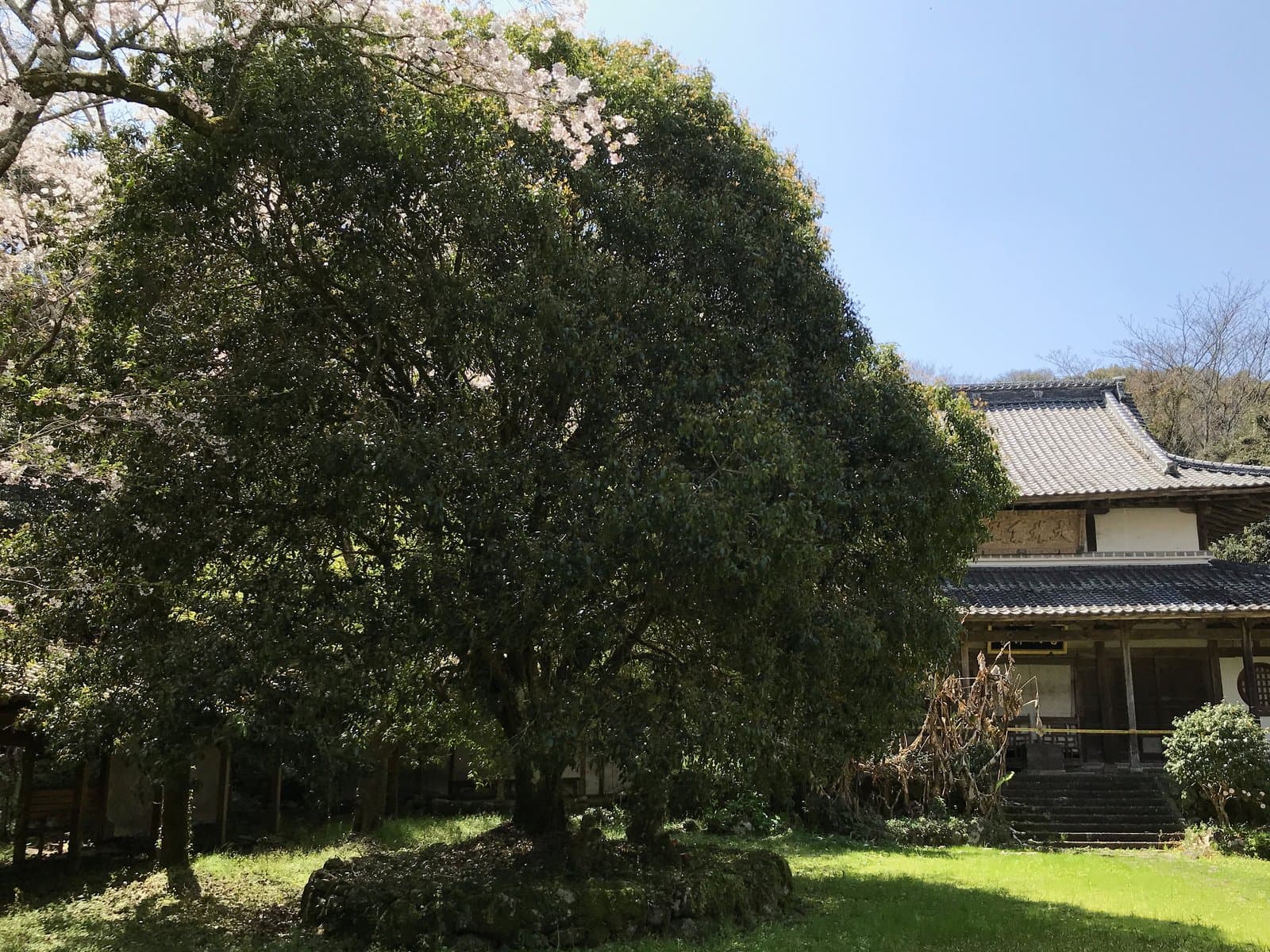
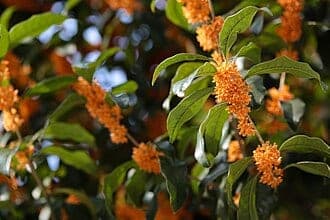
Osmanthus fragrans is a large evergreen shrub or small tree native to China, Japan, and the Himalayan region. It produces small, inconspicuous flowers with an exceptionally strong sweet fragrance. A single established plant can scent a garden from a considerable distance, and it provides year-round evergreen structure that makes it useful well beyond its brief bloom windows.
It grows slowly to 10–20 feet and tolerates a range of light from full sun to part shade, though bloom production is heavier in good light. Slightly acidic, well-drained soil amended with organic matter suits it well. Mulching the root zone conserves moisture and insulates roots near the zone 8a limit. In borderline climates, planting against a south-facing wall helps buffer hard freezes. Peak bloom occurs in fall; some cultivars rebloom in spring or winter.
In China, where the plant is called guì huā (桂花), the flowers are used to scent oolong and green teas, flavor rice wine, and make osmanthus jelly, cakes, and infused honey. Traditional Chinese medicine uses the flowers for cough and stomach discomfort. The floral essential oil is a significant ingredient in fine perfumery.
Phytophthora Root Rot
Wilting despite moist soil, yellowing leaves, stunted growth, and dark, decayed roots and crown tissue. Vines may collapse during hot weather.
Plant in well-draining soil and avoid waterlogging. Remove and destroy affected vines. Improve drainage with raised beds or amended soil and avoid overwatering.
Root rot
Plants wilt, yellow, and stunt even in moist soil; lower stems and roots turn brown, soft, and mushy and the plant may collapse. Most common in heavy, wet, or poorly drained ground.
Improve drainage and stop overwatering, and never plant too deep. Lift and destroy badly affected plants along with the soil around the roots. Grow in raised or free-draining beds to prevent it returning.
Fungal leaf spot
Brown or purplish spots on the leaves, often ringed with a yellow halo, that spread and merge in warm, humid, or wet weather; heavily spotted leaves yellow and drop early.
Pick off spotted leaves and clear fallen debris to remove overwintering spores. Improve air circulation by thinning, and water at the base so foliage dries quickly. If it persists, apply a copper- or sulfur-based fungicide at the first sign.
Sooty Mold (Scale-Associated)
Black, powdery or crusty coating on upper leaf surfaces and stems. Affected leaves may yellow and drop in severe cases. The mold grows on honeydew secreted by scale insects, mealybugs, or aphids feeding on the plant.
Control the underlying pest infestation first using horticultural oil or neem oil applied thoroughly to stems and leaf undersides. Once pest populations are reduced, sooty mold stops spreading and weathers away over time. Rinse foliage with a strong stream of water to dislodge existing mold deposits.