
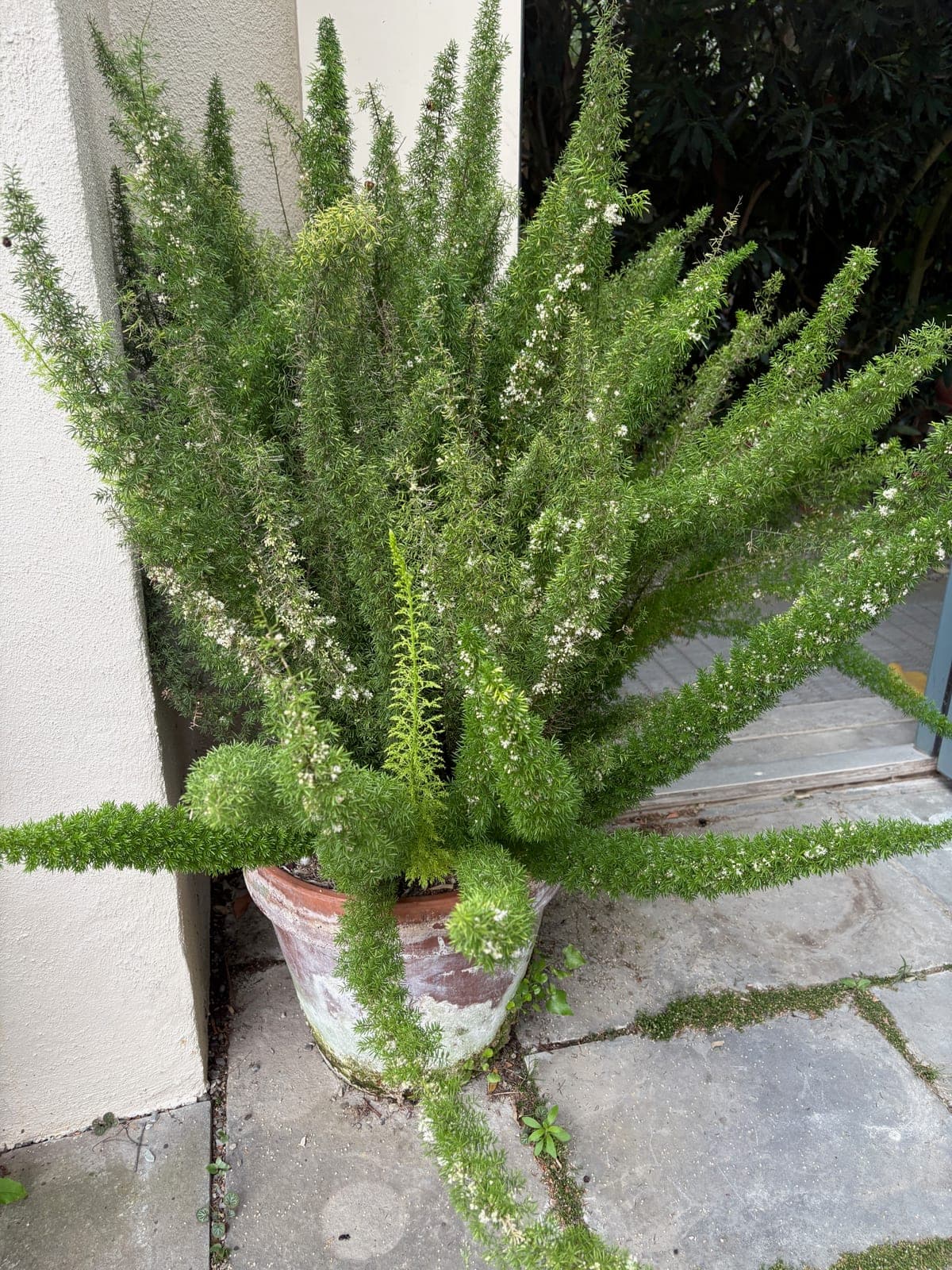
Outdoors in zones 9a and up, foxtail fern behaves nothing like the tidy houseplant it is farther north - it clumps, spreads by tuberous roots, and self-seeds readily from the small red berries that follow its inconspicuous white flowers. In Florida, where it escapes cultivation into natural areas, it is listed as invasive; plant it with that in mind, deadhead spent berries before birds distribute them further, and keep it out of beds that border conservation land or waterways.
Where it is welcome, it earns its keep as one of the toughest evergreen foliage plants for a Florida landscape - full sun to part shade, sandy soil, and long stretches without rain all suit it fine, and the arching bottle-brush plumes give structure to a bed year-round without ever needing deadheading for looks. Established clumps are drought tolerant enough to skip supplemental water outside of the driest stretches. The tradeoff for that toughness is vigor: divide congested clumps every couple of years to keep it in bounds, and stay ahead of seedlings coming up nearby.
Growing it indoors up north? See the indoor care guide - light, water, and the rhythm that keeps it flowering as a houseplant.Spider Mites
Tetranychus urticae →Fine stippling or bronzing on leaves, faint webbing on undersides, foliage drying out during hot, dry weather.
Spray foliage with a strong jet of water to dislodge mites. Apply insecticidal soap or horticultural oil to leaf undersides; repeat every 5–7 days as needed.