
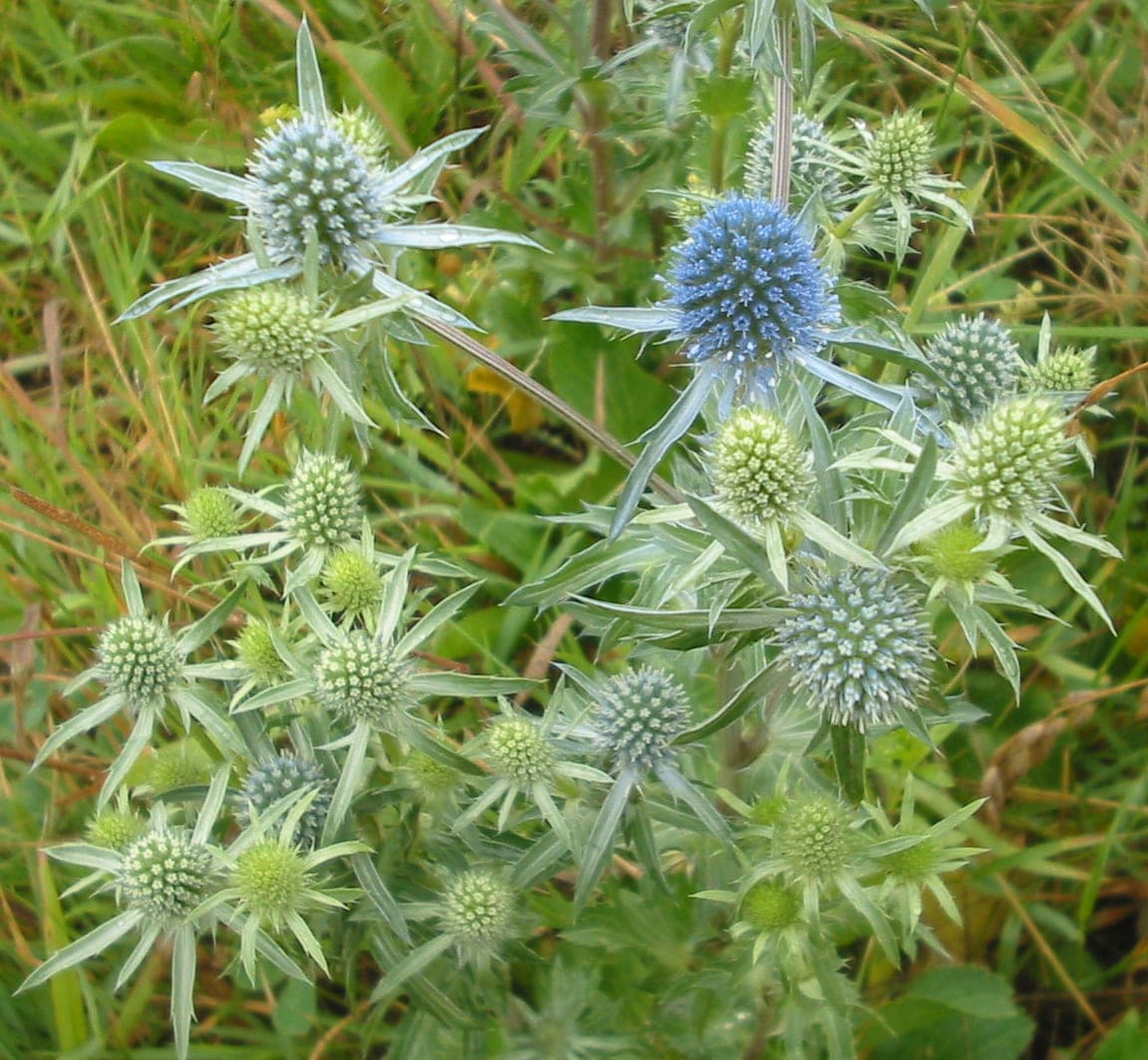
Eryngium planum is a taprooted herbaceous perennial native to central and southeastern Europe and Central Asia. The entire plant - stems, bracts, and flowerheads - takes on a steely metallic blue cast in summer, making it one of the more architecturally distinct perennials for open, dry sites. It belongs to the Apiaceae family and produces clusters of small, conical flowerheads surrounded by spiky bracts from midsummer into early fall.
Full sun and sharply drained, lean soil are essential. Rich or wet soil encourages floppy stems and crown rot; avoid mulching around the crown. The taproot makes established plants drought tolerant but difficult to relocate, so seedlings should be moved to their permanent position while still small. Plants self-seed reliably, and dried stems hold form and color well into winter. Cold hardiness is strong, with roots surviving well below freezing.
The flowerheads attract bees, hoverflies, and wasps throughout summer. Stems cut at peak color retain their blue tones when dried. In the landscape, E. planum suits gravel gardens, dry mixed borders, and prairie-style plantings where lean soil limits competition from more vigorous species. Folk medicine traditions in Central and Eastern Europe have used the plant for urinary complaints.
Crown Rot
Lower leaves yellow and wilt; the base of the rosette turns brown and soft, sometimes with white fungal threads at the soil line. Plants collapse in wet conditions.
Remove and destroy affected plants. Improve drainage and avoid overhead watering. Do not mulch directly against the crown. Space plants for airflow and avoid replanting in the same wet spot.
Root rot
Plants wilt, yellow, and stunt even in moist soil; lower stems and roots turn brown, soft, and mushy and the plant may collapse. Most common in heavy, wet, or poorly drained ground.
Improve drainage and stop overwatering, and never plant too deep. Lift and destroy badly affected plants along with the soil around the roots. Grow in raised or free-draining beds to prevent it returning.
Powdery mildew
White or grey powdery coating on leaves - usually starting on older growth in humid conditions or when nights cool.
Improve air circulation by thinning plants. Apply neem oil or potassium bicarbonate spray at first sign. Avoid overhead watering.