
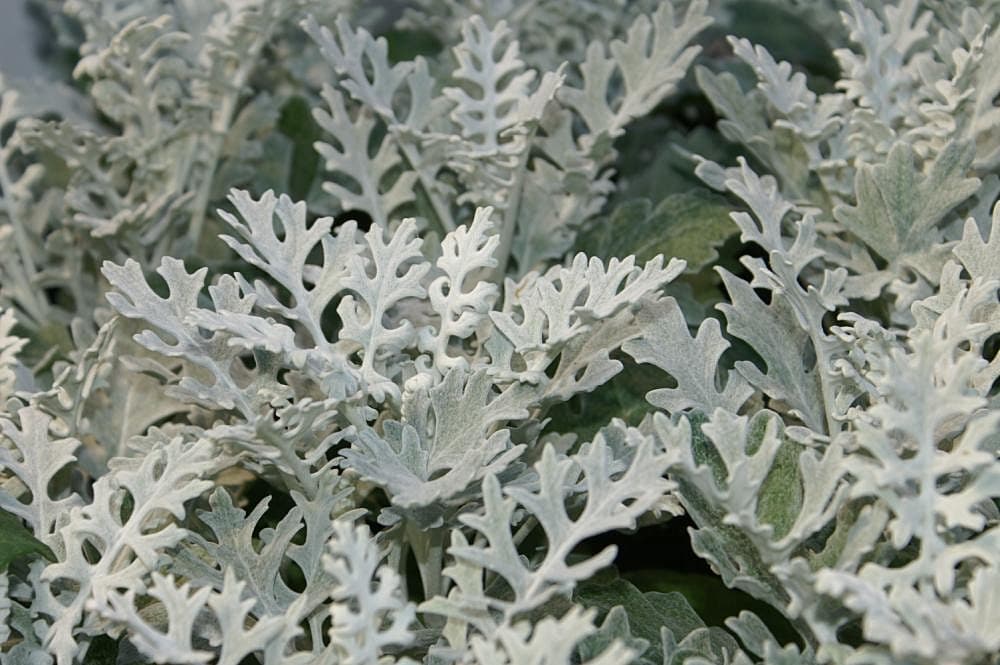
Dusty Miller (Jacobaea maritima, syn. Senecio cineraria) is a Mediterranean perennial grown for its deeply lobed, silver-white foliage. In USDA zones 8–10 it persists as a woody-based perennial; in cooler regions it is treated as a cool-season annual. Its primary role is as a foliage contrast plant in mixed borders, edging, and containers, where its pale leaves intensify the color of nearby plants.
Full sun and sharply drained soil are non-negotiable; waterlogged conditions are the leading cause of decline. Salt tolerance and low water needs make it reliable in coastal and low-irrigation landscapes. Removing flower buds as they develop keeps plants compact and maximizes foliage. In zones 8–10, cut plants back hard in late winter to encourage vigorous regrowth. pH between 5.5 and 7.0 suits it well; plants tolerate poor, sandy soils better than rich, wet ones.
Powdery mildew
White or grey powdery coating on leaves - usually starting on older growth in humid conditions or when nights cool.
Improve air circulation by thinning plants. Apply neem oil or potassium bicarbonate spray at first sign. Avoid overhead watering.
Root rot
Plants wilt, yellow, and stunt even in moist soil; lower stems and roots turn brown, soft, and mushy and the plant may collapse. Most common in heavy, wet, or poorly drained ground.
Improve drainage and stop overwatering, and never plant too deep. Lift and destroy badly affected plants along with the soil around the roots. Grow in raised or free-draining beds to prevent it returning.
Botrytis (grey mould)
Grey fuzzy mould on petals and stems, worst in cool wet conditions.
Remove affected parts immediately. Improve air circulation. Avoid overhead watering. Apply copper fungicide if severe.
Downy mildew
Yellowing on top of leaves with grey-purple fuzz underneath. Spreads rapidly in humid conditions.
Remove affected leaves. Improve air circulation. Avoid overhead watering. Copper spray as preventive.