
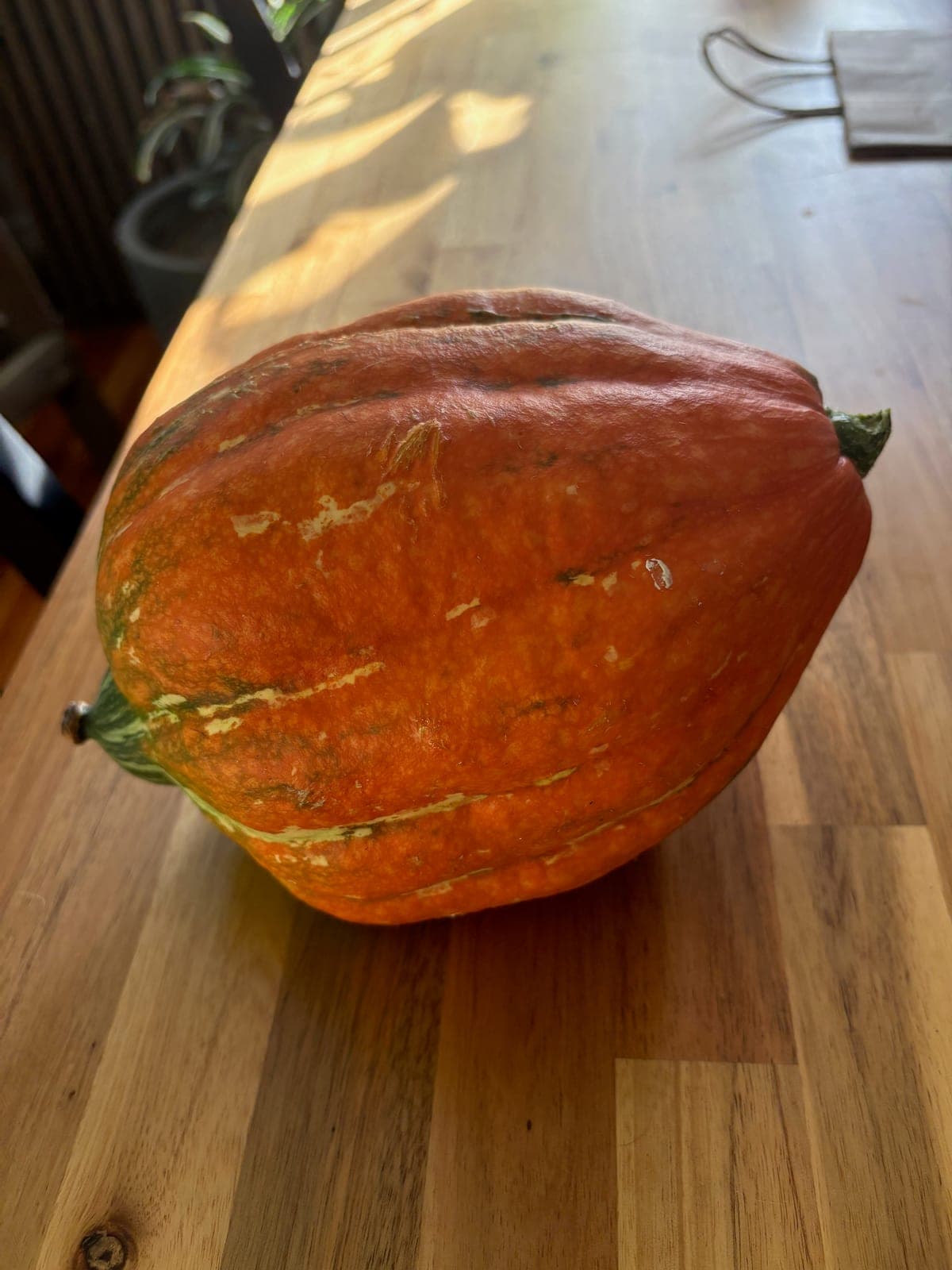
Red Kuri is a Japanese heirloom winter squash (Cucurbita maxima) grown for its vivid orange-red, teardrop-shaped fruit typically weighing 4–7 lb. The thin skin becomes tender enough to eat after cooking, eliminating peeling, and the dense, dry flesh has a pronounced chestnut-like sweetness. Fruit stores 3–6 months in cool, dry conditions, extending harvest well into winter. Cucurbita maxima as a species originated in South America more than 4,000 years ago; the Red Kuri variety was later developed in Japan from that lineage.
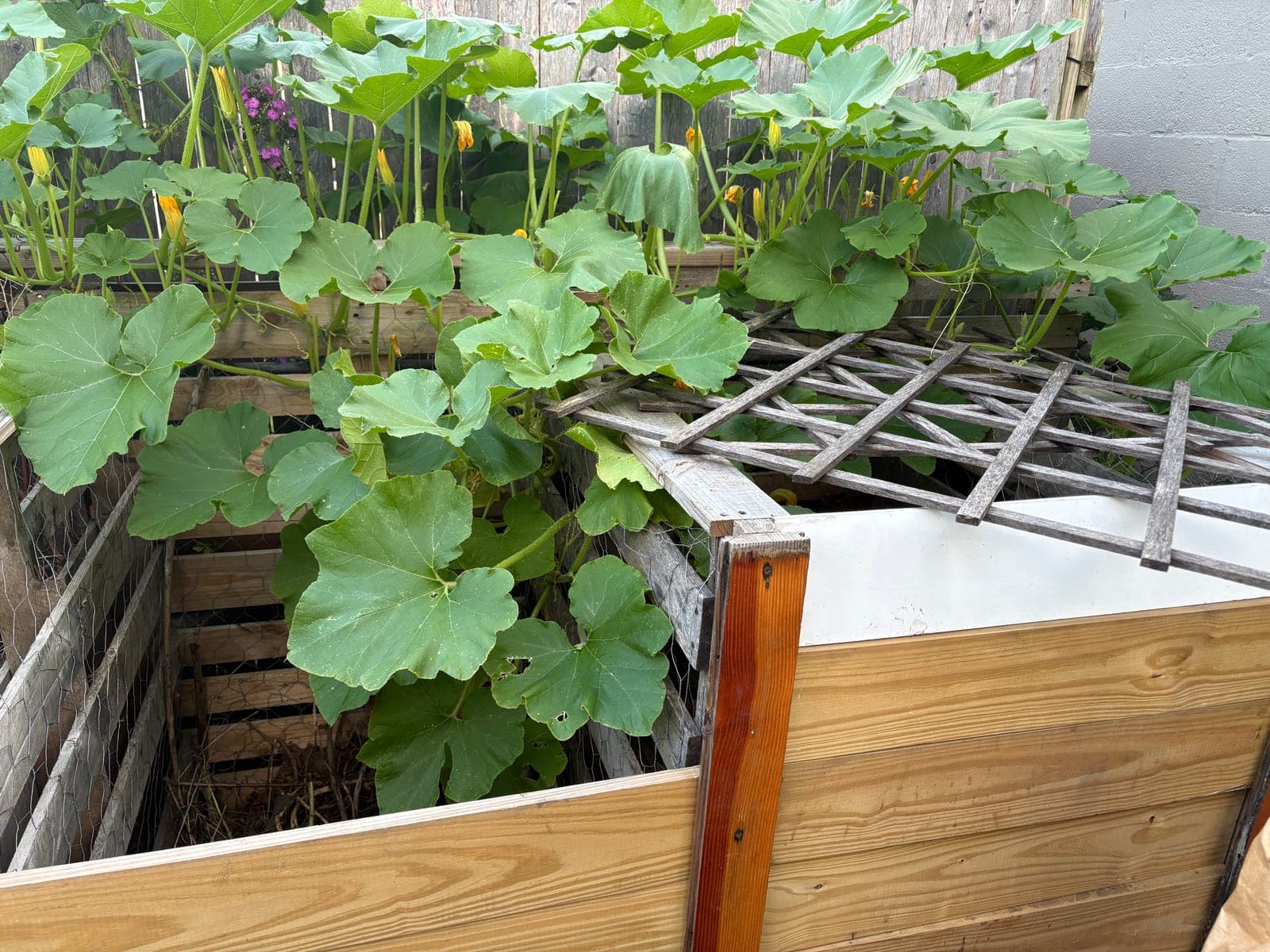
Red Kuri requires 90–100 frost-free days and full sun in fertile, well-drained soil. Vines extend 8–10 feet, so allow generous spacing between plants or train vertically on a sturdy trellis with sling supports under each fruit. A 3–4 inch mulch layer conserves moisture, moderates soil temperature, and suppresses weeds. Soil pH between 6.0 and 6.8 gives the best results. Because cucurbits are poor transplant candidates, start seeds indoors no more than three weeks before last frost to avoid root disturbance at planting.
Roasted Red Kuri seeds are a nutrient-dense snack high in zinc and essential fatty acids. Cucurbita seed extracts have a documented history of use for intestinal parasites and urinary discomfort linked to prostate enlargement, with both applications supported by clinical research.
Powdery mildew
White or grey powdery coating on leaves - usually starting on older growth in humid conditions or when nights cool.
Improve air circulation by thinning plants. Apply neem oil or potassium bicarbonate spray at first sign. Avoid overhead watering.
Downy mildew
Yellowing on top of leaves with grey-purple fuzz underneath. Spreads rapidly in humid conditions.
Remove affected leaves. Improve air circulation. Avoid overhead watering. Copper spray as preventive.
Mosaic virus
Yellowing, mottled, or distorted leaves. No cure - spread by aphids.
Remove and destroy infected plants. Control aphid populations to prevent spread. Do not propagate from infected tubers.
Bacterial Wilt
Individual leaves wilt and dry while still green, progressing to whole-plant collapse. Cut stems ooze a sticky, stringy sap.
Spread by cucumber beetles. Control beetles with row covers until bloom and remove infected plants promptly. No cure once infected; rotate crops and remove plant debris.
Fusarium wilt
Sudden wilting, brown streaks in stems, yellowing leaves. Affects sweet basil varieties most.
No cure. Remove and destroy plants. Do not replant in the same spot for 3+ years. Choose resistant varieties.
Gummy Stem Blight
Water-soaked lesions on stems that ooze a sticky, amber-brown gum. Leaves develop tan to brown circular spots with dark margins. Severe infections cause vine collapse and sunken, rotting areas on fruit.
Remove and destroy infected plant material promptly. Apply copper-based or chlorothalonil fungicide preventively during wet stretches. Avoid overhead irrigation. Use disease-free seed and rotate cucurbits out of affected beds for at least 2 years.
Angular Leaf Spot
Small water-soaked spots on leaves that turn brown and angular, bounded by leaf veins. Spots may dry and drop out, leaving holes. Fruit can develop small sunken lesions.
Avoid overhead watering and working among wet plants. Remove infected leaves, rotate crops on a 2–3 year cycle, and use copper-based sprays if the disease spreads.
Phytophthora Root Rot
Wilting despite moist soil, yellowing leaves, stunted growth, and dark, decayed roots and crown tissue. Vines may collapse during hot weather.
Plant in well-draining soil and avoid waterlogging. Remove and destroy affected vines. Improve drainage with raised beds or amended soil and avoid overwatering.