
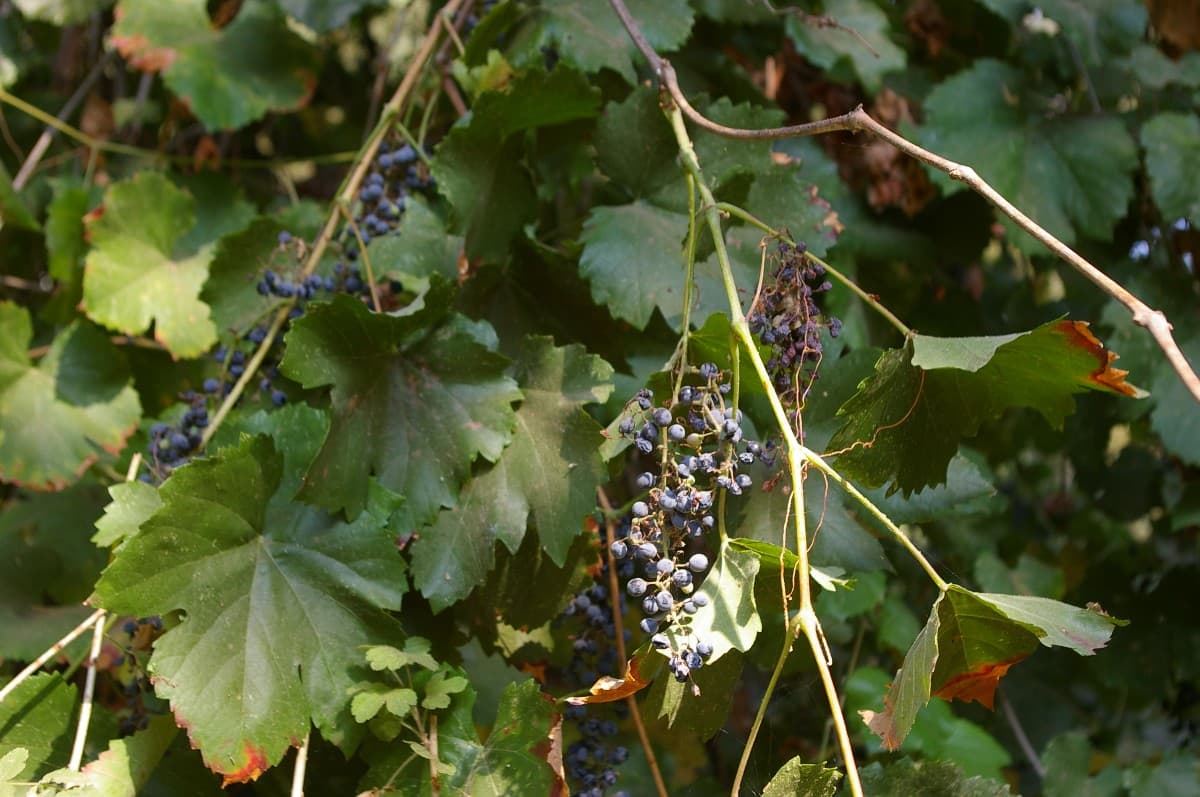
Concord grape is a cultivar of the native fox grape, Vitis labrusca, selected by Ephraim Wales Bull in Concord, Massachusetts in 1849. Its deep blue-black, slip-skin fruit and distinctive musky-sweet flavor became the foundation of the American grape juice and jelly industry, and it remains the most widely planted cold-hardy table and juice grape in home gardens across the Northeast and Midwest.
It's a vigorous deciduous vine that needs a sturdy trellis, arbor, or wire-and-post system and, critically, annual dormant-season pruning - grapes fruit only on one-year-old wood, so an unpruned vine quickly turns into a tangle of leaves with little fruit. A spur or cane pruning system removes 90% or more of the previous year's growth each winter, which feels drastic but is exactly what keeps the vine productive. Full sun and good air circulation matter more than rich soil; overly fertile ground pushes leafy growth at the expense of fruit. Concord is self-fertile, so a single vine will set a full crop.
Fruit ripens in early to mid fall, with clusters best picked once they've fully colored and taste sweet rather than tart - Concord grapes don't continue ripening once cut. Beyond fresh eating, this is the classic grape for juice, jelly, and pie, and the foliage itself provides excellent color and structure on a pergola through the growing season.
Grape Black Rot
Tan circular spots with dark borders on leaves; infected berries shrivel into hard, black, wrinkled mummies that cling to the cluster.
Remove and destroy mummified fruit and infected leaves; prune for airflow. Apply protective fungicide from bud break through fruit set in wet seasons. Clean up fallen debris each fall to reduce overwintering spores.
Downy mildew
Yellowing on top of leaves with grey-purple fuzz underneath. Spreads rapidly in humid conditions.
Remove affected leaves. Improve air circulation. Avoid overhead watering. Copper spray as preventive.
Powdery mildew
White or grey powdery coating on leaves - usually starting on older growth in humid conditions or when nights cool.
Improve air circulation by thinning plants. Apply neem oil or potassium bicarbonate spray at first sign. Avoid overhead watering.