
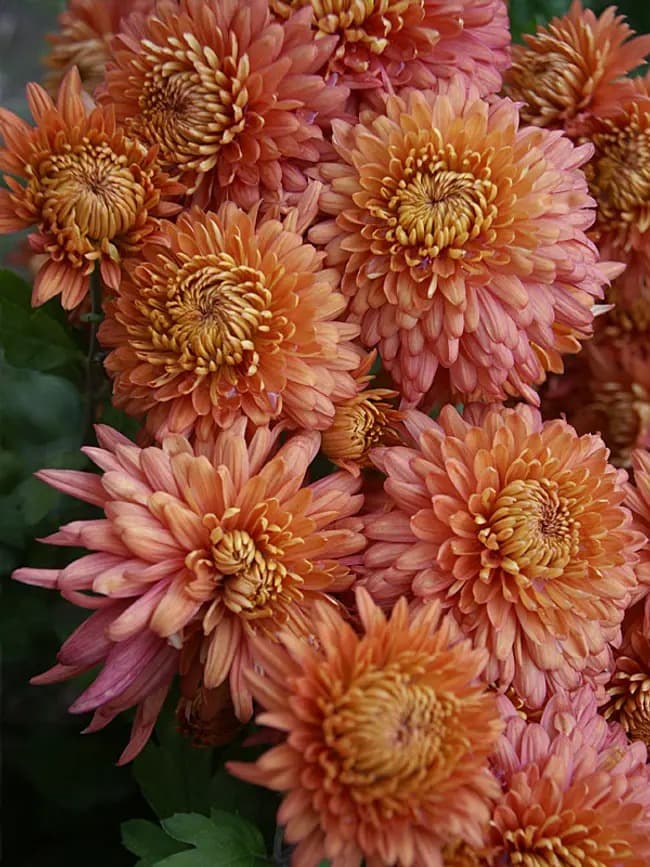
'Coral Cavalier' is a hardy garden mum (Chrysanthemum × morifolium) producing dense, coral-toned double blooms in autumn. Unlike florist mums sold as temporary gift plants, garden mums planted in spring and pinched regularly through summer develop deep root systems that return reliably for several years in zones 5–9.
Full sun and well-drained soil are essential. Mums sitting in wet soil through winter rarely survive regardless of their hardiness rating. Mulch applied after the ground freezes moderates crown temperature swings. Division every two to three years maintains bloom density and plant vigor. The final pinch must be completed no later than mid-July to allow enough time for bud development before autumn days shorten.
Chrysanthemum flowers have a long history in East Asian culinary and medicinal traditions. Petals are used in teas and soups across China, Korea, and Japan. In traditional Chinese medicine, flower preparations are associated with reducing fever, relieving headache, and supporting eye health.
Powdery mildew
White or grey powdery coating on leaves - usually starting on older growth in humid conditions or when nights cool.
Improve air circulation by thinning plants. Apply neem oil or potassium bicarbonate spray at first sign. Avoid overhead watering.
Botrytis (grey mould)
Grey fuzzy mould on petals and stems, worst in cool wet conditions.
Remove affected parts immediately. Improve air circulation. Avoid overhead watering. Apply copper fungicide if severe.
Septoria Leaf Spot
Small tan to brown spots with dark borders on leaves, often with tiny black specks at the center. Spots merge and lower leaves yellow and die.
Remove infected leaves and avoid overhead watering. Space plants for airflow and rotate planting location each year. Apply a copper-based fungicide if spread continues.
Aster Yellows
Deformed, greenish flowers, stunted growth, and yellowed foliage. Flower centers may produce tufts of leafy growth instead of normal petals.
No cure. Remove and destroy infected plants immediately to stop spread. Control leafhoppers, which transmit the disease, and remove nearby weed hosts.
Chrysanthemum White Rust
Pale yellow to cream-colored spots on upper leaf surfaces with corresponding white to pinkish-white pustules (spore masses) on undersides. Severely affected leaves yellow, distort, and may drop. Distinguished from common rust by the white or cream color of the pustules rather than orange-brown.
Remove and bag all affected plant material immediately; do not compost. Apply a registered fungicide (myclobutanil, tebuconazole, or chlorothalonil) at first sign of infection and repeat on a 7–14 day schedule. Avoid overhead irrigation. This pathogen (Puccinia horiana) is a quarantine pest in many regions; check local reporting requirements before disposal.
Foliar Nematode (Chrysanthemum)
Angular brown to bronze patches bounded by leaf veins, beginning on lower leaves and moving upward as the season progresses. Affected leaves dry out and cling to the stem rather than dropping cleanly.
Remove and destroy all infested foliage. Avoid overhead irrigation; nematodes (Aphelenchoides ritzemabosi) spread through water films on leaf surfaces. Do not propagate from affected stock. No effective in-garden chemical treatment; prevention through clean planting material, strict sanitation, and dry foliage management is the primary strategy.
Root rot
Plants wilt, yellow, and stunt even in moist soil; lower stems and roots turn brown, soft, and mushy and the plant may collapse. Most common in heavy, wet, or poorly drained ground.
Improve drainage and stop overwatering, and never plant too deep. Lift and destroy badly affected plants along with the soil around the roots. Grow in raised or free-draining beds to prevent it returning.
Verticillium Wilt
Lower leaves yellow and wilt, often on one side of the plant, with brown streaking in the stem and crown tissue when cut open. Plants are stunted and decline over the season.
Remove and destroy affected plants. Avoid planting in soil that has grown infected tomatoes, peppers, or other susceptible crops. Rotate beds and improve drainage; there is no cure once a plant is infected.