
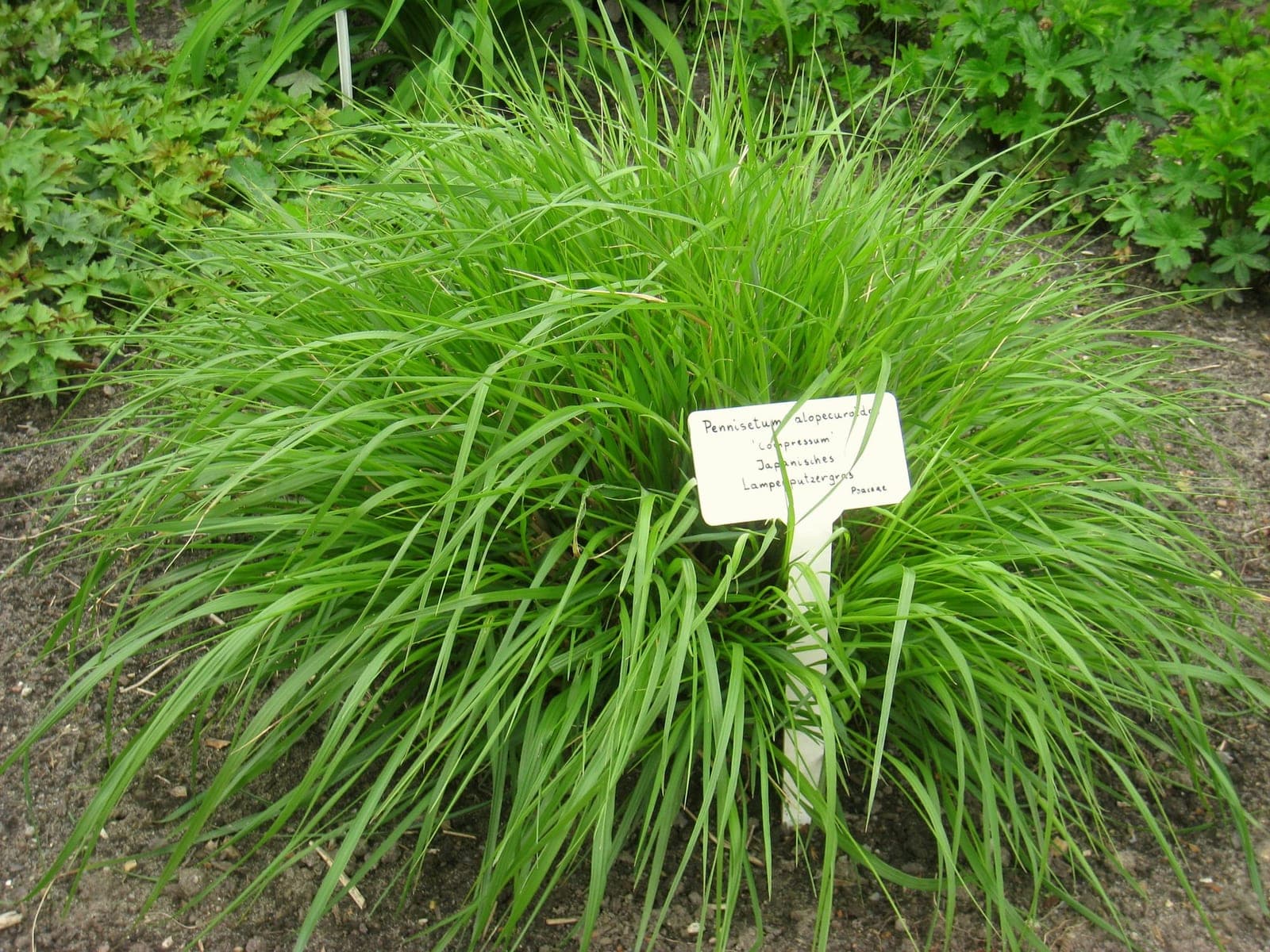
Chinese Fountain Grass is a clump-forming warm-season perennial grass native to Asia and Australia. It produces arching, narrow foliage and dense, bottlebrush-like seed heads that emerge pinkish-purple in late summer and age to cream. Seed heads persist through winter and attract seed-eating birds.
It thrives in full sun and well-drained soil and tolerates drought once established. Clumps expand slowly and benefit from division every three to four years to maintain vigor. In zones 5 and 6, a light layer of mulch applied over the crown after the ground begins to freeze improves winter reliability. Cut all foliage to 3–4 inches above the ground in late winter before new growth emerges. It self-seeds freely and has escaped cultivation in parts of the Mid-Atlantic and Southeast; cut the seed heads before they shatter if volunteers start turning up.
Rust
Orange to brown raised pustules on the undersides of leaves, with yellow spotting on the upper surface. Heavy infections cause leaves to yellow and drop.
Remove and destroy infected leaves. Avoid overhead watering and improve air circulation. Apply a sulfur or copper-based fungicide if it spreads. Clear plant debris in fall.
Crown Rot
Lower leaves yellow and wilt; the base of the rosette turns brown and soft, sometimes with white fungal threads at the soil line. Plants collapse in wet conditions.
Remove and destroy affected plants. Improve drainage and avoid overhead watering. Do not mulch directly against the crown. Space plants for airflow and avoid replanting in the same wet spot.