
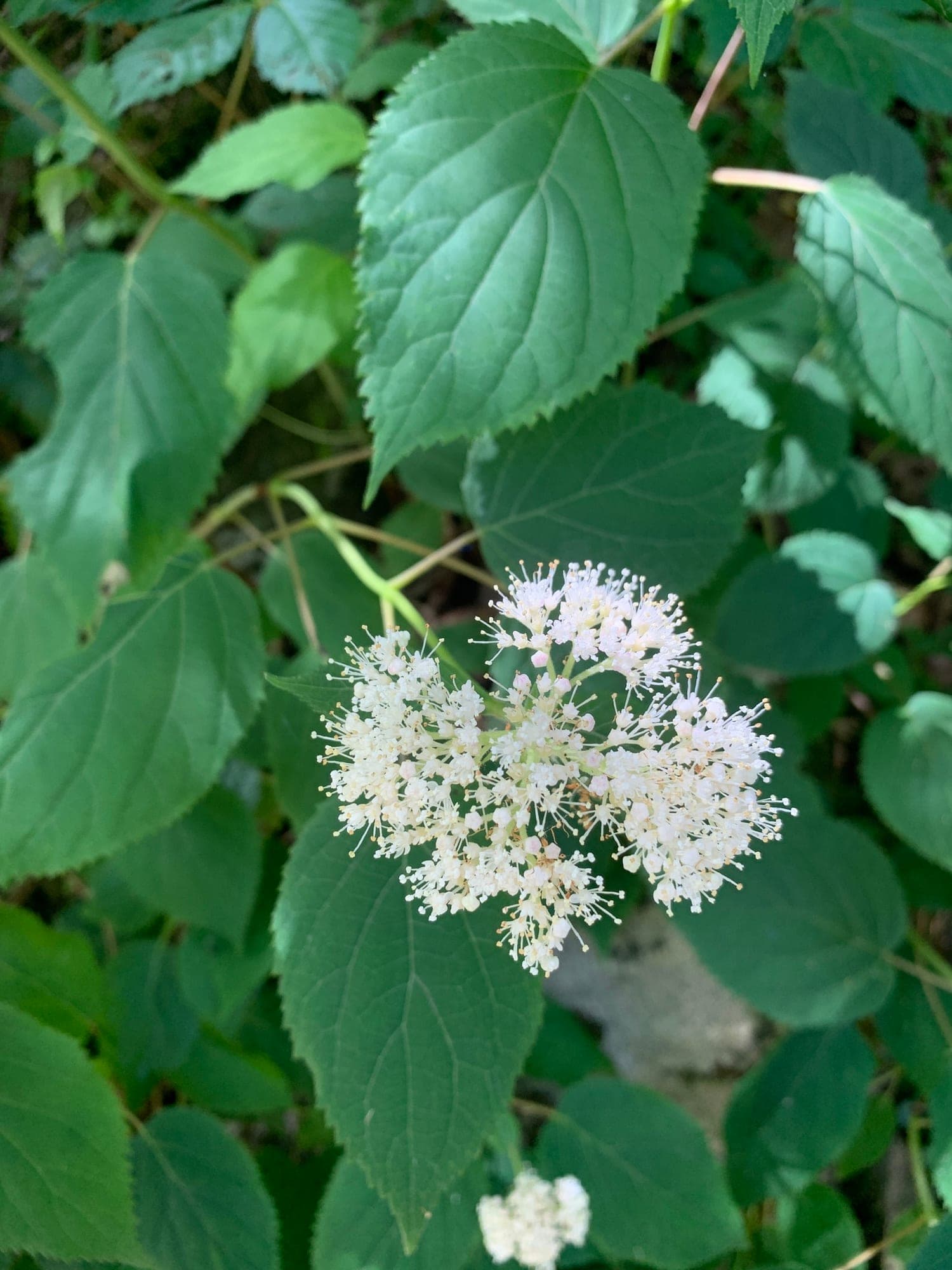
Cardiandra formosana is a low-growing perennial subshrub in the Hydrangeaceae family, native to Taiwan and the Ryukyu Islands of southern Japan. It produces lacecap-style clusters of small fertile flowers ringed by larger sterile florets in pink to soft lavender, appearing from late summer into fall, one of the few shade plants that carries ornamental interest into that gap between summer perennials and autumn foliage.
It thrives in woodland conditions: partial to deep shade, consistently moist humus-rich soil, and shelter from drying winds. The plant spreads slowly by rhizomes to form a tidy clump without becoming invasive. Soil pH between 5.5 and 6.5 suits it best. In zone 6, a 2–3 inch layer of organic mulch applied after the ground freezes is the most reliable way to carry the crown through winter. Avoid planting in sites with standing water; good drainage matters even though moisture is essential.
Powdery mildew
White or grey powdery coating on leaves - usually starting on older growth in humid conditions or when nights cool.
Improve air circulation by thinning plants. Apply neem oil or potassium bicarbonate spray at first sign. Avoid overhead watering.
Botrytis (grey mould)
Grey fuzzy mould on petals and stems, worst in cool wet conditions.
Remove affected parts immediately. Improve air circulation. Avoid overhead watering. Apply copper fungicide if severe.
Fungal leaf spot
Brown or purplish spots on the leaves, often ringed with a yellow halo, that spread and merge in warm, humid, or wet weather; heavily spotted leaves yellow and drop early.
Pick off spotted leaves and clear fallen debris to remove overwintering spores. Improve air circulation by thinning, and water at the base so foliage dries quickly. If it persists, apply a copper- or sulfur-based fungicide at the first sign.
Root rot
Plants wilt, yellow, and stunt even in moist soil; lower stems and roots turn brown, soft, and mushy and the plant may collapse. Most common in heavy, wet, or poorly drained ground.
Improve drainage and stop overwatering, and never plant too deep. Lift and destroy badly affected plants along with the soil around the roots. Grow in raised or free-draining beds to prevent it returning.