
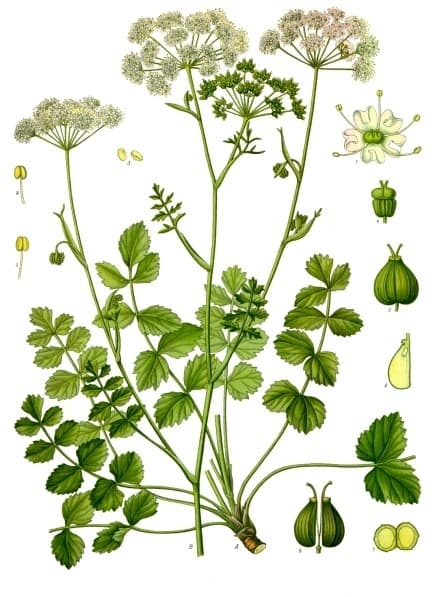
Pimpinella saxifraga is a perennial herb in the carrot family (Apiaceae), native to dry calcareous grasslands, roadsides, and meadows across Europe and western Asia. Despite the common name, it is unrelated to true burnets (Sanguisorba) or saxifrages; the name reflects leaf resemblance and a shared medicinal reputation. White compound umbels appear in midsummer and attract a broad range of beneficial insects.
The plant thrives on lean, alkaline, well-drained soils that mimic its native chalk-down habitat. Rich or moisture-retentive soils produce lush, floppy growth and shorten the plant's life. The taproot makes transplanting unreliable, so direct sowing into final position is strongly preferred. Once established it is drought-tolerant and self-seeds modestly, naturalizing well in a dry herb garden or informal meadow planting.
Young leaves carry a mild, slightly peppery flavor similar to parsley and are used fresh in salads and herb sauces - the plant is one of the traditional seven herbs in Frankfurt's Grüne Soße. Dried roots have a long record in European herbal medicine as an expectorant for coughs and bronchitis, a carminative for digestive discomfort, and a mild diuretic.
Powdery mildew
White or grey powdery coating on leaves - usually starting on older growth in humid conditions or when nights cool.
Improve air circulation by thinning plants. Apply neem oil or potassium bicarbonate spray at first sign. Avoid overhead watering.
Root rot
Plants wilt, yellow, and stunt even in moist soil; lower stems and roots turn brown, soft, and mushy and the plant may collapse. Most common in heavy, wet, or poorly drained ground.
Improve drainage and stop overwatering, and never plant too deep. Lift and destroy badly affected plants along with the soil around the roots. Grow in raised or free-draining beds to prevent it returning.
Damping Off
Seedlings collapse at the soil line with thin, water-soaked stems; seeds may fail to emerge or rot before sprouting.
Sow in well-draining mix, avoid overwatering, and ensure good airflow. Remove affected seedlings and let the surface dry between waterings.